
Views: 0 Author: Site Editor Publish Time: 2026-11-18 Origin: Site


Transporting volatile fluids demands sophisticated mechanical engineering to tame the chaotic physics of moving cargo. The sheer momentum of unrestrained liquids can easily overpower a heavy-duty chassis. When a fuel tanker trailer navigates a sharp curve or brakes hard, the payload keeps moving forward or sideways. This creates a violent sloshing effect known as liquid surge. Such dynamic kinetic energy severely destabilizes the rig and poses a catastrophic rollover risk. In this comprehensive guide, we will explore the structural features, active stability systems, and advanced designs engineers use to control fluid momentum and ensure safe highway transit.
Grasping fluid dynamics is step one in engineering a safe bulk transport vehicle. Liquid surge acts as a fundamental physical force whenever a rig alters its velocity. Solid freight stays anchored when properly secured. Fluids, however, suffer from the free surface effect.
When a driver hits the brakes, the fluid's inertia propels it forward into a massive wave. This crashes against the front bulkhead. The sudden impact violently shifts weight onto the front axles, often stripping rear-wheel traction. Navigating a tight off-ramp triggers lateral surge. Centrifugal force pushes the cargo outward, causing it to climb the interior wall of the vessel. This lateral shift effectively raises the center of gravity. The trailer gets pulled toward the outside of the curve through a dangerous pendulum effect.
Interestingly, cargo volume dictates the severity of these hazards. A partially filled vessel operating at thirty to seventy percent capacity creates the highest risk. The liquid utilizes empty space, known as ullage, to build devastating momentum before striking the walls. A fully loaded vessel restricts fluid mobility and minimizes dynamic weight shifts despite operating at maximum gross weight.
Fleet operators rarely guarantee a fully loaded manifest for every trip. Engineers must design the trailer interior to actively counteract the free surface effect. Internal baffle plates serve as the primary mechanical defense. These heavy-duty partitions are welded directly into the shell to compartmentalize the vast cargo area into smaller, interconnected chambers.
Rather than acting as solid walls, baffles feature strategically placed cutouts called manways. These openings allow the payload to flow gradually between sections. Pressure equalizes safely during loading and unloading operations. When the rig brakes abruptly, the forward-rushing fluid crashes into these baffles instead of the front bulkhead. The partitions restrict the flow rate. They dissipate kinetic energy and break a massive, unified wave into manageable ripples.
Transverse baffles run side-to-side to mitigate longitudinal surge during acceleration and braking. Longitudinal baffles run front-to-back to restrict lateral movement during tight cornering. Beyond fluid management, these internal bulkheads act as a skeletal framework. They reinforce exterior walls against immense hydrostatic pressure to prevent the vessel from bowing under heavy stress.
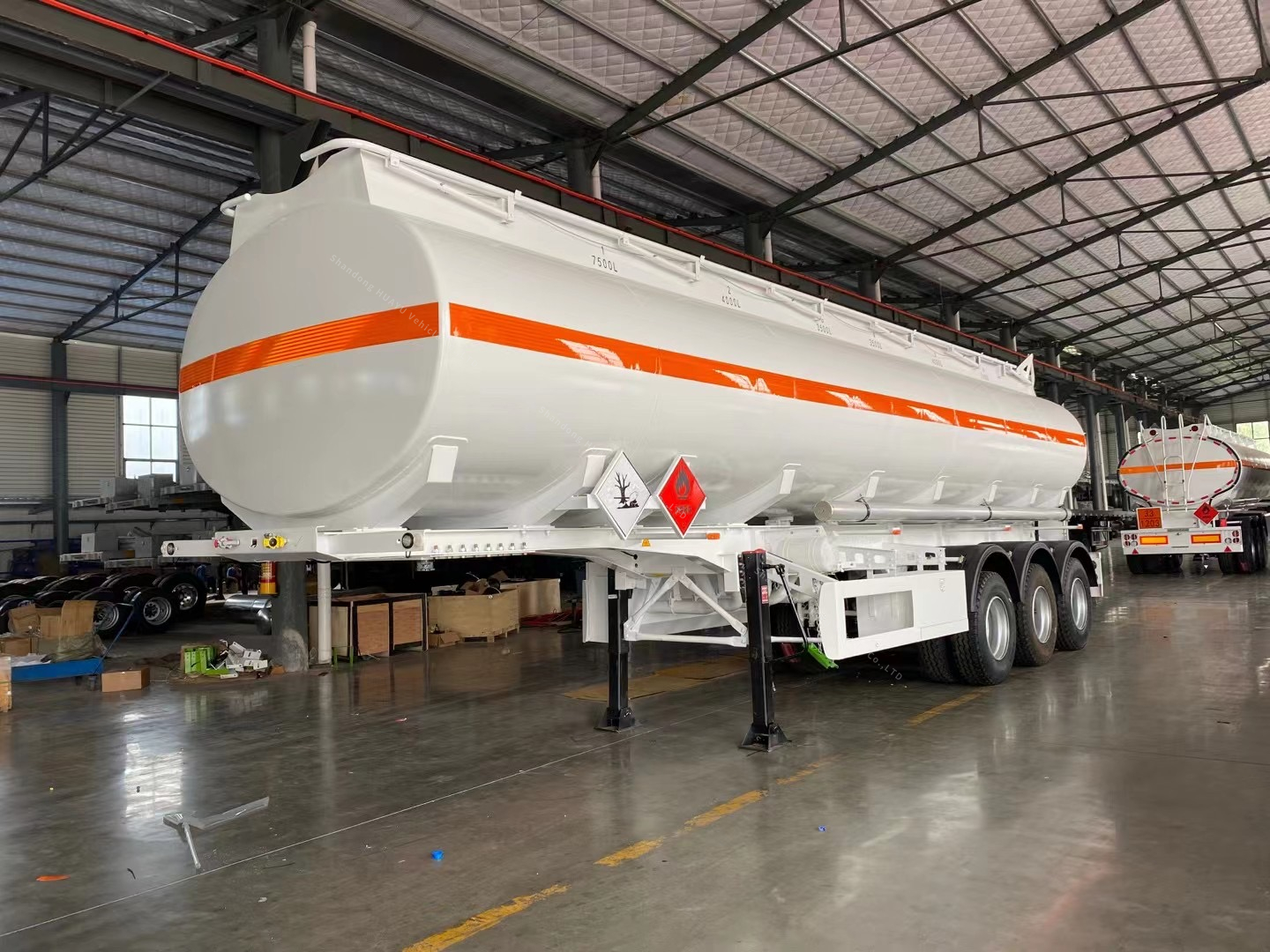
Internal partitions manage internal movement, but the exterior silhouette dictates baseline stability. Historically, tanks were purely cylindrical. Perfect cylinders excel at containing high-pressure gases by distributing stress evenly. They fail at liquid stability. A cylindrical shape carries its volume higher off the asphalt. This elevates the center of gravity and ruins cornering stability.
Modern engineering favors an elliptical or low-profile cross-section. An elliptical vessel is significantly wider than it is tall. This deliberate design spreads the liquid laterally across a broader base. The hull sits much closer to the chassis and axles. Lowering the center of gravity by just a few inches exponentially increases the centrifugal force required to tip the trailer.
This elongated shape assists in optimal weight distribution. A well-engineered diesel oil tanker semi trailer, such as a Tri-Axle 40000L model, utilizes its low-slung profile to ensure the heavy payload is evenly supported. The tractor fifth wheel and the trailer rear axle group share the burden. Balanced dispersion prevents any single tire from bearing a disproportionate load. Consistent grip is maintained during evasive maneuvers.
Material selection for the shell and chassis plays a pivotal role in road performance. Carbon steel dominated the industry for decades due to raw durability and low initial cost. As efficiency standards evolve, fleet managers are pivoting toward aluminum alloys for non-pressurized fuel transport.
The primary advantage of an aluminum gasoline tank trailer, especially high-capacity 45000L variants, lies in its exceptional strength-to-weight ratio. Aluminum weighs roughly one-third as much as steel. Drastically reducing the empty tare weight achieves two critical stability benefits. Less top-heavy structural mass lowers the unladen center of gravity. Reduced overall mass shortens stopping distances and eases the braking system burden.
Furthermore, aluminum offers superior natural corrosion resistance. Steel requires heavy chemical coatings to stave off rust. Aluminum naturally oxidizes to form a protective barrier. Internal baffles and external mounts maintain their engineered strength over years of grueling long-haul operations.
| Engineering Feature | Aluminum Alloy Construction | Carbon Steel Construction |
|---|---|---|
| Tare Weight | Significantly lighter, lowers center of gravity | Heavier, raises unladen center of gravity |
| Corrosion Resistance | Natural oxidation barrier prevents rust | Requires continuous chemical coatings |
| Braking Efficiency | Shorter stopping distances due to lower mass | Longer stopping distances under full load |
| Payload Capacity | Maximizes volume per trip legally | Restricted by heavy structural weight |
Mechanical safeguards form a robust passive defense against rollover. Passive systems cannot adapt to unpredictable highway hazards like sudden lane intrusions. Modern fleets rely on active Electronic Stability Control networks calibrated specifically for fluid transport.
At the heart of this network is the Electronic Braking System. Traditional pneumatic brakes suffer from a slight delay as air travels through the lines. The Electronic Braking System uses instantaneous electronic signals to trigger valves. This prevents fluid momentum from building up during the dreaded brake lag period. Integrated Anti-lock Braking Systems rapidly pulse brake pressure during emergency stops to maintain tire traction.
Looking at the current commercial transport landscape, there is a massive shift toward predictive, AI-enhanced stability systems. Regulatory bodies are pushing for smarter fleets. Roll Stability Support now goes beyond basic sensor monitoring. Modern systems utilize real-time data on lateral acceleration, wheel speed, and air suspension pressure. If the computer calculates a truck entering a curve is approaching its rollover threshold, it intervenes autonomously. The system cuts engine throttle and applies targeted micro-braking to the outer wheels. This proactive technological shift effectively neutralizes human error before a rollover sequence initiates.
Choosing the right equipment requires aligning engineering specs with your specific operational routes. A mismatch between trailer design and daily deployment leads to accelerated wear and increased safety risks.
Assess your route topography first. For mountainous regions with sharp switchbacks, prioritize low-profile elliptical designs with tri-axle configurations to maximize footprint stability. Next, match the material to the payload. Hauling highly corrosive aviation fuel or standard gasoline demands an aluminum alloy build. This prevents rust contamination while maximizing payload capacity per trip. Finally, specify baffle density based on delivery types. If your fleet frequently runs multi-drop delivery routes resulting in partially filled tanks, mandate a higher density of transverse baffles to combat severe ullage effects.
Even with state-of-the-art baffles, the human element remains the ultimate safeguard. Driving a fluid-loaded heavy vehicle demands specialized techniques. The core principle of tanker operation is absolute smoothness. Volatile fluids react violently to sudden momentum shifts. Drivers must execute all steering and braking inputs with gradual precision.
Speed management on highway off-ramps is paramount. Posted advisory speeds are calculated for rigid passenger cars. Heavy rigs experiencing the pendulum effect require a different approach. Best practices dictate entering curves at least ten to fifteen miles per hour below the posted limit. All braking should be completed in a straight line before turning the steering wheel. Applying brakes mid-curve compounds lateral surge and spikes rollover risk.
Operators must maintain acute awareness of their specific load status. A rig carrying a forty percent load handles entirely differently than one filled to maximum capacity. Adjusting following distances and cornering speeds based on the current manifest is a critical daily practice.
Routine maintenance ensures anti-surge mechanisms perform flawlessly under pressure. Inspecting the integrity of internal baffles is a top priority. The relentless pounding of liquid waves induces structural fatigue over time. This results in cracked welds or detached plates. A failed baffle eliminates the vessel's ability to throttle fluid momentum.
Suspension and tire upkeep play a vital role in lateral control. Worn shock absorbers or unevenly worn tires severely diminish the rig's ability to absorb lateral forces. Excess kinetic energy transfers directly into the chassis. Operators should routinely inspect kingpin connections and the fifth-wheel assembly. These components bear the brunt of longitudinal forces during hard stops. Secure and well-lubricated connections guarantee the trailer tracks smoothly.
Controlling liquid surge is a multi-faceted engineering challenge. It demands a seamless blend of mechanical design, electronic intervention, and highly skilled driving. Incorporating internal baffle partitions and utilizing low-profile elliptical shapes reduces risks significantly. Understanding these core stability factors is essential for protecting valuable cargo and maximizing operational efficiency.
Upgrading your fleet with purpose-built equipment is the most effective way to mitigate rollover risks and boost transit efficiency. Whether you require a lightweight 45000L aluminum build for maximum payload or a rugged tri-axle 40000L diesel transporter for demanding terrains, selecting the right engineered solution is critical. Visit Huayu Vehicle to explore a full range of advanced tanker trailers designed to meet the highest safety and performance standards in the industry.
A partially filled tank provides empty space, known as ullage, which allows the liquid to move freely and build momentum. This sloshing creates dynamic forces that shift the vehicle's center of gravity rapidly. It significantly increases the risk of a rollover accident during sharp maneuvers or sudden braking compared to a fully loaded tank where fluid movement is restricted.
Baffle plates act as internal barriers that break up the continuous volume of liquid inside the tank. By forcing the fluid to move through smaller openings, the baffles effectively dampen the kinetic energy of the surge. This prevents massive waves of liquid from slamming against the tank walls and destabilizing the rig during turns or stops.
Because aluminum is significantly lighter than steel, it allows for a higher payload capacity without adding excess structural weight to the top of the vehicle. This reduced tare weight helps maintain a lower overall center of gravity when fully loaded. It directly contributes to better road handling, shorter stopping distances, and lower rotational inertia during cornering.
The most effective method is a combination of advanced tank engineering and defensive driving. High-quality tanks utilize internal baffles and low-profile elliptical shapes to naturally control fluid dynamics. Drivers must complement this engineering by avoiding sudden steering inputs, braking smoothly in straight lines, and maintaining a reduced speed when entering curves.
While most modern high-quality tankers come equipped with advanced electronic braking and stability systems, older or base models might not feature these active safety networks. It is essential for fleet managers to verify the exact specifications of their equipment to ensure it meets current industry safety standards.
Liquid surge reaches its maximum hazard potential when a tank is filled between thirty and seventy percent. This specific range leaves enough empty space for the fluid to accelerate and build massive kinetic energy before slamming into the bulkheads.
An anti-lock braking system prevents wheel lockup during aggressive deceleration. By rapidly pulsing the brakes, the system maintains tire grip on the asphalt. This prevents the forward-shifting weight of the liquid surge from pushing a locked tire into a catastrophic skid or jackknife.


