
Views: 0 Author: Site Editor Publish Time: 2026-11-04 Origin: Site


Operating a fully loaded industrial tanker trailer on uneven terrain or steep side slopes tests the absolute limits of both driver skill and mechanical engineering. Unlike hauling static dry freight, moving liquid cargo introduces aggressive fluid dynamics. When a heavy rig leans on a dirt incline, shifting centers of gravity put operators at serious risk of rollover accidents. In this technical breakdown, we will explore the core mechanical factors that keep your equipment upright. We will dive into fluid movement physics, the critical role of internal baffles, and the absolute necessity of advanced suspension systems.
Before diving into the engineering specifications, keep these foundational rules in mind. A lower center of gravity is your most effective defense against lateral tipping. Inside the shell, welded metal dividers effectively stop dangerous cargo surges. Beneath the chassis, wide-track suspensions keep tires planted firmly on uneven dirt. Furthermore, strict tire pressure maintenance guarantees predictable handling. Safe professional driving techniques remain your ultimate survival tool on deceptive inclines.
Hauling liquid presents physical forces completely absent in standard flatbed transport. The most perilous dynamic is liquid surge. Hit the brakes hard or steer sharply, and the fluid shifts instantly. This creates a massive kinetic wave. When thousands of gallons slam into the metal walls, the sudden momentum easily throws the entire chassis off balance.
Picture a heavy rig navigating a sloped rural road. Gravity pulls the trailer downhill. If the liquid surges toward that lower side, it acts like a giant pendulum. This multiplies the natural gravitational pull. Specifically, this combined lateral force is a leading culprit behind immediate rollovers.
You might assume a partially empty tank is safer. Physics proves this common misconception wrong. Partially filled compartments allow maximum fluid movement. Engineers call this the free-surface effect. In contrast, a completely full tank restricts shifting. An empty one obviously has no heavy mass to surge. Therefore, adhering to strict operational guidelines for safe filling rates is a non-negotiable safety protocol.
| Fill Level | Fluid Surge Risk | Rollover Probability |
|---|---|---|
| 10% - 30% | High | Moderate |
| 40% - 70% | Extreme | Very High |
| 80% - 100% | Low | Low |
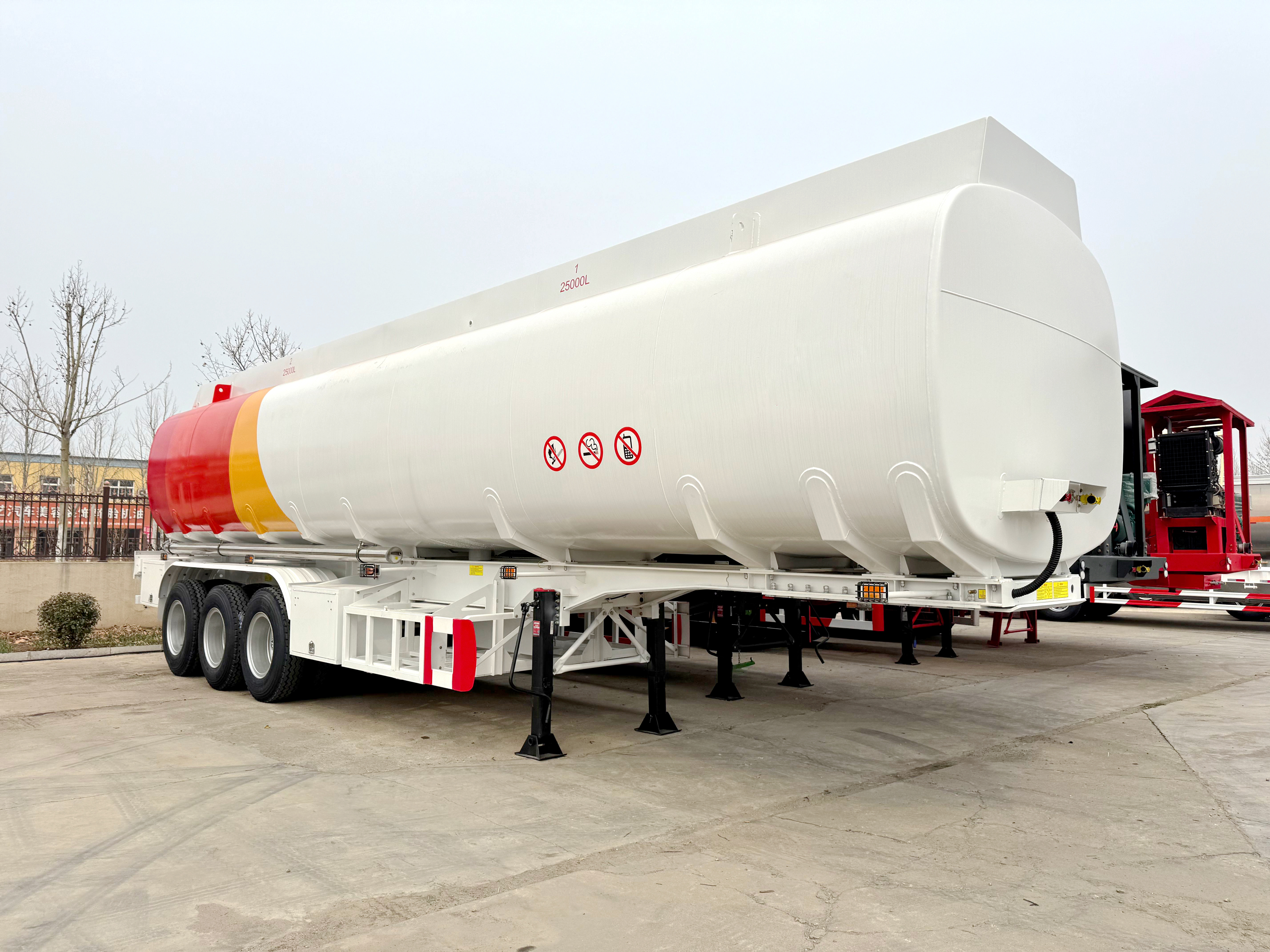
To combat volatile fluid dynamics, we rely on heavy-duty internal structures known as baffles. These thick metal dividers are welded directly to the interior shell. They separate the massive main body into smaller compartments. For example, a high-quality diesel tank trailer configured with a 50,000-liter capacity across 3 axles relies heavily on 4 to 6 millimeter thick anti-wave plates to maintain balance during transit.
Baffles act as robust physical walls against kinetic waves. They feature precision-cut flow holes allowing fluid to transfer slowly. During a sudden maneuver, they physically block the fast-moving surge. By breaking the kinetic energy, baffles prevent heavy fluid from slamming into one side. On a steep side slope, this mechanical intervention prevents a fatal weight shift.
Because they withstand massive internal pressures, manufacturers build these dividers from high-tensile steel or lightweight aluminum alloy. Poorly designed dividers crack under repeated stress. They float freely inside and cause severe structural damage. Always choose equipment meeting strict international safety standards to ensure these structures hold up under extreme torsional twisting.
Moving beneath the shell, the suspension system connects your heavy payload to the road. On a steep side slope, a reliable suspension is your lifeline. It absorbs harsh shocks while maintaining constant tire contact. Standard narrow axles prove too perilous for steep inclines. Wide-track suspensions push the wheels further outward. This specific geometry creates a wider base of support, making the vehicle much harder to tip laterally.
Different systems react uniquely to rough terrain. Mechanical leaf springs offer rugged durability but bounce dangerously on rough side slopes. Advanced air suspensions utilize compressed airbags to absorb impacts smoothly. They automatically adjust pressure to keep the trailer perfectly level. This active leveling capability is indispensable when navigating off-road slopes.
Additionally, axle count dictates weight distribution. Tri-axle or spread-axle configurations increase the wheelbase and spread the heavy burden over more tires. Reducing the concentrated load on a single pivot point translates directly to enhanced side slope stability.
| Suspension Feature | Mechanical Leaf Springs | Advanced Air Suspension |
|---|---|---|
| Terrain Adaptability | Moderate | Excellent |
| Side Slope Stability | Good | Superior |
| Load Leveling | Manual or None | Fully Automatic |
Among all mechanical factors, the center of gravity determines ultimate stability. A high balance point makes lateral tipping inevitable. Lowering this point is our primary goal in commercial engineering. Traditional cylindrical designs sit high on the chassis. Modern elliptical tanks are wider and flatter. This pushes the liquid weight further downward toward the asphalt.
Low-profile designs hugging the trailer frame are significantly safer for complex navigation. Some advanced configurations drop the tank belly deeply between the axles. This heavily reduces the tipping moment during lateral tilts. A lower chassis frame improves overall vehicle balance by keeping the heavy cargo close to the ground.
Different industrial liquids have vastly different densities. Standard gasoline is lighter than heavy diesel or crude oil. Heavy liquids naturally lower the center of gravity but generate stronger kinetic surge forces. We must carefully balance cargo density with total volumetric capacity to ensure the rig remains stable under maximum payload.
Looking at current market trajectories, the liquid transport sector is moving rapidly toward active intervention systems. We see a vital shift from reactive safety measures to proactive data-driven management. Telematics now map side slope angles and fluid momentum in real-time. Safety regulators and fleet managers utilize this predictive modeling to understand exactly how liquid surge impacts vehicle stability on challenging topographies.
Furthermore, stringent mandates for Electronic Stability Control are becoming the global standard. Fleets failing to adopt these smart-sensor technologies face skyrocketing insurance premiums and increased liability. The future of side slope stability relies on the seamless integration of rugged mechanical design and intelligent digital monitoring.
Beyond structural geometry, modern digital technology adds a crucial layer of active protection. Advanced sensors are vital for transporting hazardous materials safely. Electronic Stability Control is a life-saving technology for modern fleets. Utilizing precise sensors to monitor wheel speed and tilt, this system instantly detects when a dangerous rollover is imminent.
Because the automated system reacts fractions of a second faster than any human driver, it acts immediately upon detecting a dangerous tilt. It automatically applies the brakes to specific individual wheels. This rapidly reduces vehicle speed and corrects the trailer angle. This intervention helps keep the rig perfectly aligned on highly deceptive side slopes.
Even sophisticated engineering fails without rigorous maintenance. Thorough daily inspections are mandatory. Small mechanical defects compound rollover risks exponentially on uneven ground. Tires are your only physical contact point with the earth. Uneven tire pressure immediately causes a heavy trailer to lean. A leaning trailer on a steep side slope is disastrous.
Maintain precise and equal tire pressures. Utilize automated tire inflation systems where your budget permits. Similarly, trailer brakes must engage evenly across all installed axles. If one side grabs harder, the entire rig pulls laterally. This induces a dangerous slide that often leads to rolling.
Over time, suspension bushings wear out. Trailer kingpins develop dangerous mechanical play. Loose components allow the heavy shell to sway laterally. Inspecting all connection points during routine preventive maintenance is absolutely critical for maximum stability.
Navigating a side slope requires profound spatial awareness and fluid mechanics knowledge. Advanced technology cannot replace professional driving skill. Careful manual operation remains your ultimate safety barrier.
The relationship between speed and stability is critical. Every heavy-duty vehicle has a specific rollover threshold. This is the maximum lateral acceleration it can withstand before tipping. A liquid-filled rig on a side slope sees this threshold plummet drastically. Operators must reduce speed to a crawl well before engaging uneven terrain. Entering an incline too fast amplifies the liquid surge against the downhill walls.
Fleet operators must strictly enforce loading protocols regarding ullage, which is the empty space left for fluid expansion. Dispatchers should ensure the tank is either completely emptied or loaded to maximum safe capacity. When behind the wheel, sudden mechanical inputs are the enemy. Drivers must utilize smooth steering inputs and apply brakes gradually. Relying on the engine brake maintains a controlled descent without locking the axles.
| Slope Angle in Degrees | Tank Fill Level | Liquid Surge Risk | Required Driver Action |
|---|---|---|---|
| 0 to 5 Mild | 100% Full | Low | Maintain posted speed limits; smooth steering. |
| 0 to 5 Mild | 40% to 60% Partial | Moderate | Reduce speed by 15%; anticipate minor lateral shifting. |
| 6 to 10 Moderate | 100% Full | Moderate | Engage lower gear; reduce speed by 25%; avoid sudden braking. |
| 6 to 10 Moderate | 40% to 60% Partial | High | Crawl speed required; maximize following distance; no sharp turns. |
| 11 and above Severe | 100% Full | High | Evaluate alternative routes; proceed only at minimum rolling speed. |
| 11 and above Severe | 40% to 60% Partial | Critical | Do not proceed. The free-surface effect at this angle highly risks a rollover. |
Strategic procurement decisions directly impact daily operational safety. Procuring the correct equipment is a foundational step in mitigating risks. Fleet managers must approach the acquisition of a new trailer as a long-term investment. Focus heavily on reliability, regulatory compliance, and structural integrity.
Start by evaluating your specific cargo needs. The density of the liquid influences the vehicle center of gravity. For instance, when sourcing a gasoline trailer for sale, operators must account for its lighter payload. A purpose-built 42,000-liter model utilizes an optimized elliptical geometry to keep the mass close to the chassis. This allows for a larger volumetric capacity without sacrificing side slope stability.
Regulatory compliance is non-negotiable. Ensure your equipment meets stringent international standards dictating minimum wall thickness and baffle integrity. Advanced computer-aided engineering guarantees that welds and bulkheads will not fail under immense torsional twisting.
While high-quality commercial trailers equipped with wide-track air suspensions carry a higher upfront cost, they drastically reduce the Total Cost of Ownership. A single rollover accident results in catastrophic financial losses and environmental fines. Highly durable construction prevents these disasters and ensures a profitable service life.
| Component Feature | Ideal Specification for Stability | Impact on Side Slope Performance |
|---|---|---|
| Tank Cross-Section | Elliptical or Double-D shape | Lowers the center of gravity compared to traditional cylindrical tanks. |
| Baffle System | Dished, flanged, and staggered baffles | Breaks up lateral and longitudinal liquid momentum effectively. |
| Suspension Type | Wide-track pneumatic air suspension | Provides independent load leveling, keeping tires firmly planted on slopes. |
| Active Safety | Electronic Stability Control with Roll Stability Support | Automatically detects lateral acceleration and applies selective braking to prevent tipping. |
| Chassis Mounting | Low-profile integrated sub-frame | Reduces the overall height of the payload, minimizing the tipping moment. |
Safely transporting dynamic liquid cargo demands a highly engineered approach. By understanding the intricate interactions between staggered baffles, wide-track air suspensions, and a low center of gravity, you can make vastly improved procurement decisions. Always prioritize specialized stability features when expanding your fleet. Navigating deceptive side slopes requires a seamless partnership between impeccable mechanical engineering and skilled operators.
Do not compromise on your fleet safety. If you are looking to upgrade your equipment with industry-leading stability features, explore the premium liquid transport solutions available at Huayu Vehicle. From heavy-duty crude haulers to specialized lightweight aluminum models, choosing the right engineered product is your first step toward eliminating rollover risks.
The primary difference lies in the nature of the cargo. A flatbed carries solid static freight. Once secured, the center of gravity remains fixed regardless of the terrain. In contrast, dynamic liquid cargo experiences a free surface effect. When navigating a curve or a side slope, the liquid surges toward the lowest point. This sudden shifting of mass creates a pendulum effect that aggressively alters the vehicle center of gravity in real-time. This drastically increases the lateral force against the downhill tires.
While you cannot alter the fundamental geometry of an existing shell, you can take mechanical steps to optimize current stability. Upgrading to heavy-duty wide-track suspension components and ensuring all air-ride leveling valves are perfectly calibrated improves lateral resistance. Additionally, retrofitting the rig with an Electronic Stability Control system provides active braking intervention during dangerous maneuvers. Strict adherence to proper tire inflation remains the most immediate way to maintain baseline stability.
Yes, material choice plays a significant role in overall stability through weight distribution. Aluminum alloys are favored because they are significantly lighter than carbon steel. This reduction in tare weight lowers the overall center of gravity when loaded. Conversely, high-tensile steel offers superior structural rigidity, which resists twisting forces better on extreme off-road side slopes.
The safest approach is rooted in extreme speed reduction and proactive momentum management. Before reaching the slope, reduce your speed to a crawl. Engage a lower gear to utilize engine braking. Maintain a steady uniform speed while on the incline to prevent the liquid from surging. Avoid any sudden jerky steering movements. If the slope exceeds the safe operational limits of your specific load capacity, refuse the route and find a flatter alternative.
Liquid slosh actively moves the center of gravity away from the centerline of the chassis. When fluid rushes to one side of the compartment, the heaviest point of the vehicle shifts outward and upward. This dynamic movement reduces the stabilizing weight on the uphill tires and overloads the downhill tires, creating a high-risk tipping scenario.
While specific thresholds depend on the exact suspension and tank geometry, most engineers agree that side slopes exceeding 10 degrees pose a severe rollover risk for fully loaded liquid transports. For partially filled tanks experiencing the free-surface effect, even a 6 to 8 degree slope can be critically dangerous. Always consult your specific equipment manufacturer guidelines and utilize telematics to monitor slope angles.


