
Views: 0 Author: Site Editor Publish Time: 2026-11-17 Origin: Site


Heavy-duty hauling pushes steel to its absolute limits. Metal fatigue is an inevitability on the job site, not a mere possibility. The structural integrity of an end dump trailer dictates its operational lifespan and safety profile. Unplanned downtime caused by structural weld failures leads to delayed projects, catastrophic tipping accidents, and heavy emergency repair bills. Buyers and fleet managers often misidentify the root causes of these fractures. They focus solely on the payload weight rather than the trailer's stress-distribution design and operational abuse. Moving from reactive patching to proactive evaluation requires understanding the exact anatomical stress points of a hauling unit. This guide breaks down where welds fail first, how trailer geometry impacts durability, and the strict inspection frameworks required before adding a unit to your fleet.
Every time an operator engages the power take-off (PTO) and raises a loaded box, extreme vertical and lateral forces hit the chassis. The multi-stage hydraulic cylinder acts as a massive fulcrum. It pushes upward against the front of the tub while the rear hinge pins hold the back in place. This mechanical action forces the frame rails to bridge the gap, absorbing immense bending moments. Repeated loading and unloading cycles push the steel past its natural fatigue limit. Steel plates flex under heavy loads, but the welds connecting them remain rigid. This difference in flexibility creates microscopic stress risers along the weld toes. Over thousands of tipping cycles, these micro-fractures merge into visible cracks. The weld seams are forced to absorb the kinetic energy of shifting materials, eventually tearing the metal apart at the molecular level.
Pushing a dump trailer for construction past its rated capacity accelerates structural degradation exponentially. Dropping massive boulders, ripped concrete slabs, or heavy demolition debris into an empty tub creates massive shock loads. When an excavator operator releases three tons of riprap from five feet in the air, the impact force transfers directly through the floor plate into the crossmembers. This sudden kinetic strike instantly snaps welds already weakened by chronic overloading. Tractor hook-ups also generate severe impact forces. Backing a heavy truck hard into the kingpin sends a violent shockwave through the draft arms, shattering fatigued joints in a fraction of a second.
Job sites rarely offer perfectly flat ground. Dumping on uneven terrain introduces severe torsional stress to the entire rig. As the telescopic cylinder extends thirty feet into the air, the center of gravity shifts dramatically. The trailer frame twists in one direction while the raised box leans heavily in another. The tires act as pivot points, transferring ground irregularities straight up through the suspension hangers into the frame webs. This twisting effect acts as the primary catalyst for micro-fractures. The connection points between the lower chassis and the upper box absorb this rotational force. When the frame twists beyond its engineered tolerance, the rigid fillet welds snap.
Temperature fluctuations wreak havoc on structural steel integrity. Hauling hot mix asphalt at 300 degrees Fahrenheit expands the metal rapidly. Freezing winter temperatures contract it just as fast. This constant thermal cycling weakens the heat-affected zone (HAZ) surrounding structural welds. The exterior steel chills in the winter air while the interior steel boils against the payload. Abrasive payloads compound this thermal issue by wearing down the parent metal from the inside out. This leaves the weld bead exposed, thinned out, and highly vulnerable to shear forces. The constant expansion and contraction cause the rigid weld metal to separate from the softer parent steel.
| Stress Type | Primary Cause | Impact on Weld Integrity |
|---|---|---|
| Vertical Bending | Hydraulic hoist lifting heavy payloads | Stretches longitudinal welds along the frame rails |
| Shock Loading | Dropping heavy debris into an empty tub | Shatters crossmember and floor plate connections |
| Torsional Twist | Dumping on uneven or sloped terrain | Tears suspension hanger and pivot bracket welds |
| Thermal Cycling | Hauling hot asphalt in cold weather | Creates micro-fractures in the heat-affected zone |
The rear pivot hinge represents the most vulnerable failure zone on the entire unit. During a dump cycle, the entire payload weight transfers to this single horizontal axis. The support brackets endure massive shear forces as the box rises. If the load sticks to the front of the tub or shifts unevenly, the brackets twist violently. This torsional load leads directly to bracket separation and weld shearing. Inspectors must check the heavy hinge pins, the brass bushings, the grease galleys, and the surrounding thick weld seams for hairline fractures. When bushings wear out, the resulting metal-on-metal play hammers the welds with every bump in the road. A failure here guarantees a catastrophic rollover.
The tractor transfers all pulling, braking, and turning forces through the draft arms and kingpin plate. The oscillating fifth wheel constantly pushes and pulls against this connection. Cracks frequently propagate from the pin center outward toward the mounting holes. This specific failure often happens at the exact moment a driver hooks back up to the trailer, applying sudden horizontal force to a fatigued joint. A cracked kingpin plate misaligns the chassis permanently. This structural shift causes dangerous dog-tracking down the highway, destroys fuel efficiency, and accelerates tire wear to unacceptable levels.
Material discharge exerts violent impact forces on the rear tailgate assembly. Hinge welds crack frequently due to sudden payload shifts, sticky clay, and mechanical binding. When a swinging tailgate jams against a large boulder during discharge, the top hinges absorb the entire shock. You cannot simply weld a quick bead over these fatigued components. Broken hinges must be completely cut off with a torch, ground perfectly smooth, and replaced with fresh steel to restore structural integrity. The latching mechanism at the bottom also takes heavy abuse, requiring constant inspection of the locking pins and air-actuated cylinders.
Longitudinal welds connecting the floor plate to the side walls face constant abrasion and flexing. Designs relying heavily on crossmembers for rigidity transfer stress directly to these long joints. As the floor flexes downward under heavy loads, the 90-degree corner welds experience severe tension. Inspect the entire length of the floor-to-wall seam for rust bleeding. A streak of orange rust running down clean steel indicates moisture has penetrated an internal weld failure, meaning the joint is already compromised. The doghouse housing the hydraulic cylinder also features complex corner welds that require close examination.
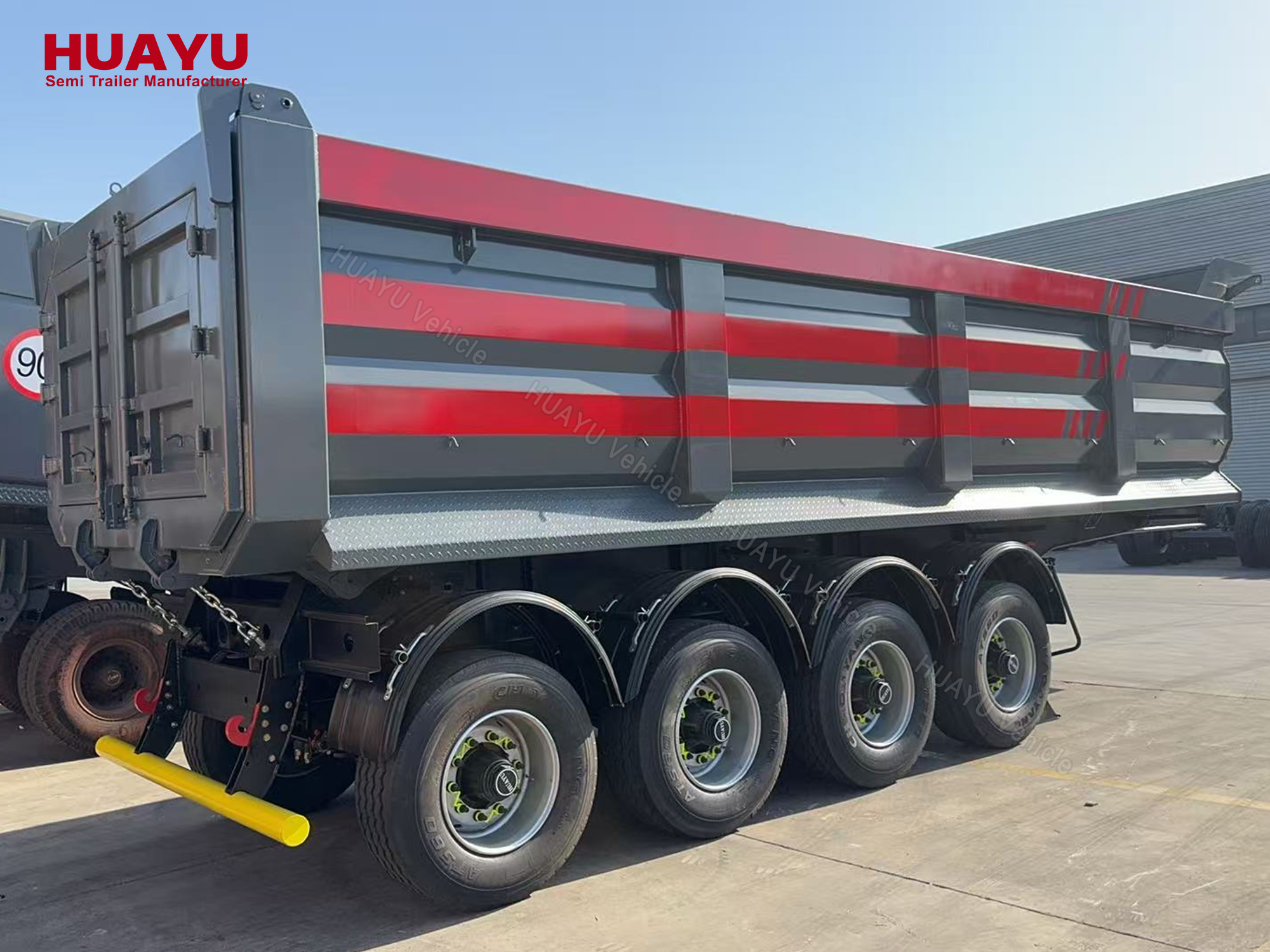
Trailer geometry dictates exactly how stress travels through the steel frame. A square shape tipper trailer relies on robust crossmembers and vertical side posts to maintain its rigidity. This traditional design creates numerous 90-degree joints underneath the floor. Corner welds and crossmember intersections become the primary inspection targets for metal fatigue. The rigid structure resists flexing, which forces the welds to absorb all the kinetic energy.
Conversely, a half-round design handles stress differently. The curved tub shape naturally distributes payload weight and absorbs impact like a suspension spring. This frameless or quarter-frame design reduces the need for heavy crossmembers. However, the half-round design shifts those fatigue risks forward to the draft arms and downward to the suspension hangers. Because the tub flexes, the connection points between the suspension and the tub take the brunt of the twisting forces.
Material choice heavily influences weld lifespan and repairability. Aluminum offers excellent payload capacity due to its light weight, but it remains highly prone to cracking under severe torsion. Aluminum welds fatigue much faster than steel when twisted on uneven ground or subjected to shock loads. Repairing aluminum requires specialized TIG or MIG welding with argon gas, making field repairs difficult.
High-tensile steel, like AR400 or AR500, delivers superior impact resistance for demolition and heavy aggregate hauling. It bends before it breaks. However, high-tensile steel requires specialized welding procedures. Improper heat control during manufacturing or field repair causes the heat-affected zone to become brittle, leading to rapid, zipper-like crack propagation under load. Welders must use low-hydrogen electrodes and proper pre-heating techniques to maintain the steel's structural integrity.
| Material Type | Primary Advantage | Weld Fatigue Characteristics | Repair Requirements |
|---|---|---|---|
| Aluminum (5454) | Maximum payload capacity, corrosion resistant | Highly susceptible to torsional cracking | Requires TIG/MIG with argon, clean environment |
| Standard Steel | Cost-effective, easy to repair | Prone to rust bleeding and heavy impact dents | Standard MIG or Stick welding |
| AR400/AR500 Steel | Extreme impact and abrasion resistance | HAZ becomes brittle if welded improperly | Requires pre-heating and low-hydrogen rods (7018) |
Catching structural failures early prevents catastrophic accidents and ruined equipment. Use a step-by-step methodology to identify hairline cracks before they split open. Look closely for rust bleeding around painted joints. Watch for structural distortions, such as bowed crossmembers, twisted draft arms, or a tailgate that refuses to latch squarely. Bring a wire brush, a slag hammer, and a can of dye penetrant to the inspection. Clean the metal thoroughly before inspecting high-stress zones. You cannot accurately evaluate a dirty, grease-covered pivot bracket. Spray the dye penetrant on suspicious joints to reveal microscopic fractures invisible to the naked eye.
Used hauling units often hide terrible repair work under fresh paint. Beware of DIY MIG surface patches. A grinder and a quick weld bead will not hold under commercial hauling loads. Proper structural crack repair requires specific, heavy-duty techniques. The technician must drill the ends of the crack to stop it from running further. They must gouge out the metal at least 1/8 inch past both sides of the fracture using a carbon arc gouger. The repair requires welding on one end, then tying it across the top and bottom to fully restore structural integrity. If you see thick, uneven weld blobs sitting on top of a crack, walk away immediately. Fishplates or gussets added over a crack without gouging the original fracture will fail within weeks.
Structural integrity directly impacts hydraulic system health. Inspect all one-inch high-pressure hydraulic hoses, lifting cylinders, and fluid connections located near primary welds. Structural flexing causes secondary hydraulic failures. A cracked frame pinches high-pressure hoses or binds the massive lifting cylinder during extension. Check the PTO pump connections and the directional valves. Any damaged hoses showing wire braid must be replaced immediately. A blown hose during a heavy lift causes sudden pressure loss, dropping the loaded box violently and destroying the remaining chassis welds upon impact.
The ultimate risk of ignoring weld fatigue is a catastrophic rollover on the job site. A cracked pivot bracket or a twisted frame fundamentally compromises the trailer's center of gravity. When the multi-stage telescopic cylinder pushes a 25-ton load into the air, a failing rear hinge will snap under the pressure. The trailer will instantly roll over sideways. This violent event frequently takes the tractor and the operator down with it, destroying the entire combination and causing severe injuries. The twisting force of a falling tub will snap the tractor's frame rails and shatter the fifth wheel connection.
Operating compromised equipment carries severe financial and legal penalties. DOT inspectors actively look for cracked frames, broken welds, and compromised kingpins at weigh stations during Level 1 inspections. An out-of-service red tag halts your hauling operation instantly. Beyond regulatory compliance, the civil liability of a structural failure on a public highway is immense. Emergency structural welding in the field costs significantly more than proactive shop maintenance. Ignoring hairline cracks guarantees expensive downtime when you have tight project deadlines to meet. A broken trailer sitting in the dirt generates zero revenue while accumulating heavy repair bills.
Weld cracks on heavy-duty hauling equipment are predictable and manageable. Fleet managers must understand the specific stress points dictated by the trailer's geometry, payload capacity, and operational environment. Proactive maintenance prevents minor fractures from becoming major disasters. When evaluating a tipper trailer for sale, prioritize structural health over cosmetic appearance. Look for units with clean, un-repaired pivot brackets and factory-intact kingpin plates. Ensure the tub design matches your intended payload, avoiding aluminum tubs for heavy demolition work.
A: During the dumping cycle, the entire payload weight and extreme torsional stress transfer directly to the rear hinges. Dumping on uneven ground, overloading the tub, or sticky materials shifting suddenly forces the pivot brackets to absorb massive shear loads, eventually tearing the welds.
A: Operators should perform a daily walk-around looking for obvious frame distortions or leaning. Conduct a thorough, cleaned-metal inspection of high-stress points like pivot brackets and the kingpin plate every 30 days, or immediately after hauling oversized, high-impact loads.
A: Yes, but only by a certified professional using proper structural techniques. The repair requires drilling the crack ends, gouging 1/8 inch past the fracture, and applying appropriate filler metal. However, extensive frame patches may permanently reduce the trailer's load rating and resale value.
A: Square shapes are not inherently weaker, but their geometry relies heavily on crossmembers and 90-degree joints. These intersections create specific stress concentrations. Half-round designs distribute stress more evenly across the tub, shifting the fatigue risks away from the box corners to the suspension and draft arms.
A: While MIG welding is fast and common for minor fixes, structural repairs on high-tensile steel require strict heat control. Low-hydrogen processes like FCAW (Flux-Cored) or SMAW (Stick) combined with proper pre-heating are necessary to prevent the heat-affected zone from becoming brittle and failing again.
A: Look for rust bleeding around structural joints, which indicates internal cracking. Inspect the kingpin plate for bowing or hairline fractures radiating from the pin. Check the rear pivot brackets for thick, non-factory weld patches, and verify the trailer tracks perfectly straight when hooked to a truck.
A: Structural cracks allow the trailer frame to twist and flex far beyond its engineered design limits. This excessive movement pinches, stretches, or rubs adjacent hydraulic lines against the steel chassis. Compromised cylinder mounts also bind the system, leading to high-pressure leaks that require immediate replacement.


