
Views: 0 Author: Site Editor Publish Time: 2025-12-23 Origin: Site


A flatbed trailer is a popular choice for transporting large or irregularly shaped cargo, but when it comes to choosing the right length, there’s more to consider than just the dimensions of your goods. 45FT flatbed trailers offer additional deck space, making them an ideal solution for certain types of freight. But is it the right choice for your business? Let’s break down the key considerations that might help you make an informed decision.
When choosing between different flatbed trailer lengths, the extra length isn’t just about fitting longer freight on the trailer. A 45FT flatbed trailer introduces various changes that could impact your overall logistics, including load management, maneuverability, and regulatory concerns.
While a 45FT trailer offers an extra five feet over a standard 40FT trailer, not all of this space is usable when it comes to loading. The actual loading length will vary depending on the trailer’s design, and things like overhang allowances, container configurations, and cargo types all play a role.
Adding length to a flatbed trailer can boost its capacity, but it also creates trade-offs. Longer trailers can be more challenging to maneuver, particularly in tight yards or narrow roads. If your business operates in areas with restricted space, you might find that a longer trailer doesn’t provide the operational flexibility that a shorter one would.
Certain types of freight are more suitable for 45FT flatbed trailers than others. These include items like steel beams, long pipes, prefabricated modules, and heavy equipment skids. For these types of cargo, the extra length helps consolidate multiple loads into one, saving both time and transportation costs.
A 45FT flatbed trailer is not always necessary for every load, but in some cases, it can make a significant difference. Here are a few scenarios where opting for a longer trailer can benefit your operation.
When transporting long freight, a 45FT flatbed trailer can consolidate multiple loads into one. This approach is particularly effective when you need to transport several pieces of long cargo like beams or pipes. By reducing the number of trips, you can cut transportation costs and improve fuel efficiency, which benefits both the environment and your bottom line.
Overhanging cargo can be a safety risk, especially when dealing with irregularly shaped or long loads. A 45FT flatbed trailer reduces the risk of overhangs, ensuring that freight fits more securely within the trailer’s confines. This means you’ll face fewer loading complications and a reduced chance of damage during transport.
If your business frequently handles shipping containers of varying lengths, including 45FT containers, a longer flatbed trailer is often a natural choice. This configuration allows for a smoother transition between container loading and transport, as the trailer can accommodate the full length of the container.
While adding a few extra feet to a flatbed trailer might seem simple, it requires careful planning to ensure safe and efficient transport. Failing to account for important load factors can lead to safety hazards, inefficiencies, or even regulatory issues.
Longer loads create a more complex weight distribution than shorter ones. It’s important to plan where and how your cargo is placed on a 45FT flatbed trailer to avoid overloading certain axles. The weight distribution directly impacts the stability of the trailer, its braking performance, and how evenly it handles over long distances.
The center of gravity is crucial for longer loads. A 45FT flatbed trailer may carry heavier loads, but if the center of gravity isn’t properly managed, it could lead to braking issues. Placing the heaviest part of the cargo closer to the center of the trailer will ensure better stability and improve overall handling.
Longer trailers require more space in the yard for turning, docking, and staging cargo. A 45FT flatbed trailer may be harder to maneuver in tighter areas like warehouse docks or construction sites, so be sure to evaluate your operational space before committing to a longer trailer.
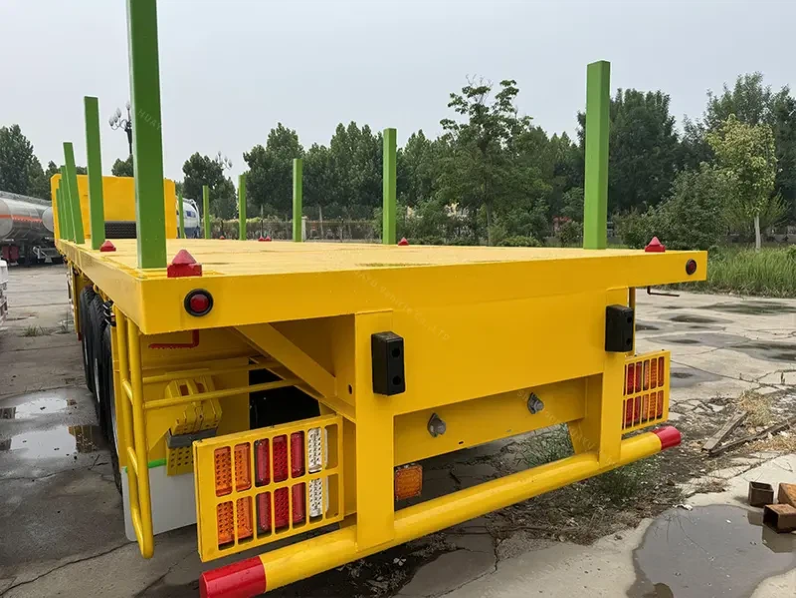
A flatbed trailer is only as reliable as its securement system. With longer cargo, over-tightening straps and chains can damage the load or cause safety concerns. Proper tie-down planning is essential to ensure the cargo is secured without excessive force.
Every cargo type requires a slightly different approach when it comes to tie-downs. A 45FT flatbed trailer offers ample space for cargo, but you’ll need to build a secure tie-down plan that’s repeatable for various cargo types. This can include using edge protection, distributing tension evenly, and utilizing multiple tie-down points.
Over-tightening, improper tie-down points, and the absence of edge protection are common causes of claims related to flatbed transport. A 45FT flatbed trailer requires careful attention to these details, as the longer length can make these mistakes more significant.
It’s important to stay compliant with industry regulations for cargo securement. Familiarizing yourself with the Federal Motor Carrier Safety Administration’s (FMCSA) securement rules and adhering to these guidelines will help you avoid costly accidents and maintain your reputation for safety and reliability.
Choosing a 45FT flatbed trailer involves more than just picking the right length. Several specifications should be prioritized to ensure the trailer functions as needed.
When selecting a longer flatbed trailer, the material of the main beams becomes even more critical. Materials like Q345B and T700 steel offer increased strength and durability, making them ideal for long and heavy loads. These options are worth considering to ensure your trailer can handle the demands of extra length and weight.
Longer trailers tend to travel longer distances and over less-than-perfect roads. Ensuring your 45FT flatbed trailer has robust suspension reinforcement can prevent unnecessary wear and tear, especially on uneven or rough terrain.
The ability to adjust the container locks on a flatbed trailer is essential, especially when transporting different types of freight. With a 45FT flatbed trailer, having flexible container lock configurations can make a significant difference in accommodating varying container lengths and weights.
Sometimes, a quick decision-making process is the best way to narrow down your trailer options. Here’s a simple checklist for whether a 45FT flatbed trailer is the right choice.
Think about what you’re hauling most often. If your freight consistently falls into the long-load category, then a 45FT flatbed trailer could be a perfect fit.
Consider your route, yard limitations, and available equipment. If a longer trailer would create logistical issues or fail to improve handling, it might be best to go with a shorter model.
Ask yourself: Will the extra length reduce the number of trips you make, or will it reduce the risk of mishandling during loading? If the answer is yes, then a 45FT flatbed trailer is likely a great fit for your needs.
Freight Scenario | Recommended Deck Length Approach | Key Spec to Prioritize | Common Loading Method |
Long Steel Beams | 45FT Flatbed Trailer | High-Strength Main Beams | Overhead Cranes |
Prefabricated Modules | 45FT Flatbed Trailer | Reinforced Suspension | Forklifts |
Equipment Skids | 45FT Flatbed Trailer | Adjustable Container Locks | Hydraulic Lifts |
When used correctly, a 45FT flatbed trailer can offer significant improvements in handling long freight, consolidating shipments, and reducing transportation costs. At Shandong HUAYU Vehicle Co., Ltd., we specialize in high-quality, customizable trailers designed to meet the unique needs of your business. Whether you're transporting steel beams, equipment skids, or prefabricated modules, a longer flatbed trailer could be just what you need to improve your operational efficiency.
Contact Us today to discuss your specific cargo dimensions and loading requirements. Our team at HUAYU is here to help you find the perfect flatbed trailer for your business needs.
Q1: When is a 45FT flatbed trailer the best option?
A: A 45FT flatbed trailer is ideal for transporting long, heavy loads like steel beams, large equipment, or prefabricated modules that require a larger deck for consolidation.
Q2: How does a longer flatbed trailer affect maneuverability?
A: Longer flatbed trailers may be harder to maneuver in tight spaces. It's important to assess your route and yard limitations before opting for a longer trailer.
Q3: What materials are used in 45FT flatbed trailers?
A: High-strength materials like Q345B steel and T700 steel are often used for the main beams, ensuring durability and strength to handle long, heavy loads.
Q4: How can I ensure the cargo is safely secured on a longer flatbed trailer?
A: Proper tie-down planning, using edge protection and avoiding over-tightening, are key to securing cargo safely. Be sure to follow FMCSA regulations for cargo securement.


