
Views: 0 Author: Site Editor Publish Time: 2025-12-24 Origin: Site


When it comes to logistics, efficiency and flexibility are key. A flatbed trailer is one of the most essential tools in freight transport. While trailers come in various lengths, the 40FT flatbed trailer is often considered the "standard" for a reason. In this article, we’ll explore why this trailer length is widely used, the advantages it offers, and why it remains the workhorse of the logistics world.
When we talk about a standard-length flatbed trailer, it usually refers to a trailer that is 40 feet in length. But what does "standard" really mean in terms of operational efficiency and usage?
The 40FT flatbed trailer is widely recognized as the standard size used for both containers and general cargo. It accommodates the transportation of standard 40-foot shipping containers with ease, and it is a popular choice for freight haulers due to its ability to carry a wide variety of cargo. It’s versatile enough to transport everything from heavy machinery to building materials, making it ideal for many sectors like construction, industrial distribution, and retail.
While a 40FT flatbed trailer is considered standard in many regions, road regulations, local infrastructure, and even weather conditions can affect its "standard" status. For instance, in regions with narrower roads or more stringent weight restrictions, a 40FT flatbed may be the maximum allowable size. As a result, understanding the local road regulations is essential when choosing a trailer for specific logistics needs.
A 40FT flatbed trailer is large enough to handle a substantial amount of cargo but doesn’t come with the maneuverability challenges that longer trailers sometimes face. It’s the sweet spot where capacity meets practicality.
One of the reasons why the 40FT flatbed trailer is so popular in logistics is its simple platform design, which allows easy loading and unloading. It offers enough space for long and heavy cargo, while the open-deck design makes it adaptable for various loading methods, from forklifts to cranes. Additionally, it’s easier to secure the load, as the flatbed allows for better access on all sides.
The 40FT flatbed trailer serves a wide range of industries, including construction, machinery transport, and bulk cargo. It’s ideal for long cargo like steel beams, prefabricated parts, and heavy industrial equipment. This trailer’s versatility allows it to handle a range of goods, from pallets of materials to long pipes, making it an invaluable asset to logistics operations.
The flatbed trailer’s open-deck design is a key factor in its widespread use. This design is especially useful for industries that require flexible loading and unloading methods.
One of the biggest advantages of a 40FT flatbed trailer is its flexibility. With an open deck, cargo can be loaded from virtually any direction—whether by forklift, crane, or even manual labor. This flexibility is essential for operations where quick loading and unloading are necessary.
By offering more access points for loading and unloading, the 40FT flatbed trailer minimizes the time spent on the job site. This is critical for reducing dwell time, ensuring that goods are moved in and out of ports, warehouses, and job sites as quickly as possible. Faster turnaround times mean increased operational efficiency and reduced shipping costs.
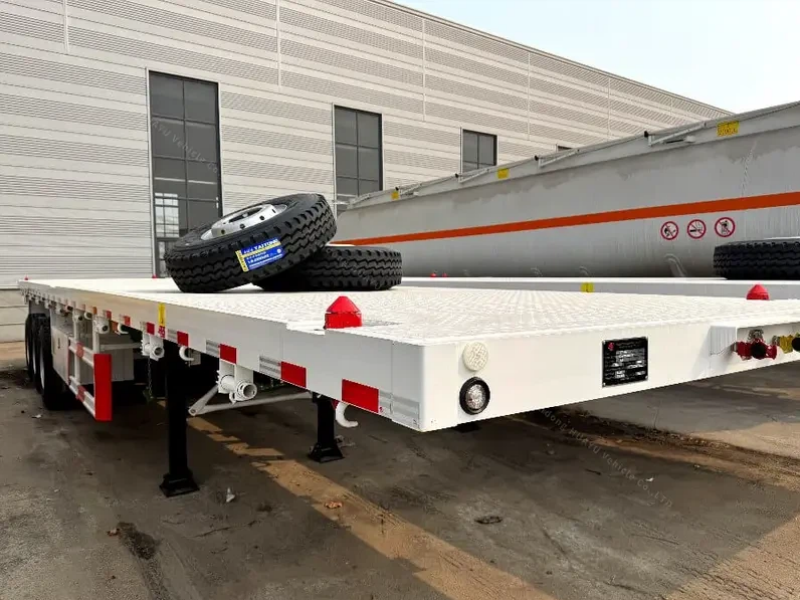
Though many trailers look similar, key specifications can greatly affect their performance and suitability for different types of freight.
A key feature of the 40FT flatbed trailer is the container lock system. These locks provide the flexibility to carry not only a single 40FT container but also two 20FT containers if needed. This adaptability allows for more flexible freight configurations, helping companies optimize their shipping strategy.
The surface of the 40FT flatbed trailer is another critical spec. A high-quality deck with anti-slip plates or patterned surfaces ensures that cargo stays in place during transport. The added friction prevents shifting, reducing the risk of damage during transit and making unloading easier. This specification is especially important for bulk cargo or materials that are prone to shifting.
When it comes to safety, a 40FT flatbed trailer must be equipped with a reliable braking system. Features like WABCO setups help ensure safe braking, particularly when carrying heavy loads. These systems improve braking performance, reduce wear, and enhance overall safety, especially in areas where road conditions may not be ideal.
The material used in the construction of a 40FT flatbed trailer is another consideration. High-strength steel like T700 offers enhanced durability and load-bearing capacity. This material choice is crucial for transporting heavy and long loads safely, providing the strength necessary to withstand the rigors of daily operations.
Long-term durability is a significant consideration when investing in a 40FT flatbed trailer, particularly if your operation involves traveling on rough or uneven roads.
To handle challenging road conditions, a 40FT flatbed trailer should feature suspension reinforcements. These reinforcements help ensure the trailer maintains stability, even when traveling on bumpy or unpaved roads. Ask about the trailer’s suspension system and how it has been designed to handle the specific demands of your operating environment.
Understanding the structural elements of a 40FT flatbed trailer can help buyers make more informed decisions. The main beam, side beams, and cross beams are crucial components that determine the trailer’s strength and durability. It’s important to choose a trailer that uses high-quality materials for these beams to ensure long-lasting performance.
Before making a purchase decision, it’s essential to have a clear understanding of your operational needs. This checklist will help you determine the most suitable trailer configuration for your business.
Consider the weight and size of the cargo you frequently transport. The 40FT flatbed trailer is versatile, but you’ll want to ensure that the deck length, axle configuration, and weight capacity align with your most common shipments.
The operational environment also plays a significant role in choosing the right flatbed trailer. Think about whether your operations are more focused on port delivery or site-specific transport, and whether you have the necessary turning space for a longer trailer.
Be sure to specify your preferences regarding axle brand, tire sizes, and suspension type. These details can significantly impact the trailer’s performance and longevity.
Use Case | Recommended Axle/Suspension Direction | Lock/Deck Features to Prioritize | Why It Reduces Total Cost |
Machinery Transport | Tandem Axles, Heavy-Duty Suspension | Container Locks, Anti-Slip Deck | Faster Loading, Less Damage |
Building Materials | Triple Axles, Reinforced Suspension | Custom Deck Size, Secure Tie-Downs | Improved Load Handling |
Bulk Cargo | Dual Axles, Durable Suspension | Open Deck, Enhanced Locking Mechanism | Flexible Freight Options |
A 40FT flatbed trailer offers the perfect balance between capacity and practicality, making it a popular choice for a wide range of industries. From machinery to bulk cargo, this trailer length can meet the demands of most daily operations while ensuring loading efficiency and long-term durability. At Shandong HUAYU Vehicle Co., Ltd., we specialize in providing top-quality flatbed trailers, including the 40FT flatbed trailer, to suit your business needs.
Contact Us today to discuss your cargo specifications and road requirements. We can help you select the ideal trailer configuration for your logistics operations.
Q1: What industries commonly use 40FT flatbed trailers?
A: Industries such as construction, machinery transport, and bulk cargo handling often use 40FT flatbed trailers for their ability to accommodate a wide range of cargo types.
Q2: How does a 40FT flatbed trailer enhance loading efficiency?
A: The open-deck design allows for loading from any direction, making it easy to use cranes, forklifts, or manual loading methods. This versatility reduces downtime during loading and unloading.
Q3: What should I consider when choosing a 40FT flatbed trailer?
A: Consider factors like cargo size, weight distribution, operational conditions, and road requirements. Choose a trailer that suits your most common freight patterns for optimal performance.
Q4: Are 40FT flatbed trailers safe for transporting heavy loads?
A: Yes, 40FT flatbed trailers are designed with reinforced suspension, high-strength materials, and secure tie-down systems to safely transport heavy loads over long distances.


