
Views: 0 Author: Site Editor Publish Time: 2025-12-31 Origin: Site


Transporting timber and logs requires a specialized approach to ensure safety, minimize damage, and comply with industry regulations. Flatbed trailers designed specifically for hauling logs—referred to as logs flatbed trailers—are equipped with features like uprights, stakes, and durable decks to secure these irregular loads effectively. This article will delve into the unique characteristics of logs flatbed trailers, explaining why proper design and securement techniques are essential to safe and efficient log transportation.
Logs are inherently different from standard freight due to their shape, size, and tendency to roll or shift during transport. Understanding these unique characteristics is key to selecting the right flatbed trailer and securement methods.
Logs are large, heavy, and often irregularly shaped, which means they are prone to rolling and shifting during transport. On a typical flatbed, these movements can cause cargo damage, risk accidents, and even compromise the stability of the trailer. Vibrations during transport only amplify these risks, making it crucial to secure logs properly to prevent unintended movement.
Even small mistakes in securing logs can lead to costly consequences, including damage to the logs themselves, the trailer, or other cargo. Additionally, improperly secured logs can cause significant downtime and create liability issues, particularly in industries like timber and construction, where the cost of delays can quickly escalate. A logs flatbed trailer equipped with the proper safety features minimizes these risks, ensuring safe transport and reducing potential liabilities.
A logs flatbed trailer is not just a standard flatbed with a few added features. To safely haul logs, the trailer must have specific features that accommodate their unique behavior during transport.
Uprights and stakes are essential to keeping logs in place and preventing them from rolling off the flatbed. These features act as barriers that contain the logs while allowing for easy loading and unloading. In some cases, removable uprights are an essential feature, especially when the trailer is used for multiple purposes. Being able to remove the uprights provides flexibility for different load types, such as containers or other long cargo.
The deck of a logs flatbed trailer needs to be sturdy and designed to handle the weight and shifting of logs. Operators should look for durable, high-traction decking material that provides adequate grip to secure the logs. This helps minimize the risk of logs sliding or shifting during transit. Additionally, a well-designed deck prevents wear and tear from the constant pressure of heavy logs, ensuring a longer lifespan for the trailer.
Hauling timber often involves traveling over rough or uneven terrain, especially in forestry or rural areas. The suspension system of a logs flatbed trailer plays a crucial role in ensuring the stability of the trailer and the logs it carries. A robust suspension system helps absorb shock, minimizing the risk of logs shifting and maintaining a smooth ride. It's important to select a trailer with a suspension system designed to handle the specific conditions of timber hauling.
Log securement is regulated by industry standards to ensure the safety of both the cargo and the driver. Understanding the correct methods and regulations can help prevent accidents and damage.
To secure logs on a flatbed trailer, it's common to use bunks, bolsters, or stakes that hold the logs in place. These features are designed to stabilize the logs and prevent shifting, especially when hauling long, heavy loads. A "solidly packed" stack means that the logs are packed tightly together with minimal movement, ensuring that they stay in place during transit. This stacking method reduces the risk of logs rolling or shifting, which can cause damage to the load or the trailer.
Each logs flatbed trailer has a working load limit (WLL) that indicates how much weight it can safely carry. When transporting logs, it's essential to understand the WLL and scale it appropriately with the load. Overloading the trailer can lead to accidents or damage, so it’s important to follow guidelines for load distribution and weight limits.
For operators, understanding complex regulations and requirements can be overwhelming. However, transforming these rules into a simple checklist makes the process much easier. Key items to include in a securement checklist are: ensuring the logs are tightly packed, using appropriate tie-downs and uprights, and confirming the trailer’s weight limit is not exceeded. By following a clear, easy-to-understand securement checklist, operators can ensure safe and compliant transport.
The way logs are loaded onto a logs flatbed trailer is just as important as how they are secured. Proper loading techniques can minimize movement and reduce the risk of damage during transit.
When preparing logs for loading, grouping them by diameter can help create a more stable base. Larger logs should be placed at the bottom of the stack, while smaller logs are placed on top. This method provides a solid foundation and reduces the risk of the load shifting during transport. Proper staging ensures that the logs are securely stacked before being tied down.
When wrapping logs for securement, the placement of the wrapper is key to ensuring that the logs stay in place. Incorrect placement can lead to uneven distribution of pressure, causing logs to shift or roll. It’s important to wrap the logs securely and consistently, making sure the wrap covers the entire stack to prevent any movement during transit.
Unloading logs from a logs flatbed trailer requires careful attention to safety. Sudden roll-outs can cause injury or damage to the logs. To prevent this, the unloading process should be slow and controlled. Ensuring the logs are properly secured and staged before unloading can reduce the risk of accidents.
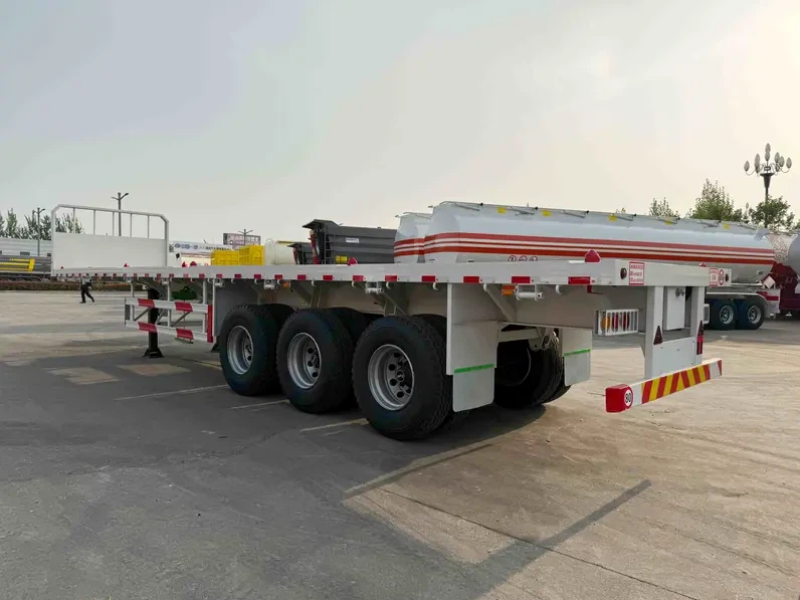
One of the standout features of HUAYU’s logs flatbed trailer is its versatility. With removable uprights and container-lock capabilities, this trailer can easily be adapted for different types of cargo.
For businesses that transport logs in the winter and containers in the summer, a logs flatbed trailer with removable uprights is an ideal choice. This multi-purpose flexibility helps reduce fleet costs by allowing operators to use the same trailer for different types of cargo throughout the year. The ability to switch between timber and containerized freight makes this trailer a versatile addition to any fleet.
Maintaining a logs flatbed trailer in forestry environments is essential for ensuring long-term durability and safe operations.
Key areas of a logs flatbed trailer that require regular maintenance include the locks, uprights, suspension, and tires. Over time, these components may wear out due to the heavy loads and rough conditions typical in timber hauling. Regular inspection and maintenance of these parts help ensure that the trailer remains in optimal working condition.
Forestry environments can be harsh, and exposure to the elements can lead to corrosion. It’s important to inspect the trailer regularly for signs of wear and corrosion. A simple maintenance routine, including cleaning and applying protective coatings to metal parts, can extend the life of the trailer and prevent costly repairs.
Risk Scenario (Rolling / Shifting / Unloading) | Feature That Controls It (Uprights, Locks, Tie-Down Plan) | Operator Check | What Failure Looks Like |
Rolling Logs During Transit | Removable Uprights, Secure Wrapping | Check upright placement | Logs shift, causing damage |
Shifting Loads in Transit | Proper Tie-Down Plan, Anti-Slip Deck | Verify load is secured | Logs move, increasing risk of accidents |
Unsafe Unloading (Roll-Outs) | Gradual Unloading Process, Proper Staging | Ensure safe unloading practices | Logs roll out, causing injury or damage |
When hauling timber and logs, safety isn’t just about payload capacity—it's about trailer design and securement practices. A logs flatbed trailer from Shandong HUAYU Vehicle Co., Ltd. offers the ideal solution for secure, efficient log transport. With features like removable uprights, strong decking, and versatile securement options, HUAYU’s timber flatbed trailer ensures that your logs are transported safely and effectively.
Contact Us today to discuss your timber transport needs and let us help you find the perfect logs flatbed trailer configuration for your business.
Q1: How does a logs flatbed trailer keep logs from rolling during transit?
A: The use of uprights and stakes, along with a solid tie-down plan, ensures that logs remain securely in place, preventing rolling during transport.
Q2: What are the key features of a logs flatbed trailer that ensure safety?
A: Key features include removable uprights, durable decking, anti-slip surfaces, and securement points for tie-downs.
Q3: Can a logs flatbed trailer be used for other types of cargo?
A: Yes, HUAYU’s logs flatbed trailer is versatile and can be adapted for transporting containers and other types of cargo thanks to its removable uprights and container lock capabilities.
Q4: What maintenance is required for a logs flatbed trailer?
A: Regular inspections of locks, uprights, suspension, and tires are essential to ensure the trailer remains in optimal working condition. Additionally, corrosion control should be part of routine maintenance.


