
Views: 0 Author: Site Editor Publish Time: 2025-07-22 Origin: Site


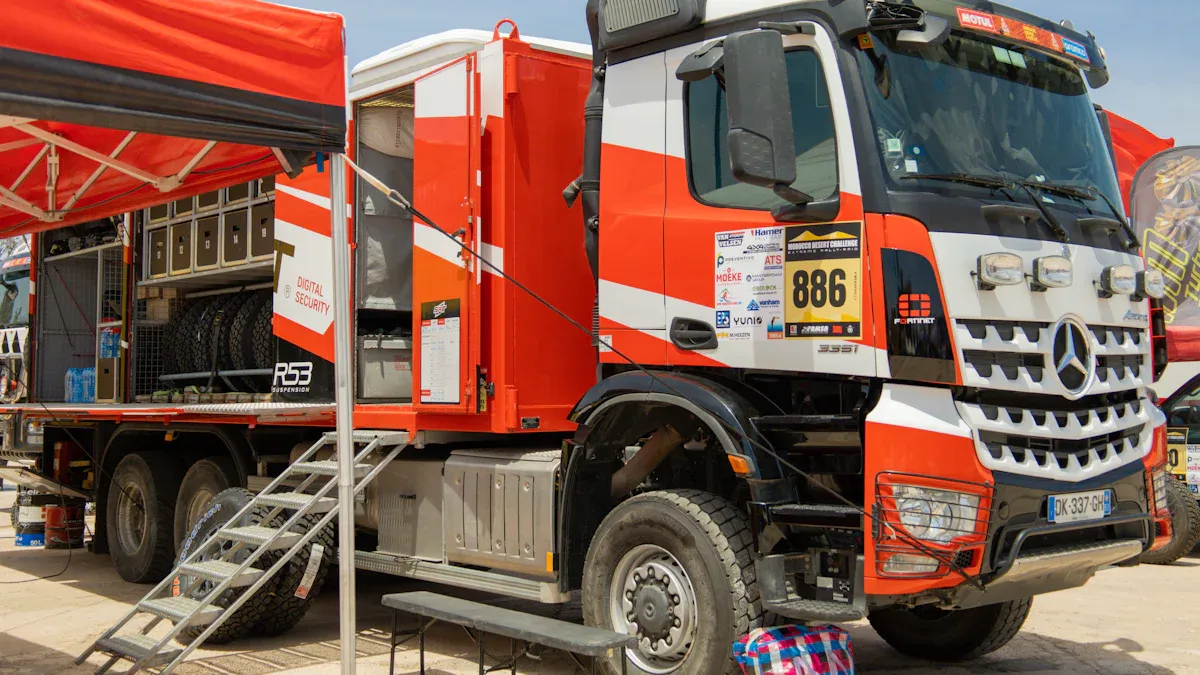
To reinforce a fence cargo trailer for heavy machinery, you must start with a thorough inspection. Safety remains critical because improper securing or unstable ground can cause equipment to overturn during loading or unloading. Many incidents happen when trailers face heavy loads, mechanical failures, or hazards at loading docks. You protect your investment and your team by choosing durable materials and ensuring every modification increases reliability. Always assess the trailer’s structure and capacity before making any changes.
Always inspect your trailer’s structure and capacity before making reinforcements to ensure safety and reliability.
Know your trailer’s weight limits and axle setup to avoid overloading and improve stability during transport.
Use high-strength steel or aluminum panels and add plywood backing to protect your cargo and trailer from damage.
Focus reinforcements on the frame, cross members, tongue, and corners to prevent flexing and increase durability.
Install braces and stabilizer jacks to support heavy loads and keep the trailer stable during loading and unloading.
Use heavy-duty ramps and secure tie-down points to load machinery safely and keep it firmly in place during travel.
Perform regular inspections and maintenance, checking welds, fasteners, and moving parts to keep your trailer in top condition.
Test your trailer with a real load after upgrades to confirm it handles weight safely and performs well on the road.
Before you reinforce your fence cargo trailer, you must assess its current capacity. This step ensures that your modifications will support heavy machinery safely and efficiently. Start by evaluating three critical areas: weight limits, structural integrity, and the axle and suspension system.
You should always know your trailer’s maximum load rating. This information is usually found on the manufacturer’s plate or in the owner’s manual. Exceeding this limit can cause frame failure or unsafe handling. For example, a 3-axle fence cargo trailer often supports up to 60 tons, while some models handle even more. The axle configuration plays a major role in load-bearing capacity. When you distribute weight across multiple axles, you reduce the risk of overloading a single axle and prevent deformation. This design also improves stability and safety during transport.
Tip: Always plan for the heaviest load you expect to carry. If you regularly haul machinery near the trailer’s maximum rating, consider upgrading to a higher-capacity model or reinforcing key components.
Next, examine the trailer’s frame and body for any signs of weakness. Common structural issues include flexible bolted connections, weak corners, and intersections of beams. You can detect these problems by performing a simple flex test—stand or jump on a corner and watch for excessive movement. Pay close attention to intersections where cross members meet and where the tongue attaches to the frame. These areas often experience the most stress and may require additional reinforcement, such as gussets or angle braces.
Frequent weak points:
Bolted connections
Corners and beam intersections
Cross member junctions
Tongue mounting points
Identifying these weaknesses before you begin reinforcement helps you target the most vulnerable spots and ensures a safer, more reliable trailer.
The axle and suspension system form the backbone of your trailer’s load-bearing ability. A well-designed system, such as the air suspension found in Shandong HUAYU’s fence cargo trailer, absorbs road shocks and distributes weight evenly. Tri-axle and multi-axle configurations balance loads, reduce tire wear, and improve impact resistance. This setup prevents permanent deformation and increases the trailer’s operational lifespan. Always inspect axles for signs of wear or damage and check that the suspension system operates smoothly.
Note: If you notice uneven tire wear or sagging, address these issues before adding reinforcements. A strong axle and suspension system is essential for safe heavy machinery transport.
You need to define your load goals before you start any reinforcement work. Begin by identifying the heaviest machinery or equipment you plan to transport. Write down the maximum weight, size, and type of cargo. This information helps you determine the level of reinforcement required. If you expect to carry loads near the upper limit of your trailer’s rating, plan for extra strength. Consider future needs as well. You may want to transport heavier or larger equipment later. Setting clear load goals ensures your upgrades will meet both current and future demands.
Tip: Always round up your load estimates. This approach gives you a safety margin and reduces the risk of overloading.
Choosing the right materials is crucial for effective reinforcement. High-strength steels, with yield strengths between 80,000 psi and 130,000 psi, provide excellent strength-to-weight ratios. These steels allow you to build lighter frames that still support heavy loads. Standard steels, with lower yield strengths, do not offer the same benefits. You can also consider composites for reinforcement. Composites have the highest strength-to-weight ratios available. They offer durability, corrosion resistance, and design flexibility. However, composites require specialized design and manufacturing. Most trailer builders use high-strength steel because it is widely available and cost-effective. When selecting materials, think about your budget, the tools you have, and the skills required for installation.
You must focus your reinforcement efforts on the most critical parts of your trailer. These areas handle the most stress during heavy machinery transport. The following table highlights the main zones and their reinforcement details:
| Critical Area | Reinforcement Details |
|---|---|
| Frame | Use heavy-duty designs with thick flanges and high-strength steel for the main beam |
| Side Beams | Install 16# channel steel for added support |
| Floor | Ensure the cargo box floor can support concentrated loads |
| Fence Panels | Reinforce panels to withstand impacts and secure cargo |
| Axles | Use robust axles rated for heavy loads |
| Suspension | Upgrade to strong mechanical or air suspension systems |
| Braking System | Check for multiple air chambers to ensure reliable stopping power |
| Additional Features | Consider adjustable sidewalls and container locks for secure transport |
Pay special attention to the frame, axles, and suspension. These components bear the brunt of heavy loads. Reinforcing fence panels and side beams helps protect your cargo and maintain trailer integrity. Upgrading the braking system and adding secure locks further improves safety. By targeting these key areas, you create a trailer that can handle the demands of heavy machinery transport.
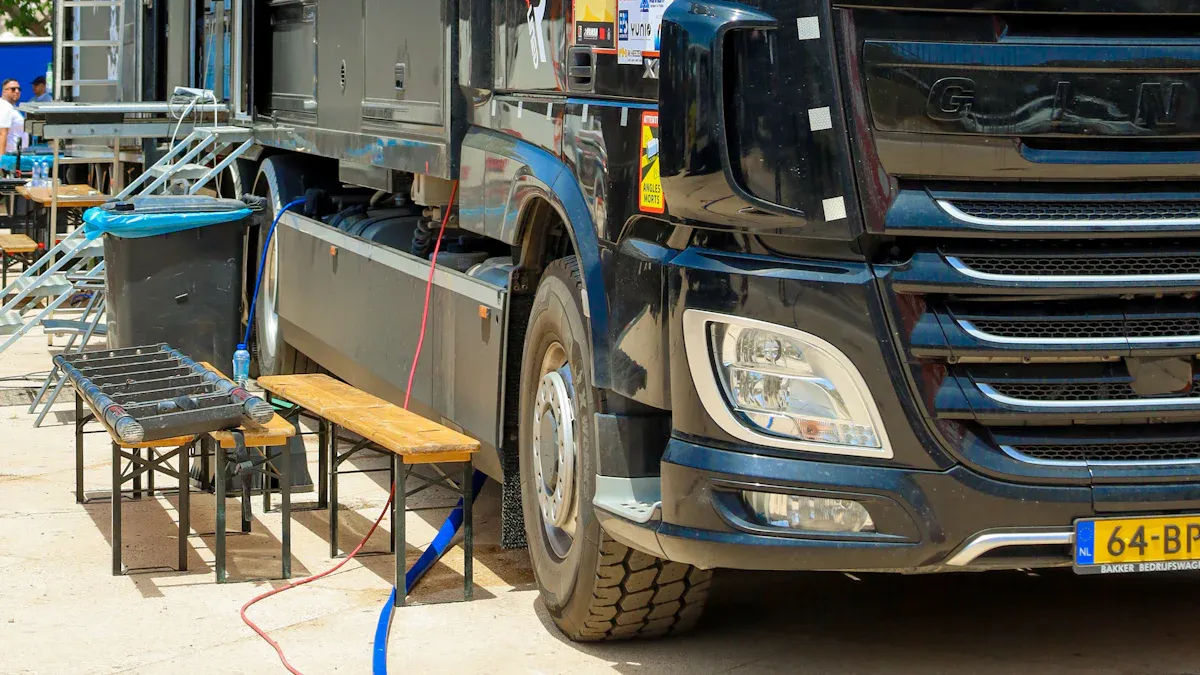
Reinforcing the frame stands as the most critical step when preparing your trailer for heavy machinery. A strong frame prevents flex, resists fatigue, and ensures safe transport under demanding conditions. You should focus on three main areas: strengthening beams, upgrading cross members, and reinforcing the tongue.
The main beams carry the majority of the load. Weak beams can cause the trailer to sag or even fail under stress. You can use several proven methods to increase their strength and durability.
Square tubing offers excellent rigidity and resists twisting forces. You can weld square tubing along the length of the main beams to boost their load-bearing capacity. Tube gussets, which use closed-section beams, provide maximum stiffness in multiple directions. This method works especially well for longer spans and areas that experience high torsion. When you add square tubing, you create a more robust structure that handles heavy machinery with confidence.
Gussets and angle braces come in many forms:
Flat plate gussets fit short spans and tight spaces.
Flanged flat gussets work well for bolt-together joints.
Vertical flat gussets add twisting rigidity.
L-angle gussets (angle iron) provide stiffness over longer spans.
Tube gussets deliver the highest strength for both vertical and torsional loads.
You should always seal seams properly to prevent corrosion between stacked or welded beams. Corrosion can weaken the reinforcement over time.
Welding plays a vital role in frame reinforcement. Welded joints provide greater stiffness and strength compared to bolted connections. You should use stitch welds every few inches rather than full-length welds when stacking beams. This approach increases strength efficiently and reduces the risk of warping the metal. Always ensure that your welds penetrate fully and bond the reinforcement securely to the original frame. Poor welds can create weak points and compromise safety.
Tip: Test the frame for flex by applying pressure at the corners. If you notice movement, reinforce those areas first. Corners and intersections are usually the most flexible and weakest parts of the frame.
Cross members support the floor and distribute weight across the trailer. Strengthening these components increases vertical load capacity and improves torsional stiffness. You can sister cross members by welding new beams next to the originals. This method roughly doubles their load capacity if the new beams match or exceed the originals. Adding torque tubes also helps resist twisting forces, reducing the risk of fatigue failures.
Key benefits of upgrading cross members:
Enhanced vertical load support
Improved resistance to frame twisting
Reduced risk of fatigue cracks
Engineering studies show that adding cross members and torque tubes significantly increases the trailer’s ability to handle heavy machinery. These upgrades help redistribute internal forces and slow crack growth, extending the life of your trailer.
The tongue connects the trailer to your towing vehicle. It experiences high stress, especially during starts, stops, and turns. Reinforcing the tongue ensures safe towing and prevents dangerous failures.
You should weld additional plates or gussets at the tongue mounting points. Focus on areas where the tongue meets the main frame. Vertical flat gussets and L-angle gussets work well for these joints. Reinforcing gooseneck or dovetail joints also increases overall frame stiffness. Always check for cracks or signs of fatigue before and after reinforcement.
Note: Calculating load capacity and stress points is essential. Simply adding material without proper analysis may not provide the desired strength. Use targeted reinforcement based on observed flex and stress.
By following these steps, you create a frame that resists flex, handles heavy machinery, and stands up to years of demanding use. Engineering research confirms that targeted reinforcement, especially at corners, intersections, and high-stress areas, dramatically improves trailer durability and safety.
Upgrading the panels on your fence cargo trailer is essential when you plan to transport heavy machinery. Strong, well-designed panels protect your cargo, improve safety, and extend the life of your trailer. You need to focus on material selection, panel height, and secure attachment methods to achieve the best results.
Selecting the right materials for your trailer panels ensures that your fence cargo trailer can handle the demands of heavy machinery transport. You should prioritize materials with high tensile strength, corrosion resistance, and adaptability.
High-strength steel and aluminum alloy panels offer excellent durability and load-bearing capacity. Steel panels provide superior tensile strength, making them ideal for supporting heavy loads. Aluminum alloy panels, while lighter, still deliver impressive strength and resist corrosion. Many manufacturers, such as Shandong HUAYU Vehicle Co., Ltd., use these materials to build customizable and robust fence cargo trailers. Their panels often feature anti-corrosion coatings, which help maintain performance in harsh environments.
Here is a comparison of important material properties to consider:
| Material Property | Description |
|---|---|
| Tensile Strength | Panels made from high-tensile steel or carbon steel support loads up to 60+ tons. |
| Material Options | Galvanized steel, aluminum alloy, or composites suit different cargo types and budgets. |
| Corrosion Resistance | Anti-corrosion coatings protect panels in coastal or chemical environments. |
| Side Wall Design | Removable or extendable steel side walls (1,000mm–1,500mm) prevent cargo shifting. |
| Structural Reinforcement | Reinforced chassis and dual axles improve stability and weight distribution. |
| Safety Features | Integrated braking systems and anti-rollover safeguards enhance safety. |
| Adaptability | Modular, customizable panels and foldable designs simplify loading and unloading. |
Tip: Choose steel for maximum strength or aluminum for a lighter trailer with good corrosion resistance. Always match your material choice to your specific cargo and operating environment.
Layering plywood behind metal panels adds another level of reinforcement. Plywood distributes impact forces and prevents dents or punctures from shifting machinery. You should use 3/4-inch plywood for optimal strength. Secure the plywood to the trailer’s frame or studs to create a solid backing for your panels. This method works especially well if you need to reinforce thin trailer walls or want extra protection for sensitive cargo.
Panel height plays a critical role in the safety and stability of your fence cargo trailer. You need to select the right height based on your cargo and transport requirements.
Lower panel heights reduce the trailer’s center of gravity, which increases stability and lowers the risk of rollovers.
Adjustable or extendable side walls allow you to adapt the trailer for different cargo sizes.
Removable panels make loading and unloading easier, especially for oversized machinery.
Proper panel height helps you comply with road clearance regulations and prevents accidental damage during transport.
Some advanced trailers, like those from Shandong HUAYU Vehicle Co., Ltd., offer modular side wall designs. You can adjust the height from the standard 1,000mm up to 1,500mm, giving you flexibility for various loads.
Note: Lowering the trailer floor or using ramp extensions can also reduce the loading angle, making it safer to load heavy equipment.
You must attach your panels securely to ensure the safety and integrity of your fence cargo trailer. Proper attachment methods prevent panels from loosening or detaching during transport.
Align rails with as many studs as possible to maximize strength.
Use screws (#12 or #14) for simple installations or bolts (¼”) for a stronger hold when you have access to both sides.
Space fasteners every 8-10 inches between studs for consistent support.
Reinforce thin trailer walls by installing 3/4-inch plywood backing secured to studs.
Use E-Track backing plates every 2-4 feet if studs are spaced far apart. This distributes the load and strengthens the attachment.
For aluminum trailers, place a rubber pad or bedliner between metals to prevent corrosion.
Ensure screw length is sufficient to grip studs without puncturing the trailer’s outer skin.
Tip: Always inspect attachment points before each trip. Tighten any loose fasteners and check for signs of wear or corrosion.
By choosing strong materials, adjusting panel height, and securing attachments properly, you create a fence cargo trailer that stands up to the demands of heavy machinery transport. Shandong HUAYU Vehicle Co., Ltd. offers customizable solutions that let you tailor your trailer to your exact needs, ensuring durability, safety, and long-term value.
You increase the structural integrity of your trailer by installing braces in key locations. Braces help distribute stress and prevent the frame from twisting under heavy loads. Diagonal steel braces work well for connecting the main beams to the side rails. You can weld or bolt these braces into place for maximum strength. Stainless steel corner braces, commonly used in fencing, also provide essential support. When you fasten these braces at the corners, you prevent sagging and leaning, which boosts lateral stability and durability. This method, proven in fence construction, applies effectively to trailers as well.
Tip: Always use corrosion-resistant hardware for braces. This choice extends the lifespan of your reinforcements, especially if you operate in wet or coastal environments.
Corners experience the highest stress during loading, unloading, and transport. You should reinforce these areas with heavy-duty gussets or angle brackets. Stainless steel corner braces stand out as a reliable option. They anchor the corners, stop unwanted movement, and keep the trailer square. You can install these braces using bolts or welds, depending on your trailer’s design. For best results, check each corner for flex after installation. If you notice any movement, add additional bracing until the structure feels rigid.
Key steps for reinforcing corners:
Inspect each corner for cracks or signs of fatigue.
Attach stainless steel corner braces securely.
Test for movement after installation.
Stabilizer jacks provide crucial support when you load or unload heavy machinery. These jacks prevent the trailer from tipping or shifting, especially on uneven ground. You should select jacks with a static load capacity that matches or exceeds your heaviest cargo. Many industrial models, such as the Vestil series, offer capacities up to 100,000 lbs. The TS-5000 Trailer Stabilizer supports up to 140,000 lbs and features a wide top plate for extra stability. This design covers most of the trailer width, making it ideal for uneven or heavy loads. It also meets OSHA regulations, ensuring safety and compliance.
| Stabilizer Jack Model | Style Type | Height Range (inches) | Static Load Capacity (lbs) |
|---|---|---|---|
| Vestil SP-TOP-BEAM-100 | Spin Top Beam | 40 to 51 | 100,000 |
| Vestil H-LO-J-BEAM | Hydraulic Beam | 41 to 47 | 100,000 |
| Vestil CJ-BEAM-SN | Hand Crank | 41 to 55 | 100,000 |
| Vestil CJ-BEAM-PN | Hand Crank | 41 to 55 | 100,000 |
| Vestil SJ-40 Economy | Flat Base Economy | 44 to 51 | 50,000 |
| Vestil LO-J Ratchet | Ratchet Style | 39 to 51 | 100,000 |
| Vestil HI-J Ratchet | Ratchet Style | 45 to 57 | 100,000 |
| Vestil SJ-35-EF | Economy Style | 41 to 57.5 | 50,000 |
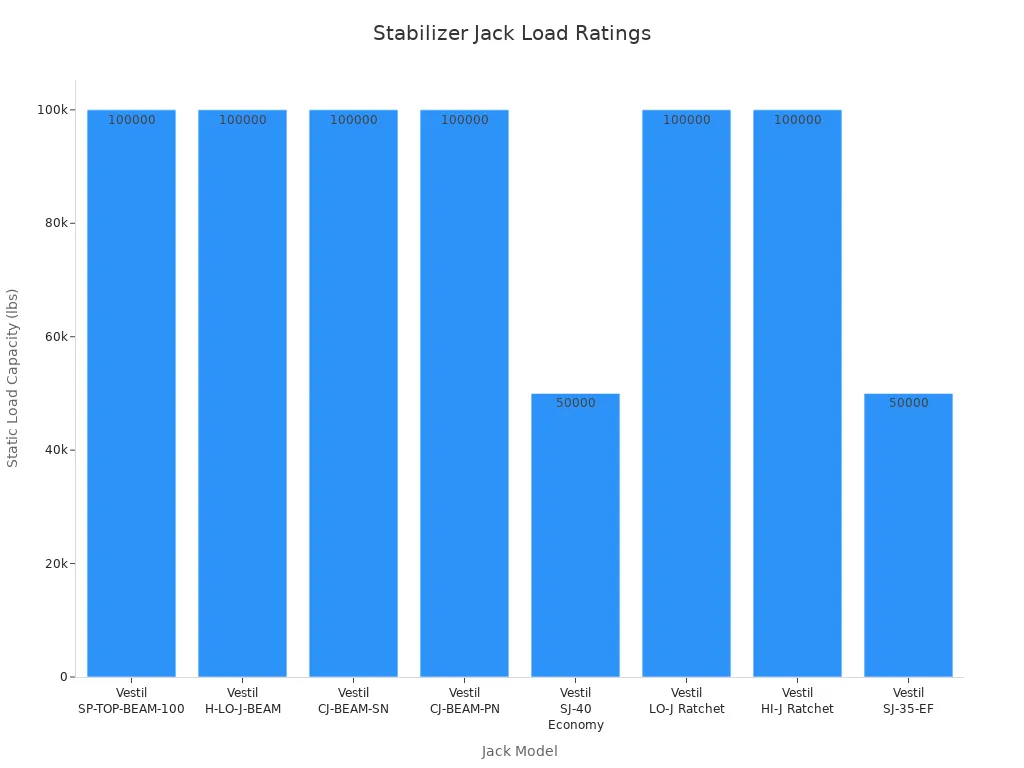
Note: Always position stabilizer jacks on solid, level ground. Double-check that each jack locks securely before you begin loading or unloading.
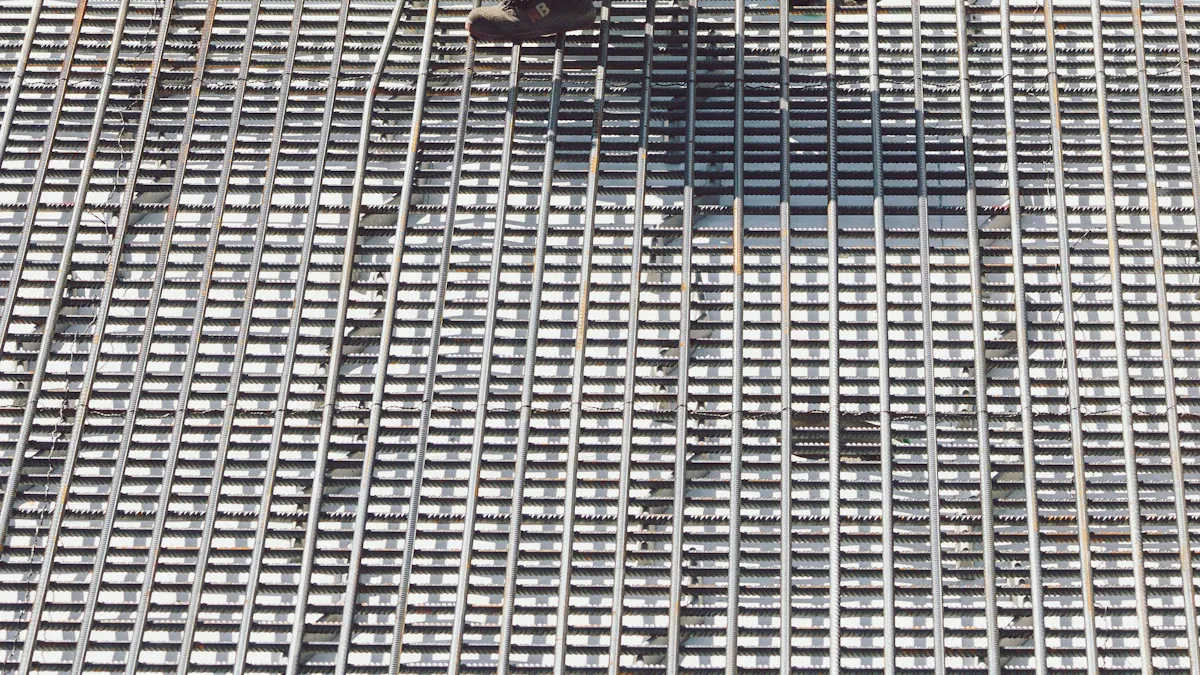
You need reliable ramps when loading heavy machinery onto your trailer. Heavy-duty ramps support large weights and provide a safe, stable path for equipment. Choose ramps with the right specifications for your operation. The table below outlines recommended features for heavy-duty ramps:
| Feature | Specification/Benefit |
|---|---|
| Length | Up to 36 feet |
| Height Adjustment | 38 to 65 inches |
| Width Options | 70 or 84 inches |
| Weight Capacity | 16,000 to 35,000 pounds (steel or aluminum) |
| Safety Curbs | 7-inch curbs prevent accidental roll-off |
| Surface | Steel grating for traction in all weather |
| Hydraulic Pump | Single-cylinder for faster lift times |
| Positioning Sleeve | 180-degree rotation for precise placement |
| Lip | 15-inch lip prevents ramp movement during use |
| Tires | 18-inch solid filled pneumatic, maintenance-free |
| Hydraulic Cylinder | Central location reduces tipping risk |
| Safety Chains/Brackets | Secure ramp to trailer or dock |
Tip: Always inspect ramps before use. Check for cracks, loose parts, or worn surfaces. Secure the ramp with chains and brackets to prevent shifting during loading.
Proper tie-downs keep your machinery secure during transport. You must use the correct number and type of tie-downs, and position them for maximum stability. Follow these best practices:
Use at least four tie-downs for equipment over 10,000 pounds.
Attach two tie-downs to the front corners and two to the rear corners of the load.
Only use manufacturer-designated tie-down points to avoid damaging your equipment.
Ensure the combined Working Load Limit (WLL) of all tie-downs is at least 50% of the equipment’s weight.
Match chain grades and hook binders, and check that all hardware is compatible.
Apply tie-downs with downward force, keeping them straight and tight.
Remove slack by wrapping excess chain around links.
Inspect tie-downs within the first 50 miles and at regular intervals during your trip.
Note: Additional tie-downs may be needed for specialized equipment or attachments. Always inspect chains and straps for wear before each trip.
Wheel chocks prevent your machinery from moving while parked or during loading and unloading. Select chocks that match your tire size and equipment weight. Never use makeshift items like rocks or lumber. Follow these steps for safe chocking:
Choose chocks designed for your vehicle and wheel diameter.
Use chocks in pairs, placing them snugly against the tire tread.
On level ground, chock both the front and back of a single wheel.
On slopes, place chocks downhill from the tires—front for downhill, rear for uphill.
For free-standing trailers, chock both left and right rear axle wheels, both in front and behind.
Always set the parking brake before placing chocks.
Inspect chocks regularly for damage and replace them if needed.
Safety Reminder: OSHA requires chocking wheels during loading and unloading. Store chocks securely on your trailer to prevent loss or damage.
Before you move any heavy machinery, you must inspect all reinforcements on your trailer. A thorough inspection helps you catch issues early and ensures safe operation. Follow these steps for a systematic check:
Look closely at the frame, crossmembers, and structural supports. Search for cracks, bends, corrosion, or any damage that could weaken your reinforcements.
Test moving parts like landing gear and ramps. Make sure they work smoothly and show no signs of stress or failure.
Use a flashlight to check hard-to-see areas, especially under the trailer. Wear safety gear to protect yourself during the inspection.
Work through a detailed checklist. This helps you cover every critical point, from fasteners to body attachments.
Record your findings. You can use a paper checklist or a digital tool to keep track of inspections and repairs.
Check the trailer’s status at the end. Decide if it is safe to use or if you need to make repairs.
Repeat these inspections before every use and as part of your daily routine. Schedule monthly or annual checks based on how often you use your trailer.
Tip: Always confirm that inspection stickers and registration are up to date. This keeps you compliant with safety regulations.
After you inspect your reinforcements, you need to test the trailer with a load. This step verifies that your upgrades work as intended and that the trailer can handle the weight safely.
Start by loading equipment that matches your expected maximum weight. Place the load evenly across the trailer bed.
Watch for any flexing, sagging, or unusual noises as you load and secure the cargo.
Check that all tie-down points, ramps, and stabilizer jacks hold firm under pressure.
Drive the trailer a short distance at low speed. Listen for rattles or shifting, and stop to inspect the frame and reinforcements again.
If you notice any problems, unload the trailer and address the issue before using it for transport.
Note: Testing with a real load gives you confidence that your trailer is ready for heavy-duty work.
Regular maintenance keeps your trailer strong and reliable. You protect your investment and extend the life of your reinforcements by following a consistent routine. Use this table to guide your maintenance schedule:
| Maintenance Task | Description |
|---|---|
| Inspect Frame Members | Check all frame parts, bolts, and rivets. Replace damaged or worn components. |
| Inspect Welds | Examine welds for cracks or weakness. Repair as needed to keep the structure sound. |
| Lubricate Hinges and Doors | Apply lubricant to hinges and doors to prevent rust and reduce friction. |
| Grease Bearings | Grease wheel bearings every six months or as recommended to avoid wear and overheating. |
| Clean Trailer | Remove dirt and debris after each use to prevent rust and damage. |
You should also lubricate moving parts like couplers and suspension components. Check seals and weatherstripping to keep water out of structural areas. Repack wheel bearings every 20,000 kilometers or once a year. Schedule a professional inspection at least once a year. Experts can spot issues you might miss and help you fix them before they become serious.
️ Consistent maintenance ensures your trailer stays safe and ready for every job.
You can reinforce your fence cargo trailer by focusing on strong materials, strategic bracing, and secure attachments. Regular inspections and maintenance keep your trailer safe and reliable. Industry leaders achieve success by customizing features, planning loads, and using advanced suspension systems. Professional welding services deliver long-term durability and compliance with safety standards. If you want proven performance and robust construction, consider Shandong HUAYU Vehicle Co., Ltd. Their reinforced frames, high-strength steel, and adaptable suspension options set them apart in heavy machinery transport.
You should use high-strength steel for maximum durability. Aluminum alloy works well if you want a lighter trailer with good corrosion resistance. Always match your material choice to your cargo and operating environment.
Inspect your trailer before every use. Schedule a thorough inspection monthly if you use it frequently. Annual professional inspections help you catch hidden issues and maintain safety.
You can handle basic reinforcements if you have welding and fabrication skills. For complex upgrades or heavy-duty use, hire a professional. This ensures structural integrity and compliance with safety standards.
Watch for signs like frame flexing, sagging, or cracks. If you notice uneven tire wear or shifting panels, your trailer may need additional reinforcement. Always address these issues before transporting heavy machinery.
Air suspension improves ride quality and protects your cargo from road shocks. You get better weight distribution and reduced tire wear. This system also increases the trailer’s lifespan and safety.
Select jacks with a static load capacity that matches or exceeds your heaviest cargo. Look for models with wide top plates and secure locking mechanisms. Always position jacks on solid, level ground.
Plywood adds impact resistance and prevents dents or punctures from shifting machinery. It distributes force across a larger area, protecting both your cargo and the trailer’s structure.
Yes, you can customize your trailer with reinforced frames, adjustable side walls, and specialized tie-down points. Brands like Shandong HUAYU Vehicle Co., Ltd. offer OEM and ODM services for tailored solutions.


