
Views: 0 Author: Site Editor Publish Time: 2026-01-06 Origin: Site


A skeleton trailer is purpose-built for the fast-paced world of container transport. Designed to handle containers in port and warehouse environments, this specialized trailer is an essential tool for logistics companies looking to optimize efficiency, reduce downtime, and improve container handling speed. In this article, we’ll break down the core features that make skeleton trailers ideal for container moves and show you how to spec them for maximum throughput and durability.
To understand the advantages of a skeleton trailer, it's important to first understand what it is and what it isn't.
A skeleton trailer is a type of flatbed trailer designed specifically for transporting shipping containers. Unlike traditional flatbed trailers, a skeleton trailer is equipped with a minimal frame that accommodates container locks, allowing for quick and secure loading and unloading. This trailer is used in ports, logistics parks, and warehouse shuttle services, making it essential for businesses that handle large volumes of containerized freight.
While a skeleton trailer is optimized for containers, it is not designed for general cargo transport. The open frame structure lacks the versatility of a flatbed trailer, which can be used for a wide range of cargo types. Therefore, flatbed trailers still play an important role in industries that require flexibility to handle different types of loads beyond standardized containers.
When it comes to port and warehouse operations, skeleton trailers have distinct advantages over flatbeds.
One of the primary reasons skeleton trailers are favored in port environments is their ability to reduce unnecessary overhead and handling time. Unlike flatbeds, which have to accommodate a full deck for general cargo, skeleton trailers are optimized for containers. Their minimal design eliminates the need for extra deck space, allowing for faster handling and quicker turnaround times in busy port environments.
If your operations primarily involve containerized freight, a skeleton trailer is the best choice. Its design is perfectly suited for carrying standard container sizes, including 20ft, 40ft, and sometimes 45ft containers. The repeatability of handling standardized containers means that skeleton trailers can be loaded and unloaded with greater consistency, reducing variability and increasing overall efficiency.
Before purchasing a skeleton trailer, it’s essential to confirm compatibility with the types of containers you handle.
The first consideration is container size compatibility. Skeleton trailers are designed to support various container lengths, but buyers must ensure that the trailer configuration aligns with their container types. Whether you handle 20ft, 40ft, or 45ft containers, it's critical to choose a trailer that offers the right locking systems and frame dimensions for the container sizes you most commonly work with.
The lock system on a skeleton trailer plays a crucial role in reducing manual intervention time. A well-designed locking system ensures that containers are securely held in place without the need for excessive manual adjustments. This is particularly important in high-volume operations, where speed is of the essence. A trailer optimized for fast handling minimizes the time spent on securing and releasing containers, thus improving operational throughput.
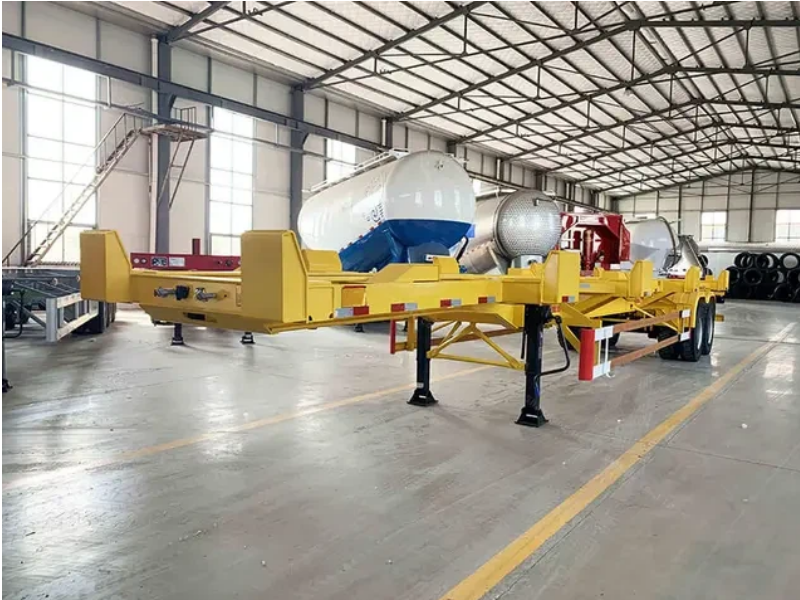
For operations in port environments, speed is everything. Certain features on a skeleton trailer can help maximize throughput, reducing bottlenecks and delays during container movements.
One of the most critical features that improve throughput is the container lock system. An optimized locking system ensures that containers are quickly and securely fastened to the trailer with minimal manual effort. Skeleton trailers with efficient lock designs reduce the time spent on loading and unloading, allowing for faster operations and higher turnover rates.
In environments where containers are frequently loaded and unloaded, the skeleton trailer must be able to withstand repeated impacts. Spring damping systems help absorb the shock during container placement and removal, ensuring smoother handling and reducing the risk of damage. This feature is especially important in busy ports where handling efficiency and container protection are paramount.
The choice of suspension system is another key factor in maximizing throughput. For skeleton trailers, mechanical suspensions are commonly used for their durability and performance under heavy loads. However, depending on your route pattern and the terrain, you may also want to consider other suspension options that offer better ride stability, particularly for longer distances or rougher surfaces.
When selecting a skeleton trailer, it’s essential to consider specific features that will align with your operational needs. Here’s a checklist to ensure you’re getting the right configuration for your business.
Dimensions: Ensure that the trailer’s frame and locking system can accommodate the container sizes you regularly handle.
Load Rating: Choose a trailer with a suitable load rating for the typical weight of the containers you carry.
Axle Capacity: Verify the axle capacity to ensure the trailer can support the weight distribution of the containers.
Tire Type: Opt for durable tires designed to handle the stress of container transport, especially if you operate in harsh conditions.
Landing Gear Brand: The landing gear must be reliable and capable of handling the weight of containers during loading and unloading.
When reaching out to sales, make sure to provide key information such as:
The types of containers you typically transport (e.g., 20ft, 40ft, etc.).
The average distance covered by your routes (short-haul vs. long-haul).
The condition of the yard surfaces, as this affects suspension and tire wear.
Skeleton trailers are designed for specific workflows that involve short-haul container circulation. Let’s look at typical use cases.
In ports and logistics parks, skeleton trailers reduce dwell time by providing faster turnaround times. The design minimizes the time needed for loading and unloading, which is critical in environments where every minute counts. By improving efficiency, skeleton trailers help speed up container circulation, ensuring that containers move quickly from one point to the next.
While skeleton trailers are perfect for containerized freight, there are situations where you may need to handle mixed loads. If your work includes a combination of container and non-container cargo, you may need to consider a flatbed trailer instead. A flatbed offers greater flexibility for various types of loads, while a skeleton trailer excels in standardized container handling.
Operation Type (Port Shuttle / Inland Depot / Mixed Route) | Best-Fit Skeleton Configuration | Lock/Suspension Priority | Expected Efficiency Gain |
Port Shuttle | 20ft, 40ft Skeleton Trailer | Optimized container locks, Spring damping | Reduced handling time, quicker turnaround |
Inland Depot | 20ft, 40ft Skeleton Trailer | Heavy-duty suspension, Durable tires | Improved stability, faster loading/unloading |
Mixed Route | Flatbed Trailer | Flexible tie-downs, Standard locks | Enhanced load variety, better operational flexibility |
When containerized freight is a core part of your business, a skeleton trailer is the best tool for the job. Designed to optimize container handling, increase throughput, and reduce downtime, skeleton trailers offer unmatched efficiency for port and warehouse operations. At Shandong HUAYU Vehicle Co., Ltd., we specialize in high-quality, customizable skeleton trailers that are built to meet your operational needs. Contact us today to discuss how we can tailor a skeleton trailer configuration that fits your business perfectly.
Q1: What is a skeleton trailer?
A: A skeleton trailer is a flatbed trailer designed specifically for carrying standardized shipping containers. It is commonly used in port environments for efficient container handling.
Q2: What are the benefits of using a skeleton trailer for container transport?
A: Skeleton trailers provide faster container handling, reduced overhead, and increased efficiency in port and warehouse environments.
Q3: What container sizes can a skeleton trailer accommodate?
A: Skeleton trailers typically accommodate 20ft, 40ft, and sometimes 45ft containers, depending on the configuration.
Q4: How can I ensure the skeleton trailer meets my needs?
A: Consider factors such as container types, route distance, and yard surfaces when selecting a skeleton trailer. Consult with your sales team to ensure you get the right configuration for your operations.


