
Views: 0 Author: Site Editor Publish Time: 2026-10-08 Origin: Site


Every minute a truck sits idle at a concrete batching plant eats directly into project margins. Imagine arriving at a bustling construction site where the silo is waiting for a critical delivery. Delays, dust clouds, and clogged pipes are not just minor nuisances. They are absolute profit killers.
A well-engineered bulk powder transport vehicle solves these bottlenecks directly. By leveraging advanced pneumatic systems and optimized tank geometry, these units drastically improve discharge efficiency. This comprehensive guide breaks down exactly how to transform a sluggish unloading process into a rapid, streamlined operation from a frontline engineering perspective.
A bulk cement tanker trailer is a specialized commercial transport vehicle engineered for the safe, sealed, and highly efficient transit of dry bulk powders. These moisture-sensitive materials typically include cement, lime, fly ash, and industrial flour. The primary purpose of this heavy-duty equipment is to move massive volumes of cargo from manufacturing plants to active construction zones without ever exposing the product to environmental elements.
Historically, transporting and unloading dry bulk materials required intensive manual labor or agonizingly slow mechanical conveyor systems. These antiquated methods were notorious for material spillage and severe dust pollution. Lengthy unloading times frequently bottlenecked supply chains. Consequently, the heavy transport industry underwent a massive shift toward modern pneumatic systems.
By utilizing compressed air rather than mechanical belts, pneumatic trailers offer a completely enclosed unloading process. This method is significantly faster and drastically cleaner. Furthermore, it requires minimal physical intervention from the human operator. While predominantly associated with the construction sector, these trailers boast remarkable versatility. The agricultural industry relies heavily on them for moving bulk flour and animal feed across vast distances. Chemical manufacturing plants also utilize these sealed trailers to transport dry chemical powders safely, ensuring hazardous materials remain entirely uncontaminated during transit.
Understanding the science behind pneumatic unloading is crucial for optimizing the process. Instead of relying on augers, this system replaces mechanical force with sheer air pressure. An engine-driven or Power Take-Off air compressor generates high-pressure air, which is then forced into the sealed tank. This action creates a powerful pressure differential. The air pushes the dry bulk material out through a discharge pipeline, propelling it upward into a towering storage silo.
The true magic of pneumatic discharge lies hidden within the fluidization process. At the very bottom of the tank sits a specialized fluidization bed. This bed is carefully covered with a permeable synthetic canvas. During operation, compressed air is pumped into a chamber directly beneath this cloth. As the pressurized air forces its way upward through the microscopic pores of the canvas, it permeates the densely packed cement powder resting heavily above it.
When the compressed air mixes intimately with the powder, it physically separates the individual microscopic particles. This separation drastically reduces the internal friction between the particles themselves and the steel walls of the tank. As a result, the dry bulk cement begins to behave exactly like a fluid. This liquid-like state allows the heavy, stubborn powder to flow effortlessly toward the lowest point of the tank. From there, it is easily caught by the air stream and pushed out through the discharge pipe.
Fluidization merely makes the material flowable. Pressure provides the kinetic muscle to actually move it. Building and maintaining the correct internal pressure is the driving force behind the entire operation. The system must build enough internal pressure to overcome the severe resistance of the discharge hose and the vertical height of the receiving silo. Maintaining a steady, unwavering pressure ensures a continuous flow of material, preventing sudden blockages that can halt a job site in its tracks.
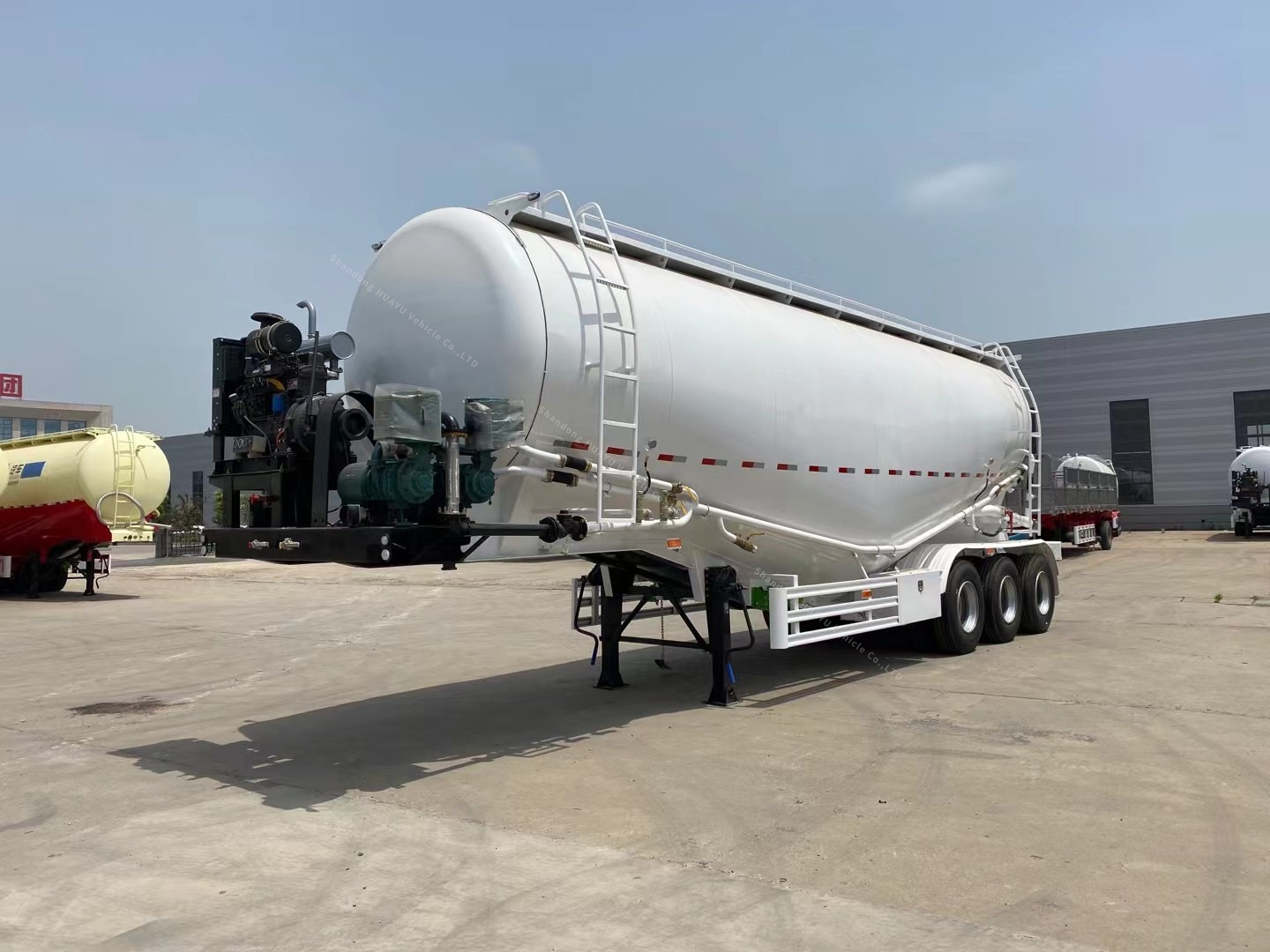
The structural geometry of the tank plays a critical role in discharge efficiency. Over the years, the V shape cement tanker trailer has firmly established itself as the industry standard for high-efficiency unloading. Unlike traditional cylindrical or flat-bottomed tanks that struggle with material retention, the V-shape features steep, angled internal walls. These walls slope sharply downward toward a central discharge valve.
This specific design is highly effective because it allows gravity to do half the heavy lifting. Cement powder is incredibly dense. The steep angles of the V-shape naturally direct the material toward the lowest point of the tank without requiring extra mechanical agitation. When combined with the pneumatic fluidization process, gravity accelerates the flow of the liquefied powder. This ensures a rapid, continuous supply of material to the discharge valve.
Older tank designs often suffered from frustrating dead zones. These were flat areas or sharp internal corners where the air pressure could not adequately reach. In these stagnant zones, cement would remain static and fail to fluidize. This resulted in unacceptably high residue rates left inside the tank after unloading. In stark contrast, the V-shape eliminates these dead corners entirely. The continuous, aggressive slope ensures that nearly 100 percent of the material is exposed to the fluidization bed.
| Performance Metric | V-Shape Tanker Design | Traditional Cylindrical Design |
|---|---|---|
| Material Flow Mechanics | Gravity-assisted rapid funneling combined with air | Relies almost entirely on air pressure |
| Internal Dead Zones | Virtually eliminated by steep sloping walls | Commonly found at flat bottom edges and corners |
| Average Residue Rate | Consistently under 0.3% | Frequently exceeds 1.0% to 1.5% |
| Cleanout Efficiency | Minimal manual intervention required | Labor-intensive sweeping and washing needed |
Lower residue rates directly translate to faster cleanout times. When a trailer leaves almost no material behind, operators spend significantly less time manually sweeping the interior between different jobs. This operational efficiency directly improves vehicle turnaround times, getting the truck back on the road faster.
If the fluidization bed is the lungs, the air compressor is the beating heart of the pneumatic discharge system. A high-capacity, ultra-reliable air compressor is absolutely vital for maintaining consistent pressure. For a standard 35CBM to 40CBM trailer, engineers typically specify a compressor rated at 12m³/min. If the compressor is undersized or struggling with worn piston rings, it will fail to generate enough air volume. This inevitably leads to sluggish unloading and frequent pipeline blockages.
Look closely at the fluidization bed. The canvas covering it dictates the entire air-powder mixing quality. This material must strike a precise balance between breathability and density. If the cloth is too dense, the compressed air will struggle to pass through, resulting in poor fluidization. Conversely, if the cloth is too porous, fine cement particles will fall backward into the air chamber below. This causes severe blockages and potential damage to the air lines. High-quality, wear-resistant synthetic canvas ensures optimal air dispersion and a much longer operational lifespan.
The physical pathway the cement takes to exit the trailer must be engineered for absolute minimal resistance. The diameter, angle, and internal smoothness of the discharge pipes are carefully calculated to prevent bottlenecks. Specifically, the system relies heavily on quick-opening butterfly valves. These precision valves allow operators to instantly open the flow path once the optimal internal pressure is reached. This guarantees an immediate and powerful surge of material into the storage silo, rather than a weak trickle.
Even with the most advanced engineering, a trailer cannot achieve peak pneumatic discharge efficiency without proper human operation. The operator plays a critical role in managing the delicate balance of air pressure, material flow, and equipment safety. By adhering to strict operational protocols, logistics teams can significantly reduce unloading times.
Efficiency begins long before the compressor is even turned on. Operators must conduct thorough pre-discharge checks to ensure system integrity. Verify that the top loading hatches are securely sealed. Check for any visible surface cracks on the discharge hoses. Ensure that the heavy-duty coupling to the receiving silo is completely airtight. A seemingly minor air leak at a manhole cover can drastically reduce internal tank pressure, completely undermining the fluidization process.
Proper pressure management is arguably the most important skill for a tanker operator. The ideal working pressure for most dry bulk trailers sits in a very specific sweet spot, usually around 0.2 MPa. Initiating the discharge before reaching this threshold results in a weak flow. On the other hand, allowing the pressure to climb too high creates severe safety hazards. Over-pressurizing stresses the tank's structural integrity and will inevitably trigger the safety relief valves. When these valves pop, it abruptly halts the unloading process.
Moisture is the absolute primary enemy of pneumatic discharge efficiency. If even a small amount of water enters the system, it causes the cement powder to rapidly clump and harden. Clumped cement cannot be fluidized. Instead, it forms heavy blockages over the fluidization canvas and deep inside the discharge pipes. Clearing these solid rock formations often requires hours of back-breaking manual labor.
Blockages are the most common cause of delayed unloading. They typically occur due to a sudden drop in internal pressure or insidious moisture contamination. When a clog occurs, operators should immediately close the main discharge valve to stop feeding material into the jam. They can then use the secondary air blow valve to direct pure compressed air straight into the discharge pipe. This effectively blows out the obstruction without requiring the heavy hose to be manually disconnected.
If a trailer is consistently leaving too much material behind, the equipment requires immediate inspection. Common culprits include a torn fluidization canvas that prevents even air distribution. An aging air compressor failing to output sufficient volume is another frequent issue. Additionally, the physical parking angle matters immensely. If the truck is parked on an uneven incline at the site, gravity cannot effectively guide the powder to the discharge valve.
As the construction and logistics sectors face increasing pressure to reduce turnaround times, the technology behind dry bulk transport is rapidly evolving. Recent industry analyses highlight a strong push toward automation and lightweight engineering to maximize pneumatic discharge efficiency.
One major trend is the integration of smart monitoring systems. Modern fleets are beginning to adopt Internet of Things sensors that provide real-time data on internal tank pressure, humidity levels, and compressor performance directly to the driver's dashboard. This technology prevents the guesswork that often leads to over-pressurization or moisture contamination. It ensures the discharge process operates at peak efficiency every single time.
Furthermore, there is a significant shift toward the use of high-strength, lightweight steel and advanced aluminum alloys in tank construction. These materials reduce the tare weight of the vehicle, allowing for higher legal payloads. They also feature incredibly smooth internal finishes. This microscopic smoothness further reduces friction during the fluidization process, allowing the powder to flow even faster.
In the highly competitive logistics industry, technical efficiency directly correlates with business profitability. While upgrading to a modern pneumatic dry bulk tanker requires an initial capital expenditure, the return on investment is realized rapidly through daily operational savings.
Time saved at the unloading site accumulates quickly. For example, a modern 3-axle 40CBM trailer equipped with a 12m³/min compressor can cut discharge time by 15 to 30 minutes per trip compared to aging equipment. Over a standard shift, this sheer efficiency often allows a single driver to complete an additional delivery per day. This increased capacity significantly boosts the revenue generated by a single vehicle.
To capture these financial benefits, fleet managers must evaluate equipment carefully. When purchasing a new trailer, look for specific engineering standards. Prioritize manufacturers that utilize advanced robotic welding technology to ensure perfectly airtight seams. Select models constructed with high-strength wear-resistant steel to handle the abrasive nature of cement. A well-manufactured trailer will maintain its discharge efficiency and structural integrity for years.
Efficiency in dry bulk transport is not an accident. It is the result of meticulous engineering and disciplined operation. The V-shape structure, combined with premium pneumatic components, forms the foundation of a rapid unloading system. Proper operation techniques, from mastering pressure control to rigorous moisture management, play an equally massive role in preventing delays.
Upgrading your fleet to modern standards is a remarkably smart business decision. It directly increases profit margins by optimizing daily logistics, reducing maintenance overhead, and enabling more trips per day. Do not let outdated equipment bottleneck your supply chain. If your unloading times are slipping, explore high-efficiency options designed to transform your operations. For tailored solutions and advanced trailer specifications, visit Huayu Vehicle to find the exact configuration that meets your fleet's demands.
A modern, well-maintained trailer should achieve a standard discharge rate of approximately 1.2 to 1.5 tons per minute under normal operating conditions. At this speed, a standard 30-ton load can be unloaded in about 20 to 25 minutes. A highly efficient system should also leave a material residue rate of less than 0.3 percent inside the tank.
The V-shape design perfectly integrates the forces of gravity with pneumatic fluidization. The steep, angled walls of the tank naturally funnel the heavy dry bulk material downward toward the lowest central point. This eliminates the dead corners found in older flat-bottom designs, significantly speeding up the unloading process.
The unloading process relies on a scientific principle called fluidization. An on-board air compressor pumps highly pressurized air into the bottom of the tank through a specialized breathable canvas bed. This compressed air pushes upward, separating the individual particles of the cement powder and reducing internal friction. The solid cement then behaves dynamically like a liquid, flowing smoothly out through the discharge piping.
The industry standard operating pressure for unloading dry bulk cement is generally around 0.2 MPa. Maintaining this exact pressure ensures that the air has enough kinetic force to lift and transport the heavy powder without straining the equipment. If the pressure exceeds 0.25 MPa, the safety relief valves will automatically trigger to release the excess air.
Preventing clogs requires strict moisture control and consistent pressure management. The entire pneumatic system must remain completely dry, as moisture causes cement to instantly clump. Operators must maintain a steady 0.2 MPa pressure to keep the material flowing. Additionally, use the secondary air blow valve to clear residual dust from the hose before starting and immediately after finishing the main unloading phase.
Depending on the compressor capacity and the density of the material, a standard pneumatic trailer can typically pump cement to a vertical height of 15 to 25 meters into a storage silo. Upgraded systems with high-output compressors can sometimes push material slightly higher, provided the internal tank pressure is perfectly maintained and the pipeline is free of sharp bends.
The lifespan of a fluidization canvas depends heavily on the abrasiveness of the material being transported and the frequency of use. Under normal operating conditions hauling standard cement, a high-quality synthetic canvas usually lasts between 12 to 18 months. Routine inspections are necessary, as any tears or severe thinning will immediately degrade discharge efficiency and cause blockages.


