
Views: 0 Author: Site Editor Publish Time: 2026-08-11 Origin: Site


Deploying inadequate transport equipment on degraded, unpaved, or off-highway routes destroys profit margins. Standard flatbeds and light-duty trailers lack the torsional resilience and lateral containment required for dynamic load shifting caused by uneven terrain. When you run standard chassis over deep ruts and washboards, the frames crack, cargo spills, and excessive downtime ruins operational schedules. These failures lead directly to structural breakdowns and severe safety compliance violations. You need a specialized asset built specifically for these brutal conditions. A Heavy Duty Side Wall Trailer mitigates these risks entirely. We will outline the specific structural, suspension, and securement features required to survive off-road environments. You will learn how upgrading your fleet's equipment translates directly to improved reliability, fewer maintenance delays, and secure cargo transport across the most punishing job sites.
Structural Integrity: High-tensile steel chassis and reinforced side walls are non-negotiable for preventing lateral blowouts when transporting bulk materials over uneven ground.
Suspension Dynamics: Specifying a multi axle side wall semi trailer with heavy-duty mechanical or reinforced air suspension dictates the trailer's ability to absorb off-road shock without compromising payload capacity.
Load Securement Compliance: Rough terrain magnifies dynamic forces; utilizing integrated, multi-point tie-downs, heavy-duty straps, and proper weight distribution is critical for FMCSA compliance and rollover prevention.
Procurement Strategy: Selecting the right trailer requires balancing tare weight against durability, factoring in route severity, unpredictable payload types, and long-term maintenance costs.
Rough road transport subjects trailers to extreme physical forces that highway equipment simply cannot survive. Torsional twisting occurs when one wheel drops into a deep rut while the opposite wheels remain elevated on a ridge. Vertical impact strikes the chassis every time tires hit potholes, exposed bedrock, or washboard gravel at speed. Lateral sway throws the cargo weight from side to side on slanted grades and uneven shoulders. Standard trailers buckle under these combined forces. Purpose-built trailers use advanced engineering and heavy-duty materials to absorb the abuse and keep the load secure.
The main I-beams act as the spine of the trailer. They require high-yield-strength steel to handle off-road stress. Engineers typically specify Q345 or Q460 steel for these applications. These materials offer superior tensile strength compared to standard mild steel. They resist permanent deformation when the trailer bottoms out on rough terrain or carries concentrated loads over uneven ground.
Cross-member density plays a massive role in structural survival. Off-road trailers space cross-members much closer together than standard highway trailers. This dense grid supports the floor plating and prevents the frame from warping under heavy, uneven loads. Web thickness in the I-beams must also increase. Thicker steel webs stop the beams from buckling when vertical impacts send shockwaves through the chassis.
Component | Standard Highway Trailer | Heavy Duty Off-Road Trailer | Field Benefit |
|---|---|---|---|
Main I-Beam Material | Standard Mild Steel | Q345 or Q460 High-Yield Steel | Prevents permanent bending under heavy dynamic loads. |
Cross-Member Spacing | 18 to 24 inches | 10 to 12 inches | Stops floor plate warping from concentrated machinery weight. |
Web Thickness | 6mm to 8mm | 10mm to 14mm | Resists vertical shockwaves from potholes and rocks. |
Flange Thickness | 12mm to 14mm | 16mm to 20mm | Maintains structural integrity during severe torsional twisting. |
Trailer engineering requires a precise trade-off between stiffness and flex. A chassis must remain rigid enough to support massive payloads without sagging. Yet, it must flex enough to traverse uneven terrain. If a frame is entirely rigid, the steel cannot absorb the twisting forces generated by off-road driving. The stress transfers directly to the welds, and those welds will eventually fracture under the strain.
Controlled flexibility allows the frame to twist slightly over obstacles and then return to its original shape. Reinforced goosenecks manage the stress at the front of the trailer where the twisting forces concentrate. Heavy-duty kingpins maintain connection integrity with the tractor. They prevent the trailer from snapping off the fifth wheel during extreme articulation on logging roads or construction sites.
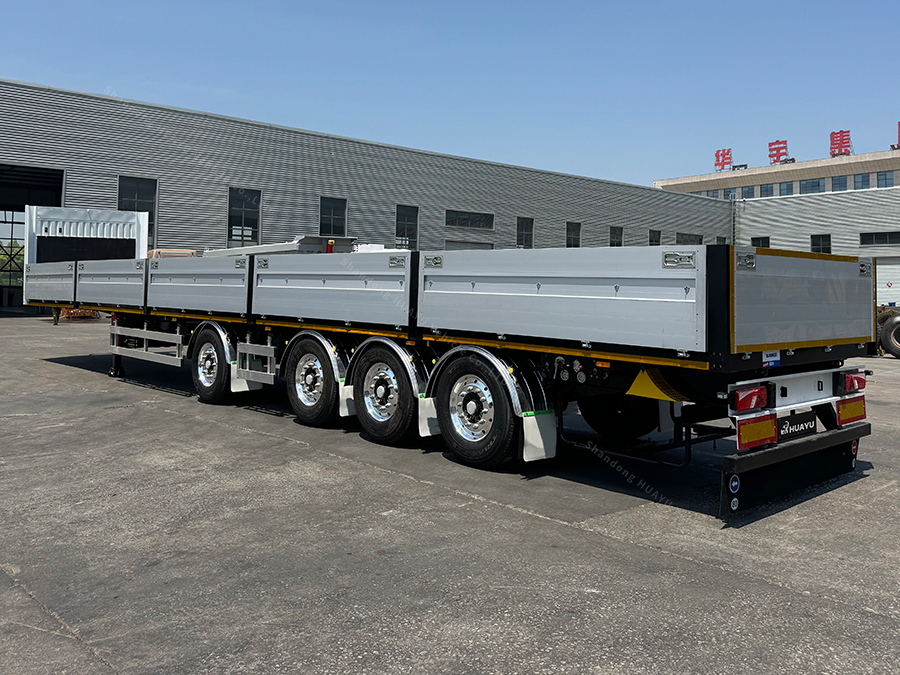
Axles and suspensions dictate how a trailer interacts with the ground. You cannot run standard highway axles on logging roads and expect them to survive. The undercarriage takes the brunt of the punishment, and specifying the right components determines whether your trailer finishes the route or requires a field rescue.
Multiple axles distribute weight more evenly across the surface. This reduces ground pressure significantly. Lower ground pressure prevents the trailer from sinking into soft mud, loose gravel, or sand. A multi axle side wall semi trailer excels in these unpredictable environments because it spreads the payload over a larger footprint.
Procurement teams must follow a strict rule for off-road operations. If exact payload weights remain unpredictable, you must default to heavy-load axles. Specify 13-ton to 16-ton capacities. Standard 10-ton axles will snap when a fully loaded trailer drops into a deep rut. Heavy-duty axles feature thicker tube walls, larger bearings, and reinforced spindles to handle the abuse of off-road transport.
Selecting the right suspension depends entirely on your specific route severity. Each system offers distinct advantages and distinct failure points. You must match the suspension to the terrain you encounter most frequently.
Suspension Type | Durability on Rough Roads | Maintenance & Repair | Best Use Case |
|---|---|---|---|
Mechanical Leaf Springs | Extremely high. Multi-leaf packs handle massive shock loads. | Simple to repair in the field. Parts are universally available. | Harsh off-road routes, mining roads, unpredictable debris. |
Air Ride Suspensions | Moderate. Airbags protect fragile cargo but risk punctures. | Complex. Requires intact air lines and specialized parts. | Mixed highway and light dirt roads where cargo protection is priority. |
Bogie / Trunnion | Maximum durability. Designed for extreme articulation. | Low maintenance, but heavy and expensive to replace. | Deep mud, severe ruts, and heavy machinery transport. |
Ground clearance prevents the trailer from high-centering on rutted roads. You must evaluate the approach and departure angles before deploying a trailer off-road. A steep departure angle stops the rear bumper from dragging when exiting steep dips or crossing drainage ditches. The undercarriage needs maximum clearance to avoid obstacles.
Relocate air tanks, brake chambers, and slack adjusters higher up the frame. This protects them from flying rocks, deep mud, and debris strikes. If a rock smashes an air valve, the brakes lock up, and the trailer becomes stranded. High-clearance designs keep critical components out of the strike zone.
Rough terrain turns static payloads into dynamic hazards. Loose bulk materials will shift violently. Machinery will bounce and slide. You need specialized containment systems to keep the cargo on the deck and prevent rollovers caused by sudden weight shifts.
Standard drop-sides bend outward when cargo shifts. A reinforced bulk cargo trailer uses corrugated steel panels. The corrugation adds immense lateral strength without adding excessive weight. Heavy-duty hinges secure the panels to the deck. They resist the shearing forces caused by shifting loads.
Removable but rigid pillars support the side walls. These pillars lock directly into the chassis pockets. They contain lateral shifts of loose cargo when the trailer tilts on uneven grades. If a load of gravel or scrap metal slides to one side during a sharp off-road turn, the reinforced walls prevent a blowout and keep the material contained.
FMCSA cargo securement rules apply strictly to heavy equipment over 10,000 lbs. Rough terrain magnifies dynamic forces, making compliance even more critical. You cannot rely on standard strap placements. You need integrated D-rings welded directly to the frame. Winch tracks must run the entire length of the trailer to provide flexible tie-down options.
Use at least four independent tie-down points for heavy items. Place two in the front and two in the back. Cross-strap large items to prevent lateral sliding. Use heavy-duty straps with high working load limits. Add edge protectors to every strap. Constant off-road vibration causes severe strap abrasion. Edge protectors stop the straps from snapping against sharp metal corners.
Tall or bulky items present unique risks. They raise the center of gravity. This exacerbates lateral sway on uneven terrain. You must add extra straps to counteract this leverage. Secure the top sections of tall machinery to prevent tipping, and use heavy chains for tracked equipment.
Loading a trailer correctly determines how it handles off-road. Poor weight distribution causes traction loss and steering issues. Place heavier cargo toward the front of the trailer. Keep it ahead of the axle group. This transfers weight to the tractor's drive tires. It maintains steering control and traction in mud or loose dirt.
Center the load perfectly left-to-right. An off-center load will pull the trailer into ditches. It increases the risk of rollovers on slanted roads. Use blocking and bracing against the side walls to keep the load centered during transit. Nail wooden blocks directly to the deck if necessary to stop machinery from walking sideways.
Buying an off-road trailer requires matching technical specifications to your operational reality. You must map specific trailer features directly to your desired business outcomes. Buying generic equipment leads to premature failures and expensive field repairs.
Do not buy features you do not need. Connect every specification to a problem you face in the field. Reinforced side walls reduce cargo damage claims. Heavy-duty axles lower maintenance downtime. Multi-leaf suspensions prevent broken springs in remote areas. High-yield steel prevents chassis replacement. Every feature must solve a specific route hazard.
Structural reinforcements add weight. Thicker steel, extra cross-members, and heavy axles increase the trailer's tare weight. This creates a conceptual trade-off. Higher tare weight reduces your maximum legal payload capacity on public highways.
You must analyze your primary operating environment. If you spend the majority of your time on rough dirt roads, prioritize durability over maximum payload. The lost payload revenue is cheaper than replacing a snapped chassis. If you only run off-road occasionally, seek a middle ground. Use high-tensile lightweight steel to maintain payload while adding moderate strength.
Stopping a heavy load on a steep, unpaved descent requires massive braking power. Standard brakes overheat quickly. Specify wider brake shoes to dissipate heat faster. Automatic slack adjusters are mandatory. They keep the brakes calibrated despite constant off-road vibration.
Evaluate the necessity of ABS and EBS systems. Anti-lock Braking Systems prevent wheel lockup on loose gravel. Electronic Braking Systems provide faster response times. Both systems help drivers maintain steering control during emergency stops on slippery mud or wet clay.
Field inspections prevent catastrophic failures. You must spot damage before the trailer leaves the site. Specify high-visibility interior coatings. Paint the inside of the trailer frame and side walls white or light gray.
White paint exposes internal weld fractures instantly. When a weld cracks, rust bleeds out. A rust trail on white paint is highly visible during a quick walk-around. It highlights side wall stress and chassis damage immediately. Dark paint hides these hairline cracks until the component fails completely.
Deploying new equipment does not automatically solve all transport problems. Human error and poor maintenance will destroy even the strongest trailers. You must actively mitigate adoption risks through training and strict maintenance schedules.
The most common failure is overloading. Operators assume a reinforced trailer can carry infinite weight. Every trailer has an off-road capacity limit. Exceeding this limit destroys the suspension and bends the axles. Improper securement is another major risk. Drivers often fail to use enough straps. This allows cargo to smash into the side walls, bending the hinges and warping the panels.
Off-road driving requires specialized skills. Standard highway training is insufficient. Implement mandatory driver training for rough routes. Focus on off-road speed management. Hitting a pothole at high speed will break axles, regardless of their rating.
Teach drivers how to corner with high centers of gravity. Sharp turns on uneven ground cause rollovers. Train them on dynamic braking techniques. They must learn how to apply trailer brakes independently to prevent jackknifing on steep dirt grades.
Rough terrain accelerates wear and tear. You need a rigorous, specialized inspection schedule. Focus heavily on high-stress areas that take the most abuse.
Inspect suspension U-bolts daily. Off-road vibration loosens them quickly, leading to axle misalignment.
Check chassis welds for rust trails using the white-paint method during every pre-trip inspection.
Examine side wall hinges for bending or missing pins before loading bulk materials.
Manage tire pressure actively. Lower pressure increases traction in mud, but requires reinflation before highway use to prevent blowouts.
Clean air brake lines regularly. Mud and debris will pack into the fittings and cause brake failure.
Verify the integrity of all D-rings and winch tracks before securing heavy machinery.
Grease all suspension pivot points weekly to push out abrasive dirt and water.
A purpose-built heavy duty side wall trailer is a mandatory investment for fleets operating on degraded routes. Standard equipment will fail. It will cost you money in downtime, repairs, and lost cargo. By upgrading your chassis steel, specifying heavy-load axles, and enforcing strict securement protocols, you protect your operations from unpredictable terrain.
Use this shortlisting logic for your next procurement cycle. Match your axle capacity to your maximum expected payload. Default to heavy axles if your loads are unpredictable. Verify the steel yield strength of the main beams. Confirm that all securement points meet FMCSA compliance for heavy equipment.
Take these next steps to secure your fleet:
Audit your current route severity to identify the most common causes of trailer damage.
Consult with engineering-focused trailer manufacturers to discuss custom structural reinforcements.
Request specific axle and suspension configurations tailored to your exact cargo types.
Implement a mandatory off-road driver training program focusing on speed and braking.
Upgrade your preventative maintenance schedule to include daily U-bolt and weld inspections.
A: Multiple axles distribute the cargo weight more evenly across the ground. This reduces the overall ground pressure of the trailer. Lower ground pressure prevents the tires from sinking into soft mud, sand, or loose gravel. It also enhances traction and stability when navigating deeply rutted uneven surfaces.
A: Heavy-duty mechanical leaf springs offer the best balance of durability and field repairability for harsh environments. However, for extreme mud, deep ruts, and heavy machinery transport, specialized off-road bogie or trunnion suspensions provide maximum articulation and structural survival.
A: Follow FMCSA standards. Use heavy-duty straps and cross-strap items using a minimum of four tie-down points (two front, two back). Add extra straps for tall or bulky items to counteract a raised center of gravity. Always use edge protectors to prevent strap abrasion from off-road vibration.
A: Yes, but it requires specific engineering. The trailer must feature reinforced floor plating and high-density cross-members to support the concentrated weight. You must also use proper blocking and bracing against the reinforced side walls to prevent the machinery from shifting laterally.
A: You must inspect chassis welds for hairline fractures. High-visibility interior paint helps spot rust trails easily. Re-torque all suspension U-bolts, as vibration loosens them. Check air lines and brake chambers for rock or debris damage. Finally, verify the integrity of all side wall latches and hinges.
A: Adding structural reinforcements, thicker steel, and heavier axles increases the trailer's tare weight. This reduces your maximum legal payload capacity on public highways. You must balance the need for off-road durability against the potential loss of payload revenue per trip.


