
Views: 0 Author: Site Editor Publish Time: 2026-11-09 Origin: Site


Logistics fleets face a relentless operational challenge when hauling heavy freight through winding highways or tight urban corners. Cargo shifting during transit damages valuable inventory and disrupts vehicle dynamics. More critically, it dramatically elevates the risk of rollover accidents.
Specifically, a side wall trailer is systematically engineered to address these complex physics-based threats. By delivering robust physical containment alongside reinforced structural support, this equipment provides a far more reliable solution than standard open-deck alternatives. This technical breakdown explores how precise material engineering and architectural frameworks actively stabilize payloads to ensure highway safety and operational efficiency.
To grasp why freight shifts, we must examine the forces acting upon a moving commercial vehicle. When a truck enters a cloverleaf interchange, it undergoes centripetal acceleration. The payload resting on the deck, however, possesses inertia. It naturally wants to continue moving in a straight line. This conflict generates centrifugal force. It is an outward lateral push acting directly on the cargo mass.
The magnitude of this outward thrust depends on the cargo weight, vehicle speed, and turn radius. Even a moderate curve taken at cruising speeds creates immense lateral pressure. Standard open flatbeds frequently fail to contain this movement. They rely entirely on friction mats and synthetic webbing. Should a single strap lose tension from road vibration, the freight inevitably slides.
Imagine hauling 60 tons of stacked steel pipes or bagged cement. A lateral shift of just a few inches drastically alters the center of mass. This sudden load transfer overloads the outer suspension and lifts the inner tires off the asphalt, severely increasing rollover probability.
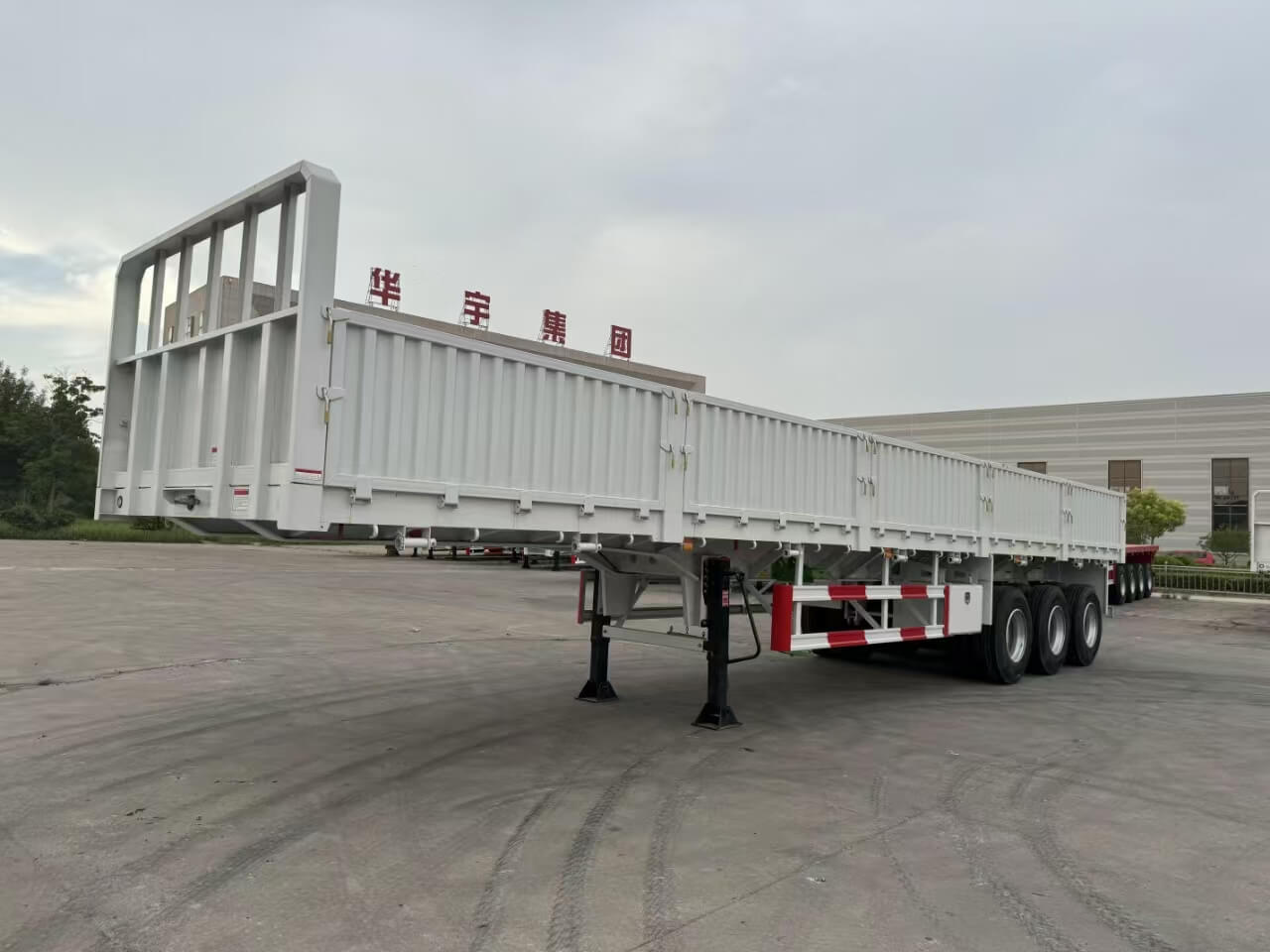
Physical containment is the primary defense against lateral movement. The effectiveness of this equipment lies in its architectural framework, functioning as a rigid safety cage. Unlike open decks, continuous vertical barriers run along the bed perimeter. As centrifugal force pushes the cargo outward, these walls absorb and distribute the pressure.
Not all safety cages are fabricated equally. Standard lightweight panels often buckle under dynamic impact. In contrast, a premium heavy duty side wall semi trailer utilizes high-tensile steel grades like Q345 or T700. These materials offer superior yield strength without adding excessive tare weight.
Furthermore, the quality of submerged arc welding dictates structural longevity. Top-tier designs integrate the side panels into the main chassis using continuous welding techniques. When a heavy pallet leans against the boundary during a sharp turn, the stress transfers evenly down into robust cross-members rather than fracturing weak spot welds.
Looking at current logistics trends, regulatory bodies worldwide are tightening safety standards regarding dynamic stability control. As highway speeds increase and delivery schedules compress, fleets are transitioning away from basic flatbeds for mixed freight. Industry data suggests a growing preference for engineered containment systems. Fleet managers now prioritize trailers that inherently compensate for lateral forces, reducing reliance on driver skill alone to prevent load shifts during evasive maneuvers. This shift is driving demand for advanced modular wall designs that balance maximum payload capacity with stringent safety compliance.
Cargo securement remains heavily regulated across commercial transport. While synthetic straps and edge protectors are mandatory, the physical wall serves as an invaluable secondary restraint. Relying purely on tie-downs introduces operational risks. Webbing stretches over long distances and frequently loosens after hitting potholes.
The solid boundary mitigates these vulnerabilities by providing a fail-safe. This barrier effect reduces the need for exhaustive lashing on every minor piece of freight. Loose agricultural materials or bagged cement are notoriously difficult to strap individually but are easily contained within a rigid perimeter.
Let us compare the operational differences directly:
| Feature | Side Wall Trailer | Standard Open Flatbed |
|---|---|---|
| Lateral Containment | High-tensile steel walls physically block shifting. | None. Relies entirely on strap tension and friction. |
| Bulk Cargo Handling | Excellent for bagged cement, grain, and loose pipes. | Poor. High risk of material spreading or falling. |
| Loading Efficiency | Drop-side panels allow rapid forklift access. | Requires complex and time-consuming tie-down protocols. |
| Rollover Risk | Significantly lower due to static center of gravity maintenance. | Higher if a single strap fails during a sharp turn. |
Keeping goods on the deck is only half the battle. Maintaining the trailer securely planted on the road is equally critical. The seamless integration between the heavy-duty chassis and reinforced side walls enforces a strict loading perimeter. It prevents heavy pallets from drifting toward the extreme outer edges, keeping the payload tightly packed near the longitudinal centerline.
This centralization proves vital during high-risk maneuvers like navigating roundabouts. Upgrading to a specialized high capacity side wall cargo trailer with a multi-axle setup amplifies this stability. A 4-axle configuration ensures that lateral and vertical forces exerted against the walls are absorbed by a wider suspension footprint. This dramatically enhances cornering stability for payloads exceeding 60 tons.
Abstract features mean little without concrete application. Selecting the right equipment requires matching specifications to your typical freight profile.
First, evaluate your payload weight. A standard 3-axle unit equipped with 13-ton to 16-ton axles is ideal for general consumer goods and agricultural transport up to 50 tons. For demanding industrial environments or regions with specific weight distribution laws, a 4-axle model provides the necessary load-bearing capacity and legal compliance.
Next, inspect the side wall height and modularity. Heights typically range from 600mm to 1000mm. Opt for drop-side designs featuring heavy-duty hinges and galvanized locking pins. This allows forklift operators to lower specific sections for rapid side-loading, blending the accessibility of a flatbed with enclosed security.
Even advanced structural engineering cannot replace proper loading protocols. Human error remains a persistent factor in transport instability.
Strategic placement of heavy items dictates dynamic behavior. Always position the heaviest freight along the centerline, directly over the axle group, and as low to the deck as possible. Centering the mass dampens the pendulum effect during turns.
Operators must also recognize the necessity of internal tie-downs. The lateral barrier does not negate physics. An unsecured steel coil will still roll and slam into the side wall, potentially shattering hinges. Freight must be lashed securely to floor-mounted D-rings to prevent longitudinal movement during hard braking. The wall acts as the ultimate safety net, not the sole securement method.
Routine mechanical inspections ensure longevity. Check the vertical stakes, hinges, and locking pins for corrosion or stress fractures. Fully engaged locking mechanisms guarantee the barrier remains unyielding under highway pressures.
Investing in robust transport equipment is a strategic imperative for minimizing freight damage and elevating driver safety. By providing an unyielding layer of physical containment, these trailers actively neutralize centrifugal forces. Your cargo stays exactly where it belongs, even on the tightest highway curves.
Whether your fleet requires a standard 3-axle model for agricultural logistics or a heavy-duty 4-axle unit for industrial bulk transport, structural stability pays consistent dividends. It reduces insurance claims, prevents accidents, and streamlines transit times. For fleets ready to upgrade their operational safety, exploring the precisely engineered configurations at Huayu Vehicle ensures you secure a trailer tailored to your exact payload demands.
Yes, for most general and bulk cargo, it provides superior lateral containment. This structural boundary significantly reduces the chance of freight shifting during sharp turns compared to a flatbed, offering a critical layer of safety that open decks lack.
Absolutely. While the vertical panels provide a robust physical barrier against lateral movement, proper lashing is essential. Straps and chains prevent the cargo from bouncing vertically or sliding longitudinally within the bed during hard braking and sudden acceleration.
Focus heavily on the quality of the high-tensile steel, the strength of the submerged arc welds, the durability of the locking mechanisms on the drop-side panels, and the overall load capacity rating. Ensure the axle configuration meets your specific regional weight regulations.
Standard panel heights generally range from 600mm to 1000mm depending on the manufacturer and specific logistics requirements. Taller panels are often selected for low-density bulk goods to maximize volume without exceeding weight limits.
Payload capacity varies based on the chassis design and axle configuration. A standard 3-axle model typically handles between 40 to 50 tons, whereas heavy-duty 4-axle versions can safely transport upwards of 60 to 80 tons in demanding industrial applications.
While the steel panels add initial tare weight, the drastically improved load stability leads to smoother driving patterns. This reduction in erratic steering corrections and harsh braking indirectly contributes to better fuel management over long-haul routes.


