
Views: 0 Author: Site Editor Publish Time: 2026-11-12 Origin: Site


Cargo loss and freight damage bleed billions of dollars from the global logistics industry every single year. Secure transportation forms the absolute backbone of any profitable freight fleet. Open-air and semi-enclosed units offer excellent loading versatility. However, improper securing mechanisms consistently trigger severe logistical nightmares. Incorrect slat gaps cause dangerous load shifting, irreversible product damage, and catastrophic highway safety hazards.
As a highly versatile heavy-duty solution, the fence cargo trailer accommodates diverse freight types safely. How does the physical distance between steel slats directly impact cargo retention? This structural detail dictates transport safety, regulatory compliance, and daily operational efficiency. By exploring how specific enclosure configurations affect different payloads, logistics managers can make informed decisions to drastically reduce transit risks.
A fence transport unit essentially operates as a flatbed chassis equipped with a robust stake and rail structure around its perimeter. In engineering terms, this spacing refers to the precisely measured physical distance between the horizontal steel rails and the vertical stakes. Standard measurements are never universal. They vary wildly based on the intended application.
Some configurations feature narrow gaps of just a few inches. This contains granular materials or agricultural sacks effectively. Others leave much larger openings to accommodate heavy-duty ratchet straps and reduce the overall tare weight. The foundational strength relies heavily on reinforced stake pockets welded into the side rails. These pockets anchor the vertical posts holding the horizontal barrier.
In practice, the perimeter structure acts as your primary physical barrier against lateral and longitudinal movement. Freight experiences intense dynamic forces during transit. Cornering sharply pushes the payload outward via centrifugal force. Braking hard forces thousands of pounds of goods forward. Proper engineering ensures pressure points align with the most robust sections of the cargo. If gaps are incorrect, concentrated pressure forces items to slip through. This leads to structural failure or a dangerous shift in the center of gravity.
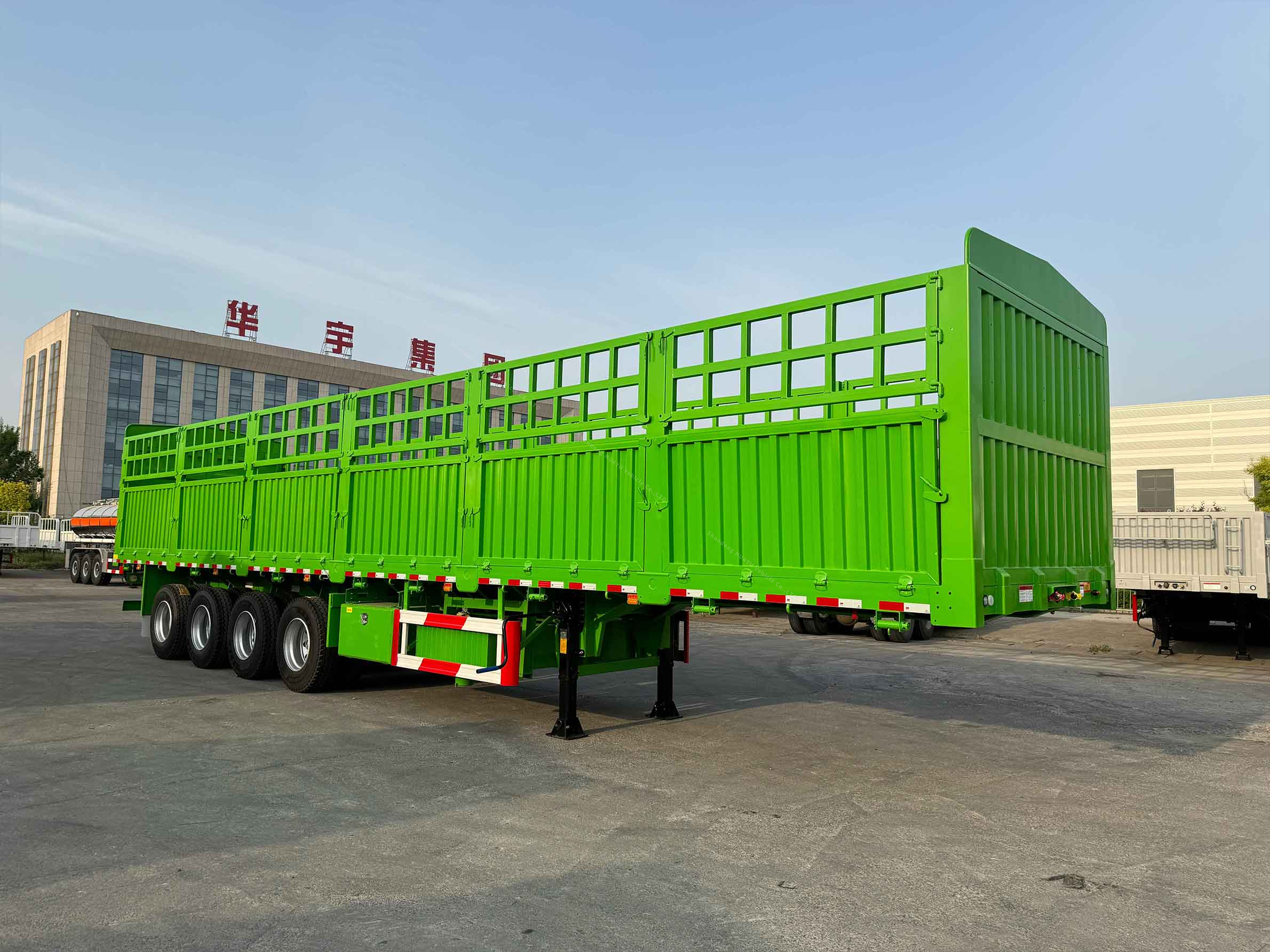
Narrow spacing acts like a rigid steel net. Minimizing the voids between horizontal rails prevents smaller units or agricultural sacks from slipping through. This setup provides maximum security for loose items that drivers cannot easily strap down individually. Furthermore, this tight grid creates a high density of secure tie-down points. Operators deploy chains and edge protectors with surgical precision. This boosts overall load stability and stops micro-shifting.
Conversely, wider configurations achieve a significantly lower tare weight. Less steel translates to a lighter trailer. This improves fuel efficiency and increases the maximum allowable payload under strict highway weight limits. Wider gaps also facilitate easier side-loading using industrial forklifts. However, this setup introduces notable retention risks. If the payload is flexible or loosely packed, the probability of bulging increases exponentially at highway speeds.
Cargo bulge is a hazardous phenomenon. Flexible goods push through wide gaps under the pressure of settling. This risks severe product damage against external obstacles and violates strict legal road width regulations. Selecting the right gap measurement mitigates this outward pressure.
| Spacing Type | Best Suited Cargo | Key Engineering Advantage | Primary Risk |
|---|---|---|---|
| Narrow Gaps | Loose items, agricultural sacks, livestock | Maximum securement density, prevents micro-shifting | Higher tare weight, reduced fuel efficiency |
| Wide Gaps | Palletized freight, steel pipes, machinery | Lower dead weight, easier forklift side-loading | Cargo bulge, risk of ejection for flexible goods |
Transporting livestock or bagged agricultural commodities demands highly specialized environments. For live animals, precise gaps are absolutely non-negotiable. They prevent limbs from extending outside the trailer while allowing adequate airflow to stop heat stress. When hauling bagged fertilizer, tight spacing prevents sacks from tearing against metal edges. The engineering challenge involves perfectly balancing physical containment with the biological needs of the payload.
Standard open-air units handle palletized goods with high efficiency. Rigid items like steel pipes or large wooden crates usually require wider spacing. Because these items maintain their own structural integrity, they do not rely on the side rails for primary containment. Heavy-duty chains secure the freight directly to the deck. The wide-spaced perimeter acts as a reliable secondary failsafe.
For logistics companies focused on scaling operations, maximizing profit per trip remains the ultimate goal. A high capacity fence semi trailer is specifically engineered to handle exceptional payload volumes. These units often feature multi-axle configurations handling up to 80 tons of cargo. As stacking height and cargo volume increase, the outward lateral pressure exerted on the perimeter multiplies instantly.
Optimal spacing becomes absolutely critical in these high-volume scenarios. Gaps must be mathematically optimized to distribute the immense weight evenly across the vertical stakes. If horizontal slats are spaced too far apart on a towering load, concentrated pressure causes the steel to bow outward. To support massive hauling requirements, manufacturers utilize premium materials like Q345 or T700 high-tensile steel. Vertical stakes must drop into deeply welded reinforced pockets. This synergistic structural integrity ensures the perimeter remains rigid even when loaded to the absolute legal limit.
Cargo retention depends heavily on the dynamic forces of the road. Traditional mechanical leaf spring suspensions are highly durable but transfer significant road shock directly into the chassis. Hit a bad pothole, and the load can literally catch air.
Upgrading to an air suspension fence cargo trailer changes the game completely. This advanced technology utilizes pneumatic cylinders to absorb harsh road irregularities. It drastically reduces vertical acceleration. The payload stops bouncing upward when navigating uneven pavement or bridge joints.
A direct mechanical synergy exists between advanced pneumatic systems and perimeter performance. When freight remains stable on the deck, it generates significantly less dynamic lateral force against the side panels. By mitigating sudden violent impacts, the air suspension allows the slat gaps to function flawlessly as a static containment field. This combination protects fragile goods from impact damage while preserving the structural integrity of welds and hinges.
Based on recent industry analysis regarding highway freight securement, the logistics sector is experiencing a clear shift toward data-driven load retention. Fleet operators are rapidly abandoning one-size-fits-all mentalities. Modern logistics demands adaptive configurations mathematically optimized for specific freight densities. Major fleets now analyze cargo sway data to determine the exact rail spacing required for their primary routes.
Furthermore, with stricter highway safety enforcement globally, industry experts note a rising preference for integrated securement systems. Vehicle structural layouts now work intrinsically with automated tensioning straps and impact-absorbing materials. The focus has shifted from relying solely on driver intuition to engineered failsafes. This evolution highlights a broader industry commitment to eliminating preventable ejections and reducing tare weight without sacrificing yield strength. Modular fence designs are quickly becoming standard requirements for top-tier transport companies.
Transportation authorities worldwide enforce strict load securement regulations to protect highway infrastructure and public safety. Improper spacing easily leads to severe compliance violations. If an inspector determines gaps are too wide for the specific items being hauled, the vehicle will likely be placed out of service. Fines, delayed shipments, and skyrocketing insurance premiums follow quickly.
The steel enclosure represents only one component of a comprehensive retention strategy. Operators must utilize supplementary securement methods. Heavy-duty structural tarpaulins, ratchet straps, and cross-chains interact directly with the rails. The physical spacing must accommodate these tools. It needs to provide accessible anchor points while allowing drivers to apply necessary downward pressure.
When investing in new fleet assets, buyers must evaluate technical specifications rigorously. Do not settle for standard dimensions if they lead to logistical inefficiencies. First, prioritize customization options. Seek manufacturers that allow tailored heights, rail intervals, and stake placements to suit your specific operational footprint.
Second, decide between removable and fixed panels. Removable panels offer superior operational versatility for side-loading with forklifts. Fixed fences continuously welded to the chassis provide maximum rigid strength for dedicated bulk hauling. Finally, evaluate material quality and welds. Assess the thickness of the high-tensile steel used in the stakes. Examine the penetration quality of the welds at the stake pockets. Verify the application of industrial anti-corrosion treatments like polyurethane paint. These details ensure the asset withstands harsh environmental conditions.
Maintaining optimal containment capabilities requires a rigorous inspection routine. Fleet mechanics must routinely check for bent horizontal slats, cracked welds, or compromised stake pockets. Even a minor deflection in a vertical post inadvertently widens the gap under heavy load. This drastically reduces the vehicle's ability to retain freight safely.
When wear and tear inevitably occur, prompt repairs ensure the vehicle remains safe. Damaged panels should never be temporarily patched. Mechanics must cut them out and replace them using steel that matches the original high-tensile specifications. Proactive maintenance extends the lifecycle of the capital asset and prevents minor structural compromises from escalating.
Fence spacing is a highly critical engineering choice. It dictates the safety, efficiency, and legality of a fleet's cargo retention strategy. From securing loose agricultural goods to supporting massive palletized loads, the precise distance between structural rails determines how well a trailer performs under pressure.
By combining optimal layouts with advanced features, logistics companies can drastically reduce product damage. Fleet managers must evaluate their specific freight requirements carefully. We highly recommend partnering with a reputable manufacturer to design a custom transport solution tailored to your exact needs. Explore the robust engineering options at Huayu Vehicle to configure the perfect heavy-duty asset for your operations today.
There is no single universal standard for these measurements. Spacing typically ranges from a few inches for livestock and small goods to larger gaps exceeding ten inches for palletized freight. Custom configurations are highly recommended to ensure the vehicle perfectly matches the specific payload type and daily operational requirements.
Yes, it can haul loose bulk materials effectively. However, this requires very narrow slat gaps, the addition of heavy-duty interior tarps, or specialized sideboards. These supplementary additions ensure that loose, granular materials remain securely retained within the footprint during transit without spilling onto the roadway.
Absolutely. Even for rugged payloads, pneumatic suspension drastically reduces wear and tear on the structural enclosure. By absorbing harsh road shocks, it prevents the freight from hammering against the side panels. This extends the vehicle's overall lifespan, improves fuel efficiency, and significantly enhances driver comfort.
Operators utilizing wide-spaced units must implement robust supplementary securement methods. Utilizing heavy-duty cargo nets, structural tarpaulins, or wrapping pallets securely with industrial shrink wrap binds the freight together. These measures ensure smaller items stay anchored to the deck rather than slipping through the voids.
Most modern designs feature modular or removable panels and stakes. This flexibility allows operators to quickly convert the enclosure into a standard flatbed. Removing the perimeter accommodates oversized loads and facilitates easier side-loading with forklifts, significantly increasing the vehicle's overall versatility and utilization rate.
Transportation authorities require that all cargo be firmly immobilized or secured on or within a vehicle. The structural enclosure must be strong enough to withstand specific g-forces during braking and cornering. If the spacing allows any part of the load to shift outward beyond the legal width limit, the vehicle is subject to severe fines and out-of-service orders.
During sharp turns or sudden evasive maneuvers, centrifugal force pushes the cargo aggressively against the side rails. If the gaps are too wide or the steel is substandard, this lateral force causes the slats to bow outward. Over time, repeated lateral impacts weaken the stake pocket welds, compromising the entire retention system.


