
Views: 0 Author: Site Editor Publish Time: 2026-07-07 Origin: Site


Discharge line blockages in dry bulk transport create a compounding financial impact. Extended unloading times eat into daily schedules. Blown hoses create massive safety hazards on the job site. Pneumatic system damage leads to expensive, unexpected repairs. Missed delivery windows ruin client relationships and disrupt supply chains. At the core of these failures are simple physics. Improper pressure ratios, moisture intrusion, electrostatic attraction, and material bridging create severe clogs. These compacted blockages often require hazardous manual intervention to clear. Preventing these issues requires a dual approach. You must specify the correct physical architecture of a Pneumatic Tanker Trailer. You must also enforce strict, material-specific operational protocols on every delivery.
You must establish baseline metrics for successful discharge operations. An optimal pounds-per-minute flow rate indicates a healthy system. Stable pressure gauge readings show consistent material movement. Zero requirement for manual physical intervention, like hammering pipes, defines a perfect unload. Operators need to recognize the physical threshold of failure. A temporary flow restriction causes minor gauge fluctuations. A hard, compacted blockage causes line pressure to spike uncontrollably while tank pressure drops. This requires immediate system shutdown to prevent hose ruptures. We track these metrics daily to ensure equipment longevity and operator safety. When you monitor the gauges closely, you catch restrictions before they become solid plugs.
| Discharge Metric | Optimal Condition | Warning Sign of Blockage |
|---|---|---|
| Line Pressure | Steady, slightly below tank pressure | Sudden, sharp spikes above 15 PSI |
| Tank Pressure | Consistent 10-12 PSI | Rapid drop while line pressure rises |
| Hose Movement | Slight, rhythmic vibration | Violent shaking or complete rigidity |
| Blower Sound | Even, continuous hum | High-pitched whining or lugging down |
Material bridging and rat-holing occur frequently. Cohesive materials pack tightly above the discharge valve. They suddenly collapse and overwhelm the discharge line. Moisture contamination causes severe chemical and physical reactions. Hygroscopic materials like cement or flour absorb moisture rapidly. They harden when exposed to untreated, hot blower air. Electrostatic cling builds up during transport. Friction generates static electricity. Fine particles cling to pipe walls and construct solid restrictions. Operator error remains a primary factor. Higher tank pressure does not equal faster unloading. Over-pressurization leads directly to material compaction in the discharge manifold. We see operators push the system too hard, thinking more air means faster delivery. It always results in a plugged line.
Aeration systems fluidize material prior to the discharge valve. They introduce air to make solid powders flow like liquids. Mechanical fluidizers use vibrating disks to break up stubborn clumps. Traditional fabric aeration pads introduce air evenly across a wider surface area. A bulk cement tanker trailer typically uses fabric pads effectively. Food-grade flour trailers often require specialized mechanical fluidizers. This prevents contamination and eliminates severe caking issues. Choosing the wrong aeration method guarantees poor cleanout and constant plugging. You have to match the pad material to the product density.
Hopper slope angles dictate natural material flow. A 45-degree slope clears cohesive powders much better than a 35-degree slope. Flatter slopes maximize overall payload volume. Steeper slopes minimize material retention and blockage risks. You must evaluate the trade-offs based on your primary cargo. Hauling heavy, sticky materials demands steeper hopper geometry to ensure complete cleanout. If you haul fly ash or fine cement, a steep slope is non-negotiable. The material will simply sit on a flat slope, requiring operators to beat on the side of the vessel.
The structural design of bottom drop tees impacts flow efficiency. Smooth-bore piping prevents particle snagging and buildup. Sweeping bends are far superior to hard angles. Sharp corners create impact zones where materials compact and harden. Strategic placement of check valves is mandatory. They prevent product backflow into the delicate aeration system during pressure surges. We always specify long-radius elbows on the discharge plumbing. Short-radius fittings create immediate bottlenecks when pushing heavy materials.
High-velocity material transfer generates significant static charge. Proper grounding mitigates this dangerous buildup. Trailer specs must integrate heavy-duty grounding straps. Copper strips and conductive hoses provide continuous static dissipation. This prevents static-induced material attraction inside the pipes. It also eliminates catastrophic explosion hazards when hauling flammable dry bulk materials. Plastic pellets are notorious for static buildup. Without proper grounding, the pellets stick to the pipe walls, reducing the internal diameter until the line completely chokes off.
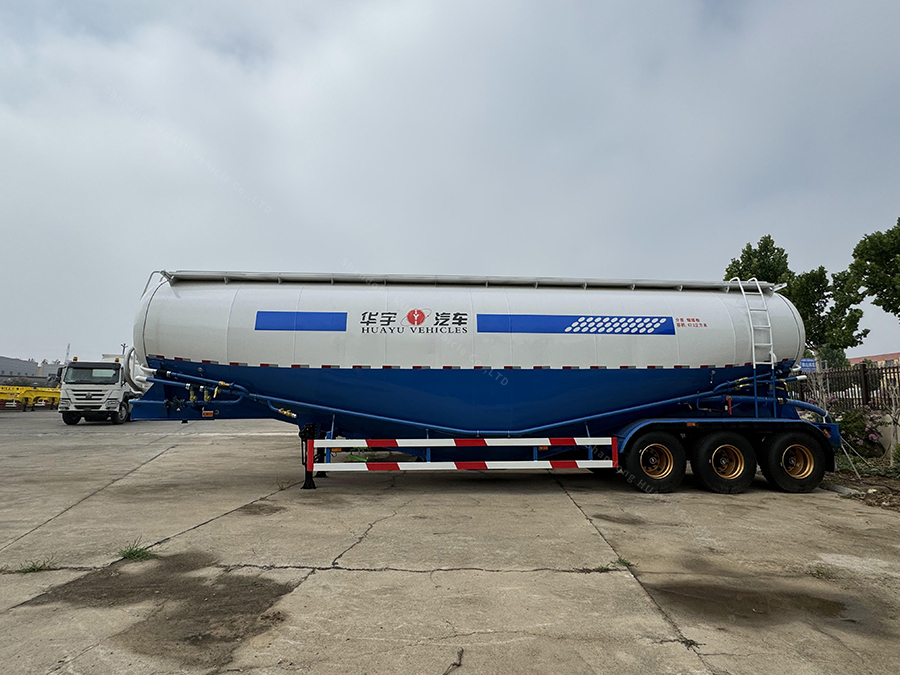
Identify the optimal pressure differential for your specific cargo. Keep line pressure slightly below tank pressure to maintain forward momentum. Define explicit high-level pressure and vacuum thresholds. Give operators clear, non-negotiable parameters. They must stop product feed immediately if a threshold is crossed. Ignoring these limits guarantees a compacted line. We train drivers to watch the line pressure gauge more than the tank gauge. The line gauge tells you exactly what is happening inside the hose.
Follow a precise order of operations. Engage top air to pressurize the vessel first. Establish strong line air to clear the pipe completely. Incrementally crack the discharge line valves to introduce product. Material-specific valve nuances matter. Leave the product discharge valve entirely closed initially when unloading cement. Crack it open slightly for lighter, more fluid products. Open the rearmost pod first. This establishes a clear flow path before moving to forward pods. Opening multiple product valves simultaneously overwhelms the line capacity. We never open two hoppers at full flow. You blend them carefully or empty them sequentially to maintain line velocity.
You can unplug a pneumatic tanker trailer by reversing the flow. Use suction to draw the blockage back into the vessel. Configure the valves specifically to pull a vacuum. Verify all safety checks before attempting a vacuum reversal. Ensure the vessel rating permits negative pressure operations. This technique clears soft clogs without manual teardowns. It saves hours of labor on the job site. You must ensure the vacuum relief valves are functioning properly before attempting this maneuver.
Pneumatic clearing techniques sometimes fail entirely. Vent all system pressure completely before attempting to disconnect hoses. Never manually clear a silo pipe under active pressure. Pounding out or hammering pipes under pressure is extremely dangerous. It creates severe personal safety hazards from flying debris. It also causes permanent structural damage to the dry bulk pressure tanker. We have seen aluminum pipes crack from operators hitting them with heavy mallets. Always use a rubber mallet if you must tap a line, and only do so when depressurized.
Define a strict operational cutoff point. Cease onsite troubleshooting when standard methods fail. This prevents severe equipment damage and injury. Disconnect hoses safely after full depressurization. Shovel accessible residue back into the top hatch or a containment vessel. Return the trailer to a maintenance shop for professional, safe cleanout. Pushing a plugged system usually results in a blown blower seal or a ruptured hot hose. It is cheaper to tow the unit back to the shop than to replace a destroyed blower.
Evaluate the return on investment for upgrading an older trailer. Install modern aeration pads and high-flow check valves. Add enhanced grounding equipment and digital pressure monitoring systems. Consider the physical limitations of the existing shell. Retrofitting fails if the core hopper geometry is fundamentally mismatched to the current product being hauled. You cannot fix a flat slope angle with better aeration pads. Sometimes, the shell design is simply obsolete for modern, high-flow unloading requirements.
Fleet managers need a strict procurement checklist when ordering new equipment. Highlight critical evaluation dimensions to ensure long-term reliability. Focus on the components that directly impact material flow and pressure management.
| Specification Category | Key Considerations for Blockage Prevention |
|---|---|
| Blower Sizing | Match CFM output to the specific material density to avoid over-pressurization. |
| Air Coolers/Dryers | Mandatory for hygroscopic materials to prevent heat and moisture caking. |
| Discharge Valve Sizing | Select larger diameters for cohesive materials to reduce bottlenecking. |
| Interior Coatings | Specify food-grade or non-stick linings to reduce wall friction and bridging. |
Discharge line blockages result directly from mismatched equipment specs, environmental moisture, or improper pressure management. Fleet managers must prioritize trailer designs that offer superior aeration, optimal hopper slopes, and integrated static grounding. These features matter far more than sheer volume capacity when hauling cohesive materials. Proper training and strict operational guidelines keep the product flowing and the equipment intact.
A: The optimal differential keeps line pressure slightly below tank pressure. This ensures material flows smoothly from the higher-pressure tank into the lower-pressure discharge line. Exact numbers vary by material, but maintaining a steady 2-3 PSI difference generally prevents packing and surging.
A: First, shut off the product valve and maximize line air to attempt clearing. If that fails, vent all system pressure completely. Never hit pressurized pipes. Once depressurized, safely disconnect the hose and manually clear the blockage or use vacuum reversal techniques if equipped.
A: Bridging occurs when cohesive particles interlock above the discharge valve, forming an arch that stops flow. Trailer design prevents this by utilizing steeper hopper slope angles and integrating efficient aeration pads to keep the material fluidized.
A: Yes, reversing the flow using suction can draw a blockage back into the vessel. It is safe only if the trailer is rated for vacuum operations and all safety relief valves are functioning. Always verify equipment ratings before attempting a vacuum reversal.
A: Top air pressurizes the vessel to push material downward toward the discharge valves. Line air flows directly through the discharge pipe to carry the dropped material away. Balancing both is critical; line air must be strong enough to sweep away material pushed by top air.
A: Blowers generate significant heat, which can bake moisture into hygroscopic materials like cement or flour. An air cooler reduces the temperature of the conveying air. This prevents condensation and thermal reactions that cause materials to cake and clog the lines.


