
Views: 0 Author: Site Editor Publish Time: 2026-09-29 Origin: Site


Long-haul fuel transportation throws a massive set of logistical hurdles at fleet operators. Picture a fully loaded rig navigating a steep mountain grade in pouring rain. Imagine that same truck enduring endless miles of sun-baked interstate. In these demanding environments, a poorly configured tank does more than just hurt fuel economy. It accelerates tire wear, exacerbates dangerous liquid surges, and ultimately eats into your profit margins. As a fluid transport engineer, I constantly see fleets losing money simply because their equipment lacks route-specific engineering.
Analyzing recent industry shifts reveals a clear trajectory in highway logistics. Transport companies are rapidly abandoning rigid, single-purpose steel tanks. Instead, operators are investing heavily in specialized lightweight setups integrated with smart pneumatic controls and aerodynamic profiles. This transition directly offsets volatile diesel prices while ensuring compliance with increasingly strict emission mandates. Furthermore, data-driven telematics are now standard, allowing fleets to monitor payload weight and tire pressure in real-time. Configuring a bulk liquid asset specifically for cross-country distances requires meticulous attention to compartment design and running gear. This guide walks you through the exact engineering specifications required to optimize your next transport vehicle for maximum safety and return on investment.
Choosing the right shell material lays the groundwork for the entire vehicle performance. This single decision directly impacts payload capacity, maintenance schedules, and overall longevity.
For highway-bound fleets, upgrading to an aluminum fuel transport trailer has become the industry gold standard. High-tensile 5000-series alloys offer an exceptional strength-to-weight ratio. By shedding thousands of pounds of dead weight compared to traditional carbon steel, operators can legally haul significantly more product per trip. Over the course of a fiscal year, a 45,000L aluminum unit dramatically boosts gross revenue through these incremental payload gains.
Specifically, aluminum possesses a natural oxide layer that provides inherent corrosion resistance. This characteristic ensures that fuel purity remains uncompromised without the need for expensive internal epoxy linings. Consequently, the asset requires far less structural maintenance over its typical 10 to 15-year lifecycle.
Despite the overwhelming benefits of lightweight alloys on paved roads, carbon steel still holds its ground in rugged, off-road scenarios. If your delivery routes frequently involve heavily rutted logging roads or unpaved mining tracks, the sheer impact resistance of Q345 steel might be necessary to withstand flying debris and chassis twisting. In contrast, operators must accept that this ruggedness comes at a steep penalty to payload capacity and highway fuel efficiency.
| Specification | 5454 Aluminum Alloy | Q345 Carbon Steel |
|---|---|---|
| Tare Weight | Extremely light, maximizes payload | Heavy, reduces legal cargo capacity |
| Corrosion Resistance | Excellent natural resistance | Requires internal anti-corrosion lining |
| Highway Fuel Economy | Superior due to lower dead weight | Lower due to heavy structural mass |
| Best Application | Long-haul interstate, commercial fuel depots | Off-road mining, rugged construction sites |
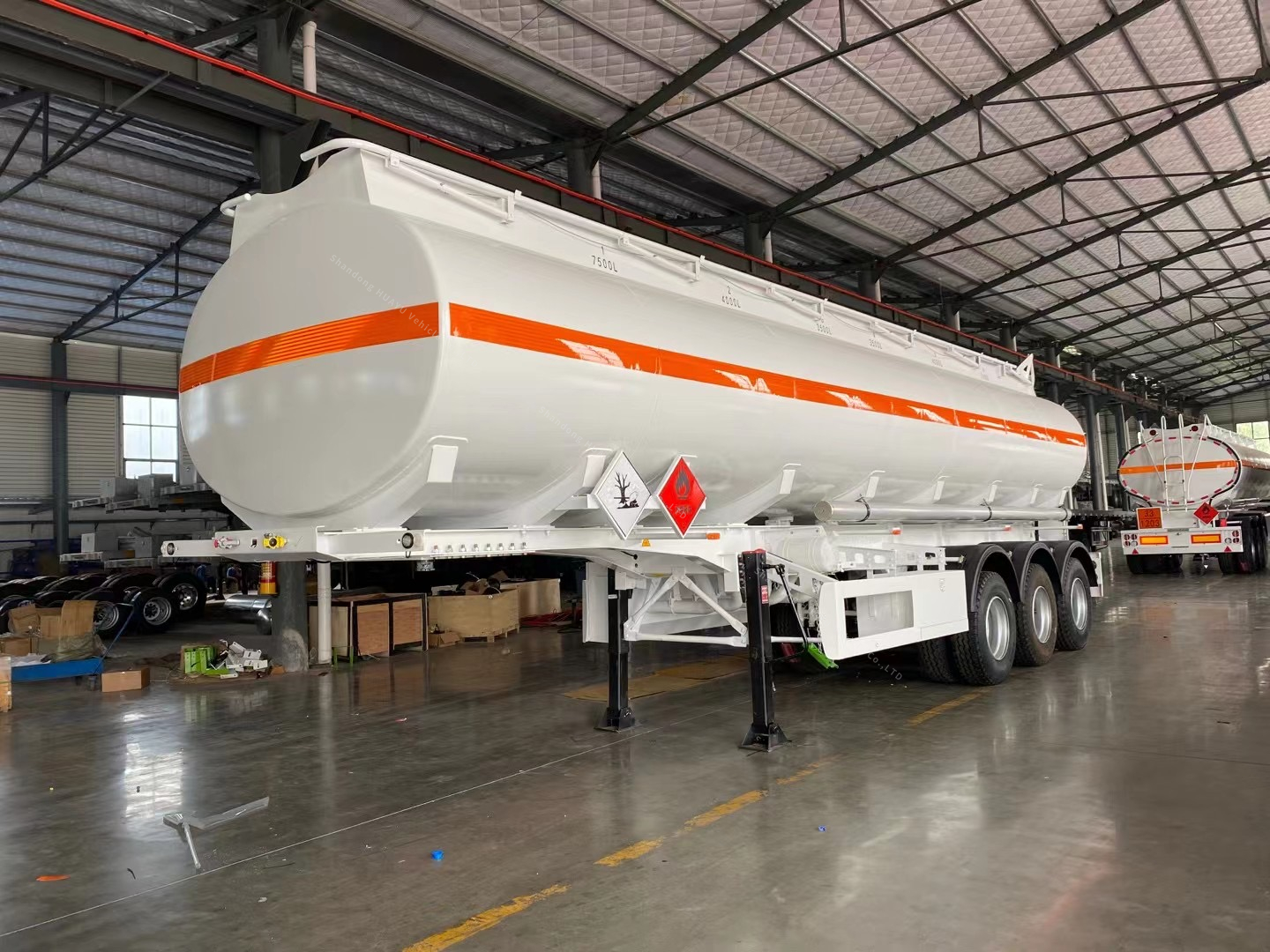
Cross-country logistics rarely involve simple point-A to point-B deliveries. To truly maximize profitability, the equipment must seamlessly adapt to complex client demands and varied drop locations.
Configuring the vessel as a multi compartment fuel tanker transforms a single-purpose rig into a highly versatile logistical tool. By dividing the total volume into three to six distinct sections, dispatchers can load standard diesel, premium grades, and even unleaded gasoline simultaneously. This flexibility is crucial for servicing modern retail gas stations and truck stops that require varied drop sizes within a single delivery window.
Driving an empty rig back to the terminal is a notorious revenue killer in long-haul trucking. Segmented tanks directly combat this issue. For instance, an operator might drop off 15,000 liters of off-road diesel at an industrial construction site in the morning. They can then proceed down the interstate to offload the remaining premium diesel at a commercial depot. As a result, the vehicle generates income for a much larger percentage of its total driven mileage.
To make this versatility work safely, the plumbing architecture demands meticulous engineering. Each chamber must feature its own dedicated discharge valve, API adaptor, and piping network. In addition, double bulkheads separate the sections. This means that even if a microscopic fracture occurs in one internal partition due to extreme stress, the different petroleum grades will never cross-contaminate. The integrity of the entire cargo remains fully protected.
Transporting tens of thousands of liters of liquid at highway speeds introduces massive kinetic forces. These forces must be managed through precise internal engineering.
When a driver hits the brakes, the fluid naturally rushes forward. This phenomenon aggressively shifts the vehicle center of gravity. It violently pushes the tractor forward, extending stopping distances and causing severe brake wear. During evasive maneuvers or tight highway off-ramps, lateral sloshing can easily tip the entire rig, leading to catastrophic rollovers.
To tame this dangerous momentum, structural dividers called baffles are welded at calculated intervals inside the shell. Rather than acting as solid walls, they feature strategic cutouts that allow fluid to flow gradually, absorbing the shock of sudden movements. For maximum durability on long routes, corrugated or dish-shaped baffles are highly recommended. Their curved geometry resists buckling under the immense pressure of shifting cargo. This specific design keeps the ride predictable and safe for the operator behind the wheel.
The running gear absorbs relentless punishment from potholed highways, bridge transitions, and uneven terminal lots. Configuring this system correctly protects both the tank shell and the driver.
A standard high-capacity diesel oil tanker trailer almost always requires a tridem, or three-axle, layout to evenly distribute the load and comply with federal bridge weight formulas. Fleet buyers should specify heavy-duty, TIR-certified axles from reputable global manufacturers. These components are engineered to endure continuous heavy stress. They stretch the intervals between mandatory maintenance, keeping the rig on the road rather than stuck in a repair bay.
While mechanical leaf springs are undeniably tough and budget-friendly, air ride suspension is practically mandatory for aluminum vessels. Pneumatic airbags cushion the ride, absorbing high-frequency road vibrations that would otherwise cause microscopic stress fractures along the aluminum weld seams over time. This dampened ride preserves the structural integrity of the expensive tank shell. Furthermore, it significantly reduces driver fatigue during multi-day trips.
Recent industry trends show a massive shift toward wide-base super single tires for highway operations. By replacing traditional dual-tire setups, fleets shave hundreds of pounds off the running gear and lower rolling resistance. This translates directly to improved tractor fuel economy. Regardless of the tire style chosen, pairing them with an automated tire pressure monitoring system is vital. This technology instantly alerts drivers to slow leaks, preventing catastrophic blowouts at high speeds.
Efficiency at the fuel depot is just as critical as highway mileage. Modern terminals require specific technical configurations to ensure that fluid transfer is rapid, safe, and environmentally compliant.
Gone are the days when operators had to scale the side of a wet, slippery tank to top-load hazardous chemicals. Today, a modern fuel transport unit must be configured with ground-level bottom-loading systems. Utilizing standardized API adaptors, terminal workers can connect multiple loading hoses simultaneously. This setup exponentially increases flow rates and drastically reduces fall hazards. It is also a strict prerequisite for entering most contemporary commercial fuel depots.
As liquid fills the internal void, it displaces highly volatile organic compounds. Environmental regulations now dictate that these harmful gases cannot be vented into the atmosphere. A closed-loop vapor recovery system captures these fumes through sequential pneumatic valves at the top of the compartments. It then routes them safely back to the underground storage at the terminal. For interstate operations, a compliant recovery system prevents hefty environmental fines and ensures seamless cross-border logistics.
Time is money at the customer drop site. Premium aluminum or stainless steel discharge valves guarantee rapid gravity drops. High-flow pneumatically controlled valves minimize tractor idle time. They allow the driver to complete the delivery efficiently and get back on the road swiftly, completely eliminating worries about stubborn leaks or slow drainage.
When transporting hazardous materials over vast distances, the trailer safety mechanisms act as the last line of defense against catastrophic accidents.
Because bulk liquids elevate the vehicle center of gravity, rollover protection is paramount. Reinforced aluminum coamings run along the top of the vessel. These are designed specifically to shield manhole covers and pressure relief vents from being crushed if the trailer overturns. At the bottom, pneumatic emergency foot valves serve as the ultimate failsafe. Engineered with a shear groove, these valves will snap off cleanly during a severe side-impact collision. This leaves the internal seal perfectly intact and keeps the hazardous cargo safely contained.
Stopping 80,000 pounds of sloshing liquid requires serious, responsive braking power. Electronic braking systems represent a massive leap forward from standard anti-lock brakes. By transmitting electronic signals directly to the brake chambers, this technology eliminates the pneumatic lag found in older air brakes. This simultaneous braking across all axles prevents dangerous trailer swing and jackknifing during panic stops.
Whether adhering to DOT 406 specifications in North America or stringent ADR standards in Europe, regulatory compliance dictates shell thickness, baffle spacing, weld integrity, and safety placard placement. Failing to meet these exact regional codes during the manufacturing phase will result in immediate regulatory grounding and voided insurance policies.
The theoretical configuration of a trailer is only as reliable as the manufacturer executing the build. Procuring a long-haul asset is a major capital expenditure that requires careful vetting.
Mass-produced, off-the-shelf units rarely deliver peak efficiency for specialized routes. A top-tier manufacturer acts as an engineering partner. They analyze your specific terrain, regional weight laws, and client drop-size requirements to custom-tailor the compartment volumes, aerodynamic profile, and axle spacing.
The lifespan of the equipment rests entirely on the integrity of its welds. Savvy buyers look for facilities utilizing automated submerged arc welding or advanced tungsten inert gas techniques. These methods guarantee deep, uniform penetration. Always demand empirical proof of rigorous quality control. Specifically, ask for X-ray inspections of critical seams and severe hydrostatic pressure testing to certify a zero-leak structure before taking delivery.
Finally, assess the after-sales infrastructure. A robust multi-year structural warranty signals manufacturer confidence in their build quality. Ensure the builder uses globally recognized, standardized components like API valves, TIR axles, and premium airbags. This guarantees that replacement parts can be sourced locally and quickly, minimizing costly downtime.
Choosing the right equipment is the absolute cornerstone of long-haul logistics success. Proper configurations do more than just enhance highway safety. They directly maximize payload capacity, streamline terminal operations, and drastically lower maintenance costs. By combining a lightweight aluminum frame with a multi-compartment design, air-ride suspension, and advanced safety valves, fleet operators can achieve the highest possible return on their investment. If you are looking to upgrade your fleet with equipment that meets these exact rigorous standards, explore the premium transport solutions at Huayu Vehicle. Contact their engineering team today to discuss custom configurations and request a quote for a high-capacity unit tailored precisely to your long-haul routes.
The optimal capacity for cross-country routes typically ranges from 30,000 to 45,000 liters. The exact volume a fleet should choose depends heavily on local weight regulations, bridge laws, and specific axle configurations. A three-axle layout is generally required to legally and safely support the weight of a fully loaded 45,000L vessel on public highways.
The initial procurement cost is higher due to the premium pricing of raw aluminum alloys and the highly specialized welding processes required to assemble it. However, because the material is significantly lighter than carbon steel, operators can legally carry thousands of additional liters of product per trip. For high-mileage routes, this initial price premium is usually recouped within the first one to two years through increased payload revenue and fuel savings.
Yes, it is entirely feasible and common to transport different petroleum grades simultaneously. To execute this safely, the vessel is engineered with complete internal segregation using double bulkheads between the compartments. Each section is equipped with its own independent bottom-loading valve, internal plumbing, and discharge manifold, completely eliminating any risk of cross-contamination.
Preventative maintenance is critical for maintaining safety and compliance. Drivers should conduct visual inspections of external valves, API adaptors, and manhole covers daily before every trip. A more comprehensive inspection for minor wear should occur every six months. Internally, regulatory bodies typically require a rigorous hydrostatic pressure test and a thorough internal structural inspection of the baffles and shell every five years to certify the asset remains safe for highway operation.
In most regions, the maximum gross vehicle weight rating for a standard tractor-trailer combination is 80,000 pounds. This includes the weight of the truck, the empty trailer, and the liquid cargo. Because liquids are heavy, minimizing the empty weight of the trailer by using aluminum alloys is the most effective way to maximize the amount of fuel you can legally transport under this 80,000-pound limit.
Air ride suspensions utilize pneumatic rubber bags instead of stiff steel springs to absorb road impacts. This system isolates the rigid tank shell from harsh, high-frequency vibrations caused by uneven pavement. By dampening these shocks, air ride prevents microscopic fatigue cracks from forming along the structural weld seams over time, drastically extending the operational lifespan of the vessel while providing a safer, smoother ride for the driver.


