
Views: 0 Author: Site Editor Publish Time: 2026-11-01 Origin: Site


You pull into the terminal after a flawless delivery. You expect to be ready for the next dispatch immediately. Instead, you discover a rock-hard layer of cement choking your discharge valves. For truck drivers and fleet managers, this scenario is a massive headache. Solidified residue coating the interior tank walls brings operations to a grinding halt.
Dry bulk cement reacts instantly to its environment. A microscopic drop of moisture or a slight misstep in handling procedures between loads ruins the remaining powder. The material hydrates, chemically sets, or severely compacts. This inevitably leads to costly operational downtime. It decreases your payload capacity due to volume loss and forces you to pay for expensive mechanical maintenance.
This guide breaks down the exact mechanical and chemical reasons why cement hardens inside transport vessels. We will explore the critical differences between chemical setting and physical compaction. Fleet operators can use these field-tested strategies to prevent material buildup, protect their equipment, and optimize daily hauling operations.
Key Takeaways
Understanding why cement hardens inside a transport vessel requires a look at its fundamental chemical properties. Portland cement is not merely a powder that dries out. It is a highly reactive hydraulic binder. The primary active compounds—tricalcium silicate and dicalcium silicate—lie dormant only until they encounter moisture.
When these compounds hit water molecules, an immediate exothermic chemical reaction begins. We call this hydration. The silicates react with water to form a complex interlocking crystalline matrix. This reaction is entirely irreversible. Once the chemical bonds form, the material transitions permanently from a fluid powder into a solid rock-like mass.
A bulk cement vessel is rarely perfectly clean between loads. A fine layer of residual dust inevitably coats the interior walls and hoppers. Many operators mistakenly believe a trailer must be exposed to heavy rain or standing water for this residue to set. In reality, microscopic moisture droplets suspended in humid air are more than sufficient. This initiates a slow localized hydration process directly against the aluminum or steel walls of the trailer.
Over time, this localized hydration leads to the dreaded caking effect. A thin hardened layer of hydrated cement forms on the interior surfaces. Cement is naturally abrasive and porous. This initial caked layer provides an ideal rough texture for subsequent dust to cling to. Over multiple loading and unloading cycles, this layer thickens progressively. It directly decreases payload capacity and disrupts the smooth internal geometry required for efficient pneumatic discharge.
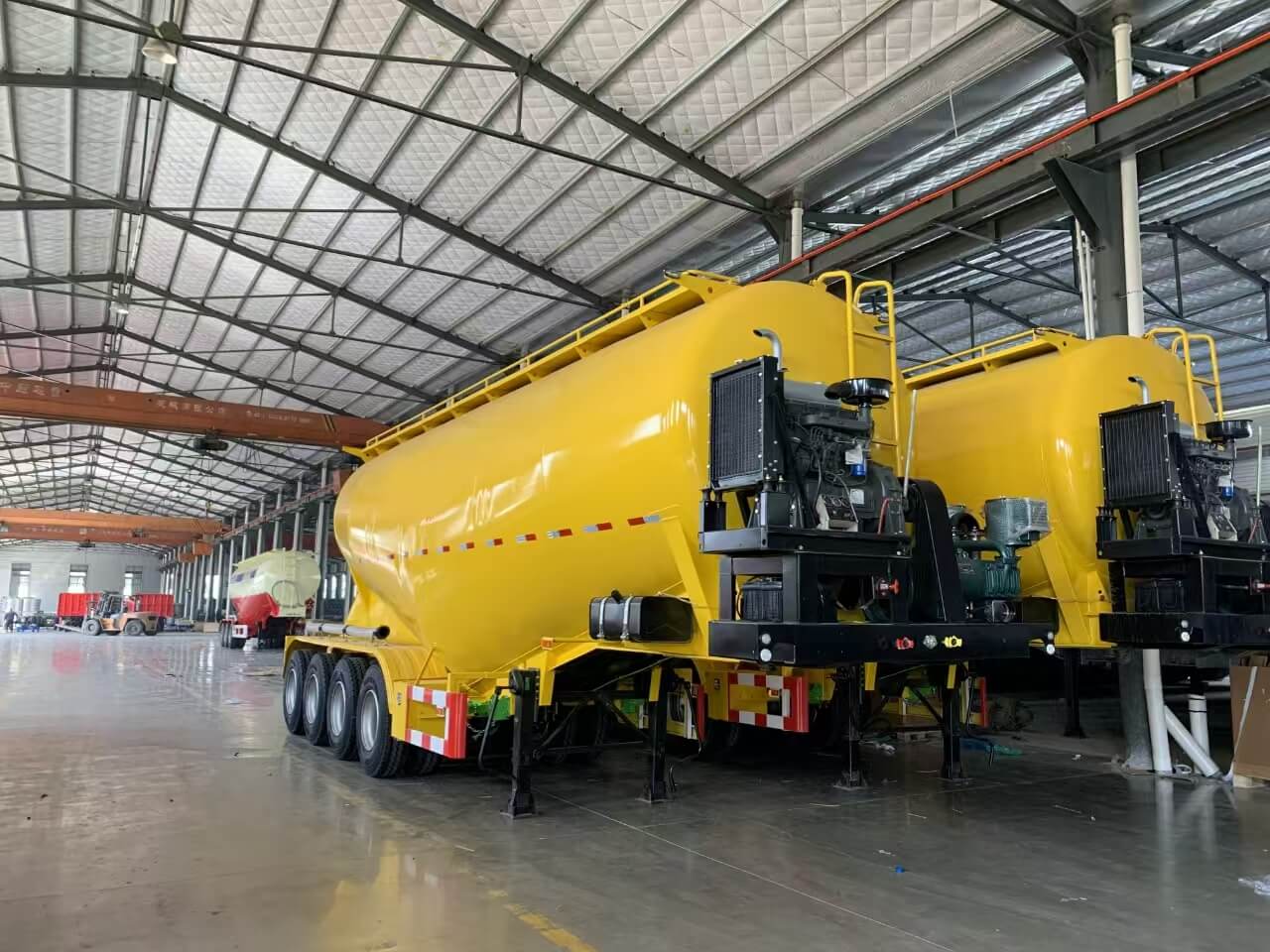
Direct exposure to rain via open hatches is an obvious risk. However, the most persistent and hidden threat to your equipment is internal condensation. Thermodynamics and the concept of the dew point govern this phenomenon.
When you park a rig overnight, the massive surface area of the metal tank acts as a highly efficient heat exchanger. It rapidly loses thermal energy to the cooler night air. Warm humid air often remains trapped inside the sealed tank from the previous day's operations. Eventually, the temperature of the interior metal walls drops below the dew point of that trapped air. Liquid water then condenses directly onto the interior walls. This provides the exact catalyst required for the residual cement dust to hydrate and cake.
The pneumatic blower system itself serves as a significant source of hidden moisture. The air compressors used to pressurize the tank operate at high RPMs and generate substantial heat. Warm air naturally holds more moisture. If your pneumatic tanker trailer lacks functional air coolers or in-line desiccant dryers, you have a problem. The cooling process inside the tank causes suspended water vapor to condense directly into the air lines and hoppers.
Mechanical failures also play a critical role in moisture ingress. A tanker relies on a strict hermetic seal to maintain its internal environment. Worn-out manhole gaskets, improperly dogged top hatches, or failing rubber seals on the bottom butterfly valves allow ambient humidity to seep in. Even a microscopic gap draws in humid air when temperature fluctuations create slight pressure differentials inside the empty vessel.
Operators often assume the cement has chemically set the moment they experience discharge blockages. Flow issues in a 3 axles dry bulk cement trailer are frequently the result of mechanical compaction rather than chemical hydration. Understanding the empirical difference between these two phenomena is crucial for proper troubleshooting on the job site.
Mechanical compaction—also known as packing or settling—is a physical process driven by gravity and vibration. As your rig rumbles down the interstate, the continuous road shock causes the dry cement particles to segregate and settle. The air that naturally exists between the microscopic particles is squeezed out. This causes the material to interlock tightly at the bottom of the conical hoppers. This compacted material is dense and tightly packed, but it remains completely dry.
To help fleet managers and drivers quickly diagnose the root cause of a blockage, refer to the following field assessment matrix.
| Diagnostic Feature | Mechanical Compaction | Chemical Setting (Hydration) |
|---|---|---|
| Primary Cause | Road vibration and gravity squeezing out trapped air | Exposure to moisture, condensation, or high humidity |
| Material State | Tightly packed but completely dry powder | Solidified, crystallized rock-like mass |
| Response to Air Pressure | Fractures, breaks apart, and returns to a fluid state | Remains structurally rigid; blocks air flow completely |
| Required Solution | Proper aeration and fluidization via the blower system | Manual dry cleaning, chiseling, or mechanical removal |
Even though compaction does not involve a chemical phase change, it presents a severe operational hurdle. Tightly packed cement restricts the flow of the subsequent load into the discharge pipe. This forces the pneumatic blower to operate at higher pressures. You burn more fuel, elevate the temperature of the compressed air, and put unnecessary mechanical strain on the entire discharge system.
Modern transport vehicles utilize advanced aeration systems to combat the natural tendency of dry bulk powders to compact. The core working principle of a bulk power tanker relies on a process known as fluidization.
Fluidization occurs when dry compressed air passes upward through a bed of solid particles. At the base of each conical hopper inside the tank, you will find aeration pads. Manufacturers construct these from heavy-duty canvas, woven synthetic fabrics, or porous spun-bond materials. When the discharge sequence begins, the pneumatic blower forces compressed air through these porous pads.
The air permeates the compacted cement powder. It effectively lifts and separates the individual particles. Reintroducing air between the particles drastically reduces the internal friction of the bulk material. The dry cement ceases to behave like a solid mass. It temporarily takes on the physical characteristics of a liquid, flowing smoothly down the angle of the hopper and out through the discharge valve.
The efficacy of this system depends entirely on the condition of the fluidization pads. Moisture entering the tank causes cement to hydrate directly on top of the aeration pads. The porous fabric becomes blinded or clogged with hardened concrete. Once a pad is blinded, compressed air can no longer pass through it evenly. The fluidization process fails. This leads to massive blockages during the next delivery, forcing operators to manually hammer the discharge pipes.
Preventing cement from hydrating and caking inside a tank requires a systematic standard operating procedure. Focus entirely on moisture elimination and residue management. Implementing these empirical steps significantly reduces between-load setting.
Achieve a Complete Empty: The most effective way to prevent residue from setting is to ensure there is as little leftover powder as possible. Train your operators in the precise blow-down process. After completing the primary discharge, fully depressurize and purge the tank. Puffing the tank—rapidly opening and closing the discharge valve while air is flowing—creates pressure spikes. These spikes help dislodge stubborn dust from the hopper walls and aeration pads. The tank must be completely empty before disengaging the PTO.
Manage Compressed Air Quality: The blower introduces massive volumes of ambient air into the tank. You must strictly control the quality of that air. Fleet maintenance teams need to ensure the truck pneumatic system is equipped with functional moisture separators, coalescing filters, or in-line air dryers. Drain and service these components regularly to guarantee the pumped air remains exceptionally dry.
Secure the Tank Immediately: The internal environment of an empty tank is highly vulnerable to ambient humidity. Operators must systematically secure the vessel immediately following the blow-down process. Shut and lock all top loading hatches, bottom discharge butterfly valves, and blow-down valves. Leaving a valve open for even a few hours allows moisture-laden air to draft into the tank.
Park in Favorable Conditions: Operational logistics often dictate parking locations. However, mitigating environmental exposure is highly beneficial. If a trailer must sit empty for an extended period, place it in a covered facility or a shaded area. This minimizes the extreme temperature fluctuations that drive overnight condensation.
The logistics sector is rapidly moving away from reactive manual chipping. Recent industry analyses highlight a massive shift toward predictive maintenance and advanced material sciences in fleet management. As logistics companies face tighter margins and strict delivery schedules, downtime is no longer acceptable.
The current industry trend heavily favors vessels engineered with smart aeration systems and high-end alloys that inherently resist moisture and caking. Fleet operators are prioritizing trailers with optimized V-shaped hopper geometries. These designs utilize gravity more effectively and reduce the reliance on high-pressure air. By adopting these advanced materials and predictive maintenance protocols, modern fleets drastically lower the risk of residual hydration and extend the operational lifespan of their equipment.
Trace amounts of caking and build-up will eventually occur over the lifespan of the equipment despite rigorous preventative measures. When prevention fails, you must approach the removal of hardened cement with strict adherence to safety and mechanical guidelines.
Dry cleaning is the most common and effective method. A technician physically enters the tank to chip away the hardened material. The interior of a tanker is classified as a permit-required confined space. This process must strictly follow OSHA regulations. Mandatory atmospheric testing, continuous mechanical ventilation, and strict lockout and tagout procedures are required to prevent accidental pressurization.
Technicians must use specialized non-sparking tools or low-impact pneumatic air chisels to fracture the caked cement. Exercise extreme caution to avoid damaging the shell of the trailer. Aggressive chiseling easily gouges the aluminum and creates deep scratches. These scratches compromise structural integrity. They also create rough microscopic crevices where future cement dust will inevitably accumulate and set.
Washing out the interior of the trailer is a highly controversial alternative. Water easily removes loose dust, but introducing liquid water into a cement trailer is inherently risky. If you perform a washout, the tank must be dried absolutely perfectly before returning to service. This typically requires massive industrial forced-air heaters to bake the moisture out of the microscopic pores of the aluminum and the aeration pads. If even a trace amount of moisture remains, the subsequent load of dry bulk cement will instantly hydrate upon contact and cause catastrophic blockages.
Internal degradation of a trailer eventually reaches a point of diminishing returns. Heavily pitted, dented, or deeply scratched internal walls create an environment that actively encourages cement build-up. Complete discharge and cleaning become nearly impossible.
When evaluating a fleet upgrade, you need to look at specific engineering parameters rather than generic features. For instance, a standard 40CBM capacity trailer offers the optimal volume-to-weight ratio for high-frequency cement hauling. Prioritize vessels constructed from premium high-strength wear-resistant steel or corrosion-resistant aluminum alloys. These materials offer a smoother internal finish out of the factory. A smoother shell drastically reduces the surface friction that allows dust to cling, directly translating to less caking and faster blow-downs.
Examine the discharge performance metrics. Top-tier modern trailers are engineered to achieve a discharge speed of 1.2 to 1.5 tons per minute. More importantly, they boast a residual ratio of less than 0.2 percent. Leaving virtually zero residue behind is the ultimate defense against between-load hydration.
Superior sealing technology is the final piece of the puzzle. Upgraded models feature high-grade temperature-resistant rubber or silicone gaskets on all manhole covers. They also utilize precision-machined premium butterfly valves at the discharge points. These components guarantee the vessel remains hermetically sealed against ambient humidity while parked.
Cement setting inside a tank between loads is a complex mechanical and chemical issue. It is primarily caused by leftover residue mixing with hidden moisture from condensation, humid air, or degraded seals. Dry bulk cement is highly reactive. By acknowledging this fact, fleet operators can shift their focus from reactive cleaning to proactive moisture control.
Understanding the fundamental difference between mechanical compaction and chemical hydration empowers drivers to use their aeration systems correctly. Implementing strict blow-down procedures and maintaining bone-dry compressed air are your first lines of defense against equipment degradation.
Ultimately, investing in high-quality trailers equipped with superior sealing technology and advanced pneumatic systems is the best long-term strategy. If your current equipment is causing constant downtime, it is time to upgrade. Visit Huayu Vehicle to explore high-performance bulk powder tankers engineered for zero-residue discharge and maximum moisture resistance. Protect your payload, minimize maintenance costs, and keep your operations running smoothly load after load.
If exposed to direct moisture, cement can begin to harden and flash set within just a few hours. The slow build-up of condensation-induced caking usually happens overnight or over a weekend when the trailer is sitting idle and subjected to temperature drops.
Yes, but it is highly risky for cement hauling operations. If you wash it, the interior must be completely bone-dry before loading dry bulk cement again. Even a spoonful of leftover water trapped in the plumbing or aeration pads can instantly ruin the next batch of cement and cause severe blockages.
This is likely due to physical compaction from constant road vibrations or condensation forming inside the tank due to overnight temperature drops. Using your blower to properly aerate the tank should break up mechanical compaction. If the material does not fluidize, hidden condensation has likely caused a chemical set.
Often referred to as a bulk powder tanker or pneumatic trailer, it is a specialized commercial trailer designed to transport fine dry materials like cement, fly ash, or flour. It utilizes a heavy-duty air compressor to fluidize the powder and blow it efficiently into storage silos.
First, ensure the system is fully depressurized for safety. Operators typically use a rubber mallet to gently tap the exterior of the discharge pipe to break up minor mechanical compaction. If the clog is due to chemically set cement, the pipe must be disconnected and manually cleared using long chipping bars or pneumatic chisels.
The ideal operating pressure typically ranges between 12 to 14 PSI—roughly 0.08 to 0.1 MPa—depending on the specific material density and the distance to the storage silo. Exceeding 15 PSI puts unnecessary strain on the aeration pads and increases the risk of blowing a pressure relief valve.


