
Views: 0 Author: Site Editor Publish Time: 2026-11-14 Origin: Site


Look closely at a cement tanker cruising down the highway. You will immediately notice the distinct V-shape or W-shape. Why avoid a standard flat or perfectly cylindrical cargo box? Transporting dry bulk materials poses a complex mechanical challenge. Those conical ends are not aesthetic choices. They are highly engineered solutions. They harness gravity, manage intense pneumatic pressure, and ensure a rapid, residue-free discharge. In industrial transport, efficiency dictates profitability. Let us break down the fascinating physics and mechanical engineering making these specialized vehicles indispensable.
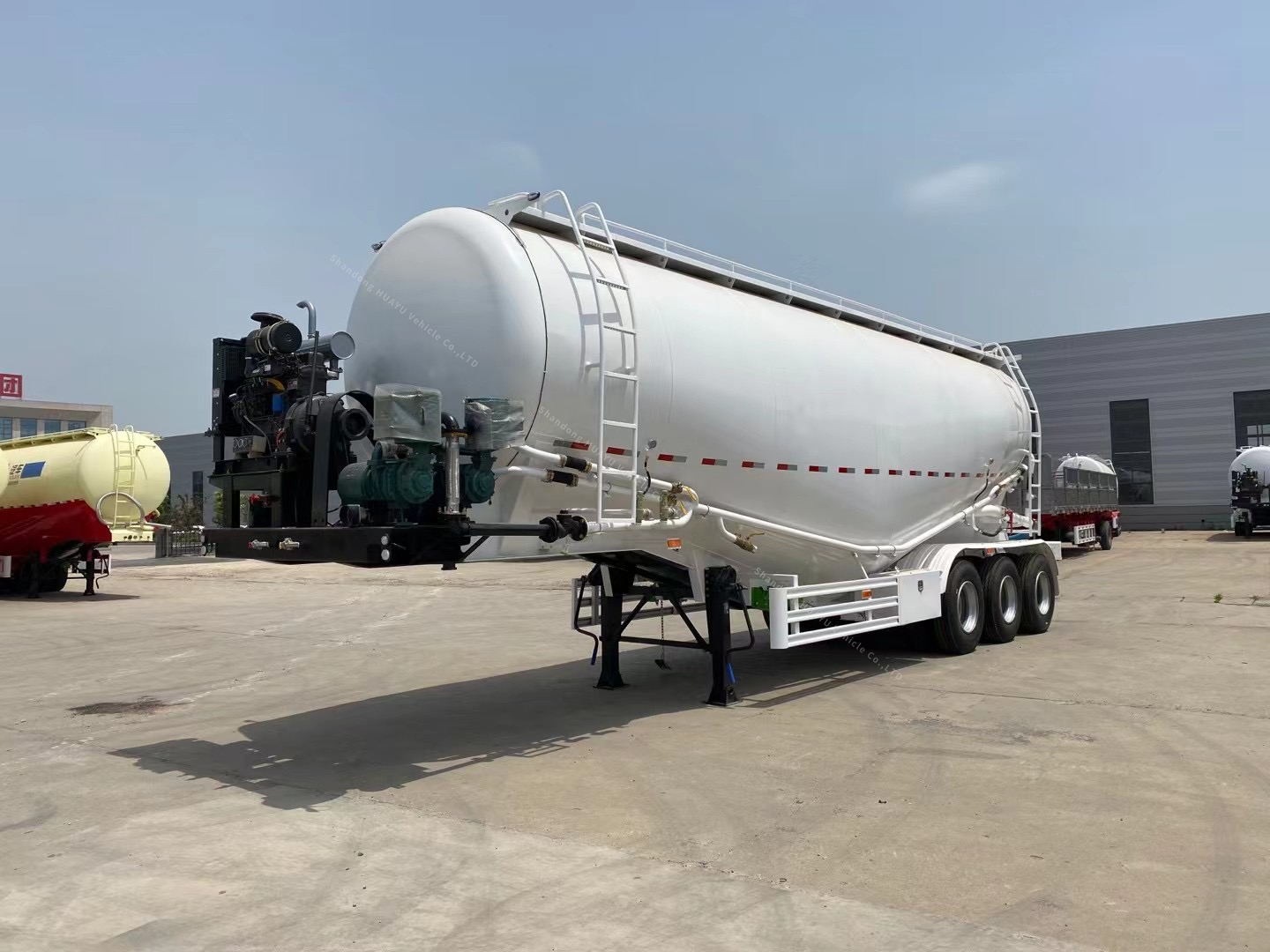
To fully grasp the engineering behind the conical design, we must first establish the operational reality of this vehicle. A cement tanker trailer is far from a simple hollow container. It functions as a mobile pneumatic processing plant designed for a highly specific logistical task.
Moving raw materials efficiently drives large-scale construction and global infrastructure development. A commercial bulk power tanker is specifically engineered to haul massive quantities of dry, powdery materials from manufacturing plants directly to storage silos or active job sites. The materials typically transported include Portland cement, fly ash, lime powder, and mineral dust.
Absolute moisture prevention is a critical operational requirement in this logistical chain. Cement acts as a hydraulic binder. It reacts chemically and hardens the moment it touches water. Therefore, the tanker must provide a hermetically sealed environment. This prevents ambient humidity or sudden rainstorms from initiating the hydration process during transit.
The operational success of these vehicles relies entirely on several integrated mechanical components working in unison. The main vessel is typically fabricated from high-strength carbon steel or aluminum alloy. It features distinct V-shaped or W-shaped conical hoppers at the base. Connected to this is the air compressor, a robust mechanical device driven by the truck engine power take-off or an independent diesel engine. Inside the hoppers lies the fluidization bed. This porous synthetic canvas permits compressed air to pass through while blocking cement particles from clogging the air lines. Finally, a network of heavy-duty discharge piping guides the pressurized mixture of air and powder out of the tank and up into the receiving silo.
Why do manufacturers abandon flat-bottom designs in favor of conical ends? It comes down to the fundamental physics of granular material flow. Dry powders behave erratically compared to liquids or solid blocks. They demand specific geometric considerations to manage their movement.
Cement powder is notoriously cohesive. Viewed under a microscope, individual particles possess jagged, angular shapes. These shapes generate high surface friction, causing them to interlock and clump together. In industrial storage, this inherent cohesion leads to two catastrophic flow failures: bridging and rat-holing.
Bridging occurs when compacted powder forms a structural arch directly over the discharge outlet. This completely halts the flow. Rat-holing happens when a narrow vertical channel empties out above the valve. The surrounding material remains stagnant and adhered to the vessel walls. Imagine building a dry powder trailer like a standard rectangular cargo box. The flat floor and sharp 90-degree corners would immediately induce both of these blockages.
The steep angles of the conical ends are precisely engineered to combat this. They exceed the natural angle of repose of the material. By harnessing gravitational pull, the sloped walls constantly overcome the internal friction of the powder. This continuous downward force pushes the material toward the lowest central point. It guarantees a reliable, uninterrupted flow.
Gravity is a powerful force, but it alone cannot push 40 tons of densely compacted cement through a narrow hose and up into a 50-foot storage silo. Advanced pneumatic engineering enters the equation here. The conical shape proves absolutely vital to the fluidization process.
Fluidization transforms a solid particulate material into a dynamic, fluid-like state. When an operator engages the system, high-pressure air pumps into the bottom of the tank. It passes upward through the porous fluidization canvas. This compressed air permeates the dense cement bed and separates the microscopic particles. Friction drops drastically. Once properly aerated, the heavy powder behaves much like water, flowing smoothly through heavy-duty valves and industrial hoses.
The geometric narrowing of the conical hopper acts as a performance amplifier for the powder pneumatic trailer. It concentrates the volume of compressed air at the very bottom of the tank. This creates a localized zone of intense pressure directly above the discharge valve. If the tank had a flat bottom, the incoming air would disperse unevenly across a wide surface area. Achieving even marginal aeration would require a massive, fuel-thirsty compressor. The V-shape funnels the fluidized cement precisely into the discharge pipe. It maximizes kinetic energy while minimizing wasted air.
Safety and structural integrity remain paramount concerns in heavy-duty trailer engineering. Unloading dry bulk materials is an inherently pressurized operation. It subjects the metal vessel to immense physical stress.
To force aerated cement out of the trailer and vertically into a silo, the internal environment must be pressurized. Systems typically operate around 0.2 MPa, which is approximately 29 psi. While 29 psi might sound relatively low, applying that pressure across the massive internal surface area of a 40-foot commercial trailer creates a staggering total outward force.
Flat metal panels and sharp corners are highly vulnerable to internal pressure. In a rectangular tank, this outward force would cause the flat walls to bow significantly. The concentrated stress at the 90-degree joints would rapidly induce metal fatigue. Microscopic cracking or catastrophic rupture would soon follow. Conical and cylindrical designs naturally convert this internal pressure into hoop stress. They distribute the load evenly across the curvature of the shell. This geometric advantage minimizes stress concentration factors. The vessel can safely endure thousands of pressurization cycles.
Operational efficiency in the logistics sector is frequently measured by payload optimization and waste reduction. The internal geometry of the tank directly dictates how much product successfully reaches the client versus how much remains trapped inside.
A transport vessel featuring a flat bottom would inevitably wedge a substantial volume of cement in the corners and along the edges. These fluid dynamic dead zones carry severe economic consequences. Any retained product represents lost revenue for the supplier. Furthermore, this leftover cement acts as dead weight on the return journey. The truck engine burns extra diesel fuel simply to haul empty space.
The maintenance implications are even more daunting. Should ambient moisture seep into the tank after unloading, the trapped powder hydrates and cures into solid concrete. Sending a maintenance worker into a confined, dusty tank with a jackhammer to chip away hardened cement is a dangerous nightmare. It is time-consuming and often damages the delicate fluidization canvas. The steep slopes of a conical design eliminate dead zones entirely. This ensures a residual rate of less than 0.3 percent and keeps the interior exceptionally clean.
Time directly correlates with profitability in commercial transport. A truck spending three hours unloading at a construction site generates zero revenue on the highway. The synergy between gravity-feeding conical hoppers and pressurized fluidization allows modern trailers to achieve remarkable discharge speeds.
Under optimal conditions, a well-engineered tank discharges dry bulk material at a staggering rate of 1 to 1.5 tons per minute. A standard 40-ton payload empties completely in roughly 30 to 40 minutes. Rapid unloading offers compounding benefits. The truck engine and auxiliary compressor run for shorter periods, reducing mechanical wear and fuel consumption. Fleet operators easily complete more delivery cycles per shift.
Global infrastructure demands are rising, and environmental regulations are tightening. Consequently, the engineering behind dry bulk transport is rapidly evolving. We are witnessing a significant industry shift toward maximizing payload-to-weight ratios. Manufacturers are experimenting heavily with advanced, lightweight aluminum alloys and high-yield structural steels to replace traditional heavy materials.
Modern vessel designs push the boundaries of hopper geometry. Engineers customize conical angles to match the exact flow characteristics of specific synthetic materials and alternative eco-friendly cements. Simultaneously, smart technology integration transforms pneumatic operations. Fleets increasingly adopt automated pressure monitoring systems and electronic discharge valves. These innovations prevent over-pressurization and optimize the air-to-material ratio in real-time. The ultimate result is drastically reduced energy consumption and a minimized carbon footprint during the unloading process.
To objectively illustrate why the conical design dominates the market, the following comparison highlights the stark performance differences against a theoretical flat-bottomed alternative.
| Feature / Metric | Conical Hopper Tank (V/W-Shape) | Theoretical Flat Bottom Tank |
|---|---|---|
| Discharge Speed | High at 1.0 to 1.5 tons per minute due to gravity-assisted funneling and concentrated fluidization. | Very Low. Requires mechanical sweeping as material will not naturally flow to the outlet. |
| Residue Leftover | Minimal at under 0.3 percent. Angled walls eliminate dead zones and material buildup. | High. Material accumulates in 90-degree corners, leading to heavy product loss. |
| Structural Integrity | Excellent. Naturally distributes 0.2 MPa air pressure, eliminating weak stress points. | Poor. Flat panels are highly susceptible to bowing and require heavy internal reinforcements. |
| Maintenance Needs | Low. The self-cleaning funnel reduces the need for hazardous manual internal cleaning. | High. Requires frequent confined-space entry to chip away hardened cement. |
| Fuel Efficiency | High. Complete discharge means no dead weight is carried on the return trip. | Low. Retained material adds unnecessary tare weight during empty runs. |
Understanding the underlying engineering is merely the first step. Fleet managers must align technical specifications with specific operational realities to guarantee a strong return on investment. Below are the key parameters to evaluate based on current industry standards.
The metal used to fabricate the tank shell dramatically impacts both initial capital expenditure and total cost of ownership. Carbon steel remains the traditional industry standard. It offers exceptional tensile strength and resistance to abrasive wear from coarse powders. It is highly durable and cost-effective but carries a heavier tare weight.
Conversely, aluminum alloys are increasingly favored in regions with stringent highway weight enforcement. Aluminum significantly reduces empty vehicle weight, often by 1.5 to 2 tons. Operators haul more payload per trip without exceeding legal axle limits. The initial investment is steeper, but long-term fuel savings and increased revenue per run often justify the upgrade.
Selecting the correct tank volume requires calculating the precise relationship between cubic capacity, cargo bulk density, and local bridge laws. Cement is highly dense at roughly 1.44 tons per cubic meter. A standard 3-axle 35cbm to 40cbm tank is usually perfect to hit maximum legal highway weights. If a fleet hauls lighter materials like fly ash, a larger 50cbm or 60cbm trailer becomes necessary to maximize the payload footprint.
A superior tank design is useless without a capable pneumatic system. Evaluate the output capacity of the air compressor carefully. A standard 40cbm pneumatic tanker typically operates flawlessly with a 12m³/min air compressor. This provides adequate flow to fluidize the material rapidly without clogging the lines. The quality of the fluidization bed is equally important. Premium synthetic canvases offer excellent temperature resistance and low moisture retention, preventing tears under intense pressure.
The running gear must be robust enough to handle high centers of gravity and heavy dynamic loads. Tri-axle configurations are the industry standard, providing optimal weight distribution. Mechanical leaf spring suspensions are highly durable and cost-effective for rugged construction sites. However, air ride suspensions are gaining popularity. Air systems absorb road vibrations better, reducing structural fatigue on the tank and extending tire life during empty transit.
Handling pressurized vessels demands strict adherence to safety protocols. Ensure any prospective trailer is equipped with high-quality pressure relief valves. These automatically vent excess air if internal pressure spikes above safe limits. Reinforced manhole covers, anti-slip walkways, and high-visibility markings are also essential for protecting operators during routine loading and inspections.
The conical ends of a cement tanker trailer represent a perfect marriage of physics and industrial engineering. By harnessing the natural force of gravity and effectively managing high pneumatic pressure, these designs guarantee maximum operational efficiency. They prevent material blockages, maintain structural integrity, and ensure rapid, residue-free deliveries.
Investing in a premium pneumatic trailer with optimized hopper geometry directly improves the bottom line for fleet owners. Faster discharge times and significantly lower maintenance requirements keep trucks on the road generating revenue rather than sitting in the repair shop.
If you are looking to upgrade your transport capabilities and maximize payload efficiency, explore the extensive range of high-performance dry bulk trailers at Huayu Vehicle. Our engineering team can help you customize the perfect conical tank solution tailored to your specific fleet requirements.
Absolutely. These specialized vehicles are highly versatile and routinely transport a wide array of dry bulk materials, including fly ash, lime powder, mineral dust, calcium carbonate, and plastic pellets. If the vessel is constructed from food-grade aluminum or stainless steel, it can even transport agricultural products like flour or sugar. However, operators must perform rigorous cleaning between different loads to prevent cross-contamination.
The geometric angle of the hoppers is meticulously calculated based on granular physics. Typically, the fluidization angle is set between 12 to 15 degrees relative to the horizontal plane. For highly cohesive materials prone to severe clumping, engineers may increase this slope to 45 degrees or steeper to ensure gravity can adequately overcome internal friction.
The compressor forces high-velocity air through a primary delivery pipe that splits into a manifold system. This manifold connects directly to the base of each conical hopper, feeding air into a sealed chamber beneath the fluidization bed. As the air pushes up through the porous canvas, it aerates the resting powder, reducing friction and allowing the solid material to flow like a liquid toward the discharge valve.
Yes, the internal geometry scales with the total capacity and length of the trailer. Smaller, compact tanks often utilize a single V-shape design, acting as one large funnel. High-capacity trailers usually feature a W-shape or multi-hopper design, incorporating two, three, or four distinct cones connected in series. This multi-cone approach effectively distributes massive payloads across the axles and allows for sequential unloading.
Blockages usually occur due to moisture contamination or incorrect air pressure settings. Operators must first depressurize the tank completely for safety. Once safe, they can pulse the air valves to break up minor clogs. For severe blockages, the discharge hose must be disconnected and cleared manually. Preventative maintenance on the fluidization canvas is the best way to avoid this issue entirely.
A well-maintained carbon steel cement tanker can last 10 to 15 years in active service. Aluminum alloy models often exceed this lifespan due to their natural corrosion resistance. The longevity heavily depends on routine maintenance of the pneumatic system, regular replacement of the fluidization cloth, and immediate repair of any structural abrasions caused by coarse powders.


