
Views: 0 Author: Site Editor Publish Time: 2026-11-14 Origin: Site


Imagine gripping the steering wheel as you navigate a sweeping highway curve at 55 mph. You are fully aware of the 40,000 pounds of dense freight loaded directly behind your cab. Without meticulous securement, centrifugal force acts almost instantly. It aggressively pushes that massive weight toward the outside edge of the curve. If the cargo shifts sideways, the cascading effects are disastrous. We are talking about crushed merchandise, jackknifed rigs, or a deadly high-speed rollover. Understanding what keeps cargo from shifting sideways in transit forms the absolute bedrock of logistics safety, legal compliance, and overarching fleet profitability.
Recently, the heavy-duty transport sector has seen a massive push toward predictive load monitoring. Industry trend analyses reveal that fleet managers are increasingly adopting smart telematics and trailer sensors to alert drivers to micro-shifts in real-time. Furthermore, regulatory bodies are tightening the enforcement of liability laws surrounding load securement. Despite these impressive technological advancements, physical hardware and structural securement remain the undisputed cornerstone of transit safety. Technology warns you of a shift. Only applied physics, rigorous blocking techniques, and purpose-built trailer architecture actually prevent it.
To effectively stop cargo from moving, logistics engineers must first grasp exactly why it wants to move. Freight does not shift arbitrarily. It reacts predictably to the intense physical forces generated by a commercial vehicle in motion.
Newton’s First Law of Motion states an object in motion stays in motion in a straight line unless acted upon by an external force. As a fully loaded rig leans into a sweeping highway interchange or takes a tight off-ramp, the tractor changes direction. However, the cargo inside naturally fights to continue moving straight.
This resistance manifests as centrifugal force relative to the trailer deck. It forcefully pushes the payload outward, away from the apex of the turn. Consequently, if this lateral kinetic energy exceeds the static friction anchoring the cargo base to the floor, the freight will inevitably slide sideways. The sharper the maneuver or the higher the velocity, the greater the lateral acceleration. This directly correlates to a higher risk of a catastrophic load shift.
Static friction is the invisible force keeping a stationary object anchored. Transit environments, however, are violently dynamic. Constant rhythmic vibrations from uneven asphalt, deep potholes, and bridge expansion joints introduce continuous vertical acceleration to the load.
When a trailer hits a bump, the sudden upward jolt momentarily reduces the downward pressure the cargo exerts on the deck. In that microsecond, the friction coefficient plummets. Over hundreds of highway miles, this relentless cycle of vibration and reduced friction causes unsecured cargo to slowly walk or vibrate sideways. Even a dense steel coil that seems impossibly heavy to move by hand will gradually creep across a trailer deck due to sustained road vibration.
The center of gravity dictates how a specific piece of freight reacts to lateral forces. Cargo with a low center of gravity, like steel plates, primarily risks sliding. In contrast, freight with a high center of gravity introduces a severe rotational hazard. Towering industrial machinery, double-stacked pallets, or liquid totes fall into this category.
Instead of merely sliding laterally, top-heavy cargo acts as a dangerous lever. When centrifugal force strikes, the elevated center of gravity creates a tipping moment. If the cargo tips sideways, it violently strikes the trailer walls. In open-deck scenarios, it plunges off entirely. This sudden lateral shift of a tipping load immediately alters the dynamic balance of the vehicle, frequently triggering a rollover.
Preventing lateral shift relies on core principles established by heavy-haul engineering standards. Mastering these concepts ensures freight remains static from the loading dock to the final destination.
A pervasive operational misconception is that cargo fitting perfectly from wall to wall inside a dry van requires no additional securement. This is a highly dangerous assumption. Standard trailer walls are engineered with thin aluminum or composite materials to protect freight from rain and wind. They are absolutely not designed to serve as structural bulkheads against thousands of pounds of lateral kinetic force.
During a hard evasive maneuver, the lateral pressure exerted by dense freight easily exceeds the structural integrity of standard sidewalls. Freight that fits snugly still demands active, independent securement to prevent it from bursting through the side of the trailer.
Think of friction as an invisible, continuous tie-down. The higher the friction coefficient between the cargo and the deck, the less securement hardware is required to combat sliding.
Placing engineered rubber friction mats beneath wooden pallets, metal skids, or machinery dramatically increases the drag between the cargo and the floor. Bare wood on a bare metal deck might offer a meager friction coefficient of 0.2. Introducing a heavy-duty rubber mat spikes that coefficient to 0.6 or higher. This simple addition drastically reduces the baseline probability of the load sliding sideways.
Every strap, chain, binder, and tie-down device is stamped with a specific Working Load Limit. This represents the maximum safe load the equipment can handle under normal conditions. To safely thwart sideways shift, operators must meticulously adhere to aggregate limit rules. The combined limit of all securement devices used must equal at least 50 percent of the total weight of the cargo being secured.
Blocking and bracing form the most robust physical barriers against lateral cargo movement. These techniques prove especially critical inside enclosed trailers, refrigerated units, or shipping containers where deploying traditional over-the-top tie-downs is impractical.
Blocking involves positioning rigid physical barriers tightly against the base of the cargo to halt horizontal sliding. Common blocking materials include heavy-duty lumber, metal chocks, or engineered synthetic blocks. For blocking to effectively neutralize sideways movement, it cannot merely rest next to the freight. It must be nailed, bolted, or wedged directly into the floor structure. This allows the block to absorb and transfer the lateral kinetic energy of the shifting cargo deep into the chassis of the trailer.
While blocking secures the base against sliding, bracing secures the upper portions of the cargo against tipping. Bracing is applied above floor level and is absolutely indispensable for top-heavy loads. By utilizing load bars, structural beams, or custom-built wooden frameworks spanning the width of the trailer, bracing anchors the upper half of the freight. This counteracts the rotational torque generated during a turn, ensuring the cargo remains perfectly vertical.
Lateral voids act as the primary catalysts for cargo shift. These are the empty spaces between pallets or between the cargo and the trailer walls. If a gap exists, the cargo has room to accelerate. It builds dangerous momentum before slamming into the next object.
To mitigate this threat, logistics personnel deploy void fillers. Honeycomb cardboard panels work exceptionally well for narrow gaps. For larger voids, inflatable dunnage airbags serve as the industry standard. Placed between pallets and inflated to a specific pressure with compressed air, these airbags expand to mold perfectly to the contour of the void. The pneumatic pressure effectively compresses the individual pallets into a single, unified, immovable block.
For open-deck transport, blocking and bracing against walls is physically impossible. Here, tie-downs become the primary mechanism for keeping cargo from shifting sideways.
Understanding the mechanical difference between direct and indirect tie-downs is crucial for lateral stability.
Direct Tie-Downs: These attach directly to the cargo via built-in anchor points or D-rings and connect to the trailer deck. They physically pull the cargo in opposing directions. This creates a tension web that directly counteracts sideways movement.
Indirect Tie-Downs: These pass entirely over the top of the cargo, attaching to the trailer on both sides. Indirect tie-downs do not pull the cargo horizontally. Instead, they generate massive downward pressure. This artificially increases the normal force and the static friction against the deck.
The geometric angle at which a tie-down is applied dictates its effectiveness against sideways movement. A strap running straight down provides 100 percent of its force as downward pressure. This is excellent for friction but offers zero direct lateral resistance.
To aggressively stop sideways movement, straps or chains must be angled. Crossing straps in an X pattern over the front and rear of the cargo provides superior lateral protection. This specific geometric angle empowers the tie-down to actively resist centrifugal forces attempting to push the cargo toward the trailer edge.
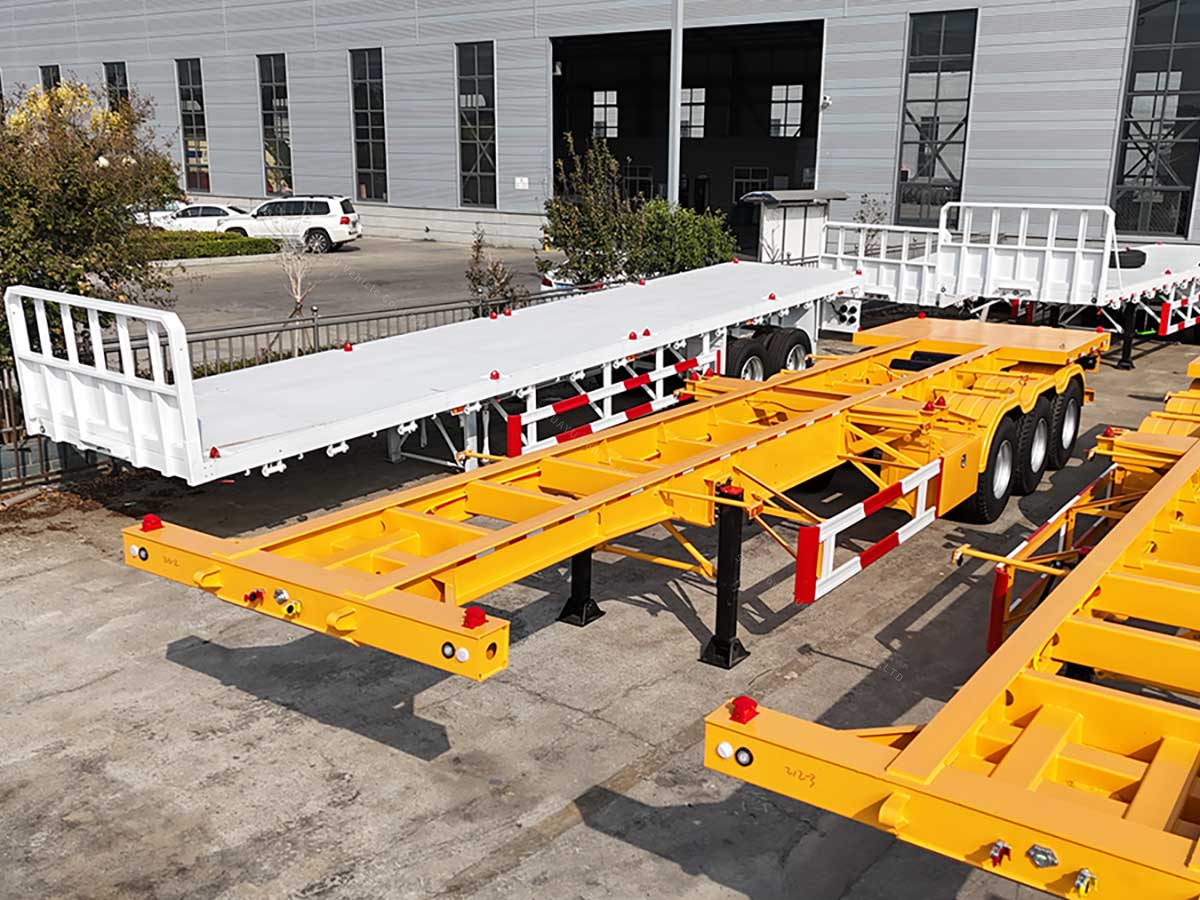
The fundamental architecture of the trailer utilized plays a foundational role in cargo securement. Attempting to secure specialized freight on the wrong type of equipment dramatically amplifies the risk of lateral shift. Investing in the right vehicle makes preventing movement inherently safer and vastly more efficient.
When transporting intermodal shipping containers, strapping or chaining a heavy steel box to a standard flat deck is highly inefficient. It leaves dangerous room for lateral sliding if tie-downs lose tension. A purpose-built chassis solves this problem entirely. Utilizing a dedicated shipping container trailer provides standardized ISO twist locks located at the four corners of the frame. When a container is lowered onto the trailer, these heavy-duty metal cones insert directly into the corner castings of the container. Rotating the locks 90 degrees physically clamps the container to the high-strength steel frame. This mechanical bond makes sideways shifting mathematically impossible.
For high-volume port drayage and rail yard logistics, minimizing tare weight while maximizing securement integrity is the ultimate priority. This is precisely why fleets frequently invest in a specialized skeleton trailer for sale. A standard 2-axle 40-foot model is typically constructed from Q345B high-tensile steel. Because this specialized vehicle lacks a solid floor, it cannot rely on friction. Instead, it relies entirely on its structural pins and twist locks. This stripped-down design forces absolute compliance. The container simply cannot be transported unless it is physically locked into the chassis, eliminating the human error associated with under-tensioned straps.
When hauling construction materials, lumber, or oversized machinery, enclosed trailers are off the table. When evaluating a flatbed trailer for sale, fleet managers must prioritize models equipped with versatile, heavy-duty securement points. A high-quality tri-axle flatbed—often capable of handling up to 60 tons—combats sideways shift by offering sliding winch tracks, reinforced stake pockets, and recessed chain spools. Because flatbeds lack walls to act as a secondary barrier, they demand the meticulous application of indirect tie-downs and friction mats. Continuous winch tracks allow operators to place straps at the exact optimal angles required to neutralize lateral forces.
| Trailer Architecture | Ideal Cargo Profile | Primary Lateral Defense | Lateral Shift Risk Level |
|---|---|---|---|
| Skeleton / Container Chassis | Intermodal Shipping Containers | ISO Twist Locks (Mechanical clamping) | Zero (when properly locked) |
| Heavy-Duty Flatbed | Machinery, Steel Coils, Lumber | Winch Tracks, Chains, Friction Mats | Low (requires skilled tie-down geometry) |
| Enclosed Dry Van | Palletized Goods, Boxed Freight | Dunnage, Load Bars, Pneumatic Airbags | Moderate (highly reliant on void filling) |
Even veteran loading crews and drivers make critical securement errors. Recognizing these frequent failures is the first step toward implementing corrective, evidence-based practices.
Fail 1: Ignoring Empty Spaces. Loading pallets into a dry van but leaving 10-inch gaps between the pallets and the trailer walls is a recipe for disaster. During a turn, the pallets slide across the gap. They build kinetic momentum before violently slamming into the wall, destabilizing the trailer. The Correction: Always eliminate lateral voids. Utilize inflatable dunnage bags, honeycomb cardboard, or adjustable load bars to create a single, continuous block of freight from wall to wall.
Fail 2: Relying Solely on Trailer Walls. Placing heavy, dense items like engine blocks against the thin aluminum walls of an enclosed trailer assumes the wall will act as a brace. The lateral force of a heavy object during a sharp maneuver will easily puncture or bow the trailer wall. The Correction: Treat the trailer walls as weather protection, not securement. Use heavy-duty floor blocking and direct tie-downs to secure heavy items independently.
Fail 3: Under-Tensioning Straps. Tightening straps aggressively while parked but failing to check them after the truck has been in motion is a critical error. As the truck travels, road vibration causes the cargo to settle and compress. This introduces dangerous slack into the straps. A loose strap provides zero downward pressure. The Correction: Follow the FMCSA mandated 50-mile check rule. Drivers must pull over within the first 50 miles of a trip to inspect and re-tension all straps and chains.
Fail 4: Miscalculating the Center of Gravity. Loading heavy, dense freight on top of lighter, fragile pallets to save floor space drastically raises the center of gravity. When lateral centrifugal force is applied, the top-heavy load acts as a pendulum. It tips sideways and potentially causes a rollover. The Correction: Always load the heaviest freight on the bottom layer, directly on the deck, keeping the center of gravity as low as possible.
Failing to prevent sideways cargo shift is not merely a theoretical safety hazard. It represents a substantial legal, financial, and operational liability for motor carriers. When freight moves laterally, the ripple effects deeply impact insurance premiums, regulatory standing, and corporate reputation.
The most severe consequence of lateral cargo shift is the sudden loss of vehicle control. This frequently culminates in a rollover or jackknife event. Commercial vehicles operate with an inherently high center of gravity. If a 40,000-pound load shifts laterally during an evasive maneuver, it instantly alters the dynamic balance of the vehicle. According to empirical safety data, load shift remains a primary contributing factor in commercial truck rollovers. The resulting accidents frequently lead to severe injuries, environmental hazards from spilled diesel, and the total loss of the tractor-trailer unit.
Even in scenarios where a lateral shift does not result in a catastrophic accident, the economic ramifications are profound. Cargo that shifts sideways is highly susceptible to crushing, abrasion, and structural failure. Upon arrival at the destination, receivers conduct rigorous inspections. Damaged freight is routinely rejected. This initiates a complex claims process that directly erodes profit margins and severely damages carrier reputation, often leading to the termination of lucrative shipping contracts.
The regulatory landscape governing cargo securement is stringent and unforgiving. The FMCSA enforces strict guidelines under Part 393 of the Federal Motor Carrier Safety Regulations. If cargo shifts due to improper securement and causes an accident, the legal liability is extensive. The driver, the motor carrier, and sometimes the shipper can be named in devastating lawsuits. Beyond civil litigation, DOT inspectors actively monitor compliance. Violations related to poor securement result in immediate out-of-service orders, triggering targeted interventions and significantly higher insurance premiums.
Securing cargo properly to prevent dangerous sideways movement is a dynamic engineering challenge. It demands a combination of applied physics, operational vigilance, and the right equipment. By thoroughly understanding the centrifugal and vertical forces at play, utilizing robust blocking and bracing, and eliminating empty voids, drivers can ensure their freight remains completely static.
Furthermore, matching the specific freight to the correct vehicle architecture is the ultimate proactive step in risk management. Physics and road conditions will constantly test load stability. Smart investments in securement tools and proper trailers ensure safe transit. Whether you need a specialized skeleton chassis for port operations or a heavy-duty flatbed for oversized industrial loads, matching your freight to the right equipment is non-negotiable. Explore the extensive lineup of engineered transport solutions at Huayu Vehicle to ensure your fleet remains safe, compliant, and highly profitable.
According to FMCSA regulations, the minimum number of tie-downs depends on the length and weight of the cargo. Generally, you need one tie-down for articles 5 feet or less in length and under 1,100 pounds. For cargo exceeding 10 feet, you must use two tie-downs for the first 10 feet, plus one additional tie-down for every subsequent 10 feet. However, to effectively combat lateral shift, crossing straps in an X pattern is highly recommended, which often requires exceeding the bare minimum legal requirements.
Blocking and bracing are complementary but distinct securement methods. Blocking involves securing rigid materials like lumber or metal chocks directly to the trailer deck to prevent the base of the cargo from sliding horizontally. Bracing is applied to the upper portions of the cargo, designed to prevent top-heavy items from tipping, leaning, or falling over when subjected to lateral forces during a turn.
Yes, internal bracing is absolutely necessary. While the twist locks on the trailer chassis secure the exterior of the shipping container and prevent the box itself from shifting sideways, they do nothing to secure the freight inside. The cargo within the container must be properly blocked, braced, and strapped. If internal freight shifts laterally, it can severely damage the container walls, alter the center of gravity, and cause a rollover.
Twist locks are heavy-duty, rotating metal cones positioned at the four corners of a specialized container chassis. During loading, the shipping container is lowered so that its corner castings fit over the twist locks. The operator then rotates the locks 90 degrees. This mechanical engagement physically binds the container to the high-tensile steel frame of the trailer, creating a rigid connection that makes lateral, forward, or vertical movement impossible during transit.
The FMCSA addresses lateral movement primarily in Part 393.100 of the FMCSRs. The regulation mandates that cargo must be contained, immobilized, or secured so that it does not leak, spill, blow off, fall from, or otherwise become dislodged. Furthermore, the securement system must be capable of withstanding a minimum lateral acceleration of 0.5 g without allowing the cargo to shift.
Yes, weather conditions significantly impact load stability by altering the coefficient of friction. Rain, snow, and ice accumulating on a flatbed deck drastically reduce the natural friction between the cargo and the floor. When friction decreases, the reliance on active tie-downs increases heavily. In wet or icy conditions, lateral forces that would normally be absorbed by deck friction can easily cause under-secured freight to slide sideways.
Liability in cargo shift accidents is often shared but primarily falls on the motor carrier and the commercial driver. The driver is legally required to inspect the load within the first 50 miles and periodically thereafter. However, if a shipper loaded and sealed a trailer and the driver had no opportunity to inspect the internal securement, the shipper may be held liable for accidents caused by internal lateral shifts.
Proper load distribution ensures weight is spread evenly across the axles and side-to-side. If cargo is loaded heavier on one side of the trailer, the suspension is unevenly compressed. This drastically lowers the rollover threshold on that side. When centrifugal force pushes toward the heavier side during a curve, the trailer is significantly more likely to tip over compared to a perfectly balanced load.
Static friction is the resistance that keeps a stationary object from moving across the trailer deck. Dynamic friction is the resistance once the object is already sliding. Static friction is always stronger than dynamic friction. The goal of cargo securement is to maintain static friction. Once a load breaks static friction and begins to slide, dynamic friction is too weak to stop it, resulting in a violent lateral shift.
According to FMCSA regulations, a commercial driver must inspect the cargo and its securing devices within the first 50 miles after beginning a trip. Following this initial check, the driver must re-examine the securement devices whenever a change of duty status is made, after the vehicle has been driven for 3 hours, or after the vehicle has been driven for 150 miles—whichever occurs first.


