
Views: 0 Author: Site Editor Publish Time: 2026-11-07 Origin: Site


Transporting fuel during the harsh winter months presents a unique set of logistical hurdles. Freezing ambient temperatures act as your most notorious adversary. Imagine standing in a wind-swept delivery terminal at 3 AM. The air is bitterly cold. You open the bottom discharge valves wide, yet barely a trickle of product exits the delivery hose. When temperatures plummet, diesel fuel undergoes a dramatic physical transformation known as waxing or gelling. This rapid chemical reaction causes the naturally occurring paraffin wax within the diesel to solidify. It morphs a highly fluid liquid into a dense, sludgy mass.
For fleet managers and owner-operators, diesel waxing is far more than a mere chemical inconvenience. It is a catastrophic operational roadblock. Waxing directly chokes fluid dynamics. It severely complicates the entire tank discharge process and throws tight delivery schedules into chaos. Understanding exactly how sub-zero weather impacts your equipment is the cornerstone of preventing catastrophic damage. You can avoid thousands of dollars in downtime and ensure safe, efficient unloading. In this comprehensive breakdown, we will dissect the empirical science of diesel waxing. We will examine its direct mechanical impact on tank discharge. Finally, we will identify the critical engineering features you must look for when winter-proofing your commercial transport fleet.
To truly grasp how winter weather sabotages fuel transport, you must first examine the microscopic chemical composition of the payload itself. Diesel waxing is not an indicator of dirty or contaminated fuel. Rather, it is a natural, unavoidable characteristic of the hydrocarbon mixture reacting to thermal depletion.
Standard commercial diesel fuel is a highly complex mixture of hydrocarbon chains derived from crude oil. This mixture inherently includes a significant concentration of paraffin wax. Under normal temperate conditions, this wax remains completely dissolved within the liquid solution. Paraffin is actually a highly beneficial component. It drastically improves the natural lubrication properties of the fuel. Furthermore, it boosts the cetane number, leading to superior combustion efficiency in heavy-duty diesel engines. However, paraffin possesses a relatively high freezing point. As the ambient air pulls heat away from the fuel, the wax molecules begin to bond together. They precipitate out of the liquid solution. Ultimately, they form solid, interlocking crystalline structures.
The transition from a free-flowing liquid to a stubborn, gel-like state does not happen instantly. It occurs across specific temperature thresholds. Monitoring these stages is essential for fleet operators aiming to manage winter deliveries without incident.
| Temperature Stage | Average Threshold | Physical Characteristics | Operational Impact |
|---|---|---|---|
| Cloud Point | 32 degrees Fahrenheit or 0 degrees Celsius | Wax crystals first become visible. The fuel takes on a cloudy, milky, or hazy appearance. | Fuel still flows relatively well. Microscopic crystals may begin to adhere to fine mesh filters and narrow valve openings. |
| Pour Point | 15 degrees Fahrenheit or lower | Fuel gels completely. Wax crystals form a dense, impenetrable lattice structure. | Fuel completely loses its fluid characteristics. Gravity draining and mechanical pumping become virtually impossible without thermal intervention. |
A fully loaded diesel tanker trailer operates as a massive thermal heat sink hurdling down the highway. A large volume of liquid naturally retains some initial terminal heat. Still, prolonged exposure to freezing temperatures and aggressive wind chill during long-haul transits will inevitably sap the core temperature of the payload. If the internal temperature drops to the pour point before reaching the destination, the entire payload becomes temporarily locked in place. The structural integrity of the aluminum or steel barrel is not compromised by the wax. However, your delivery timeline is completely shattered.
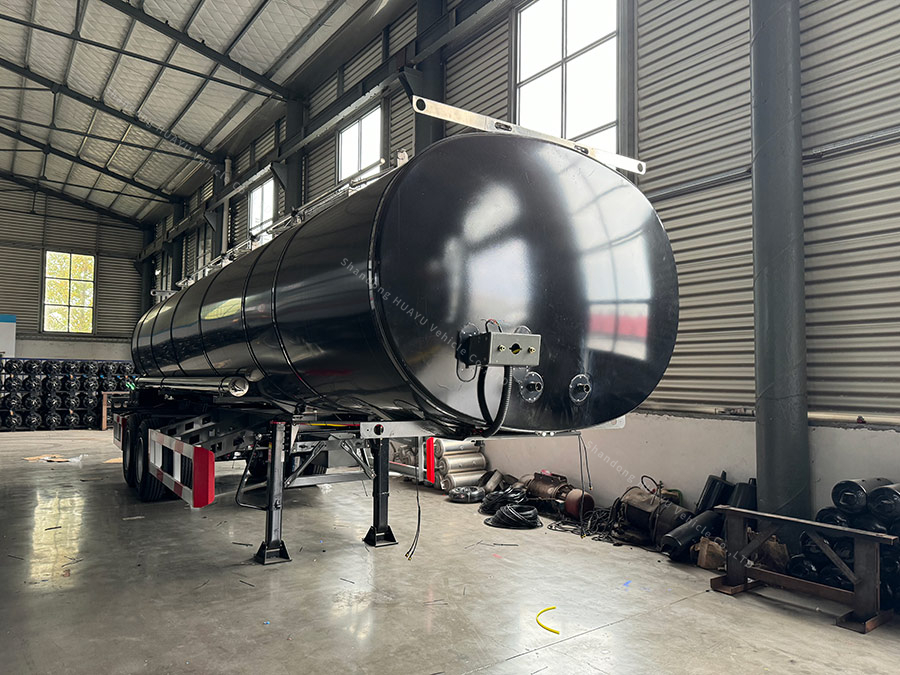
The discharge phase is the critical moment where the physical reality of diesel waxing creates the most severe logistical bottlenecks. Fluid dynamics dictate that moving a viscous sludge requires exponentially more force than moving a thin liquid.
The internal architecture of a commercial trailer involves forcing thousands of gallons of fluid through relatively narrow exit points. The bottom discharge valves, API adapters, manifolds, and delivery hoses represent significant choke points. As wax crystals circulate, they naturally seek out and accumulate at these restrictions. The solid wax adheres aggressively to the freezing cold metal surfaces of the valves. This gradually bridges the gap and reduces the internal diameter of the piping. Eventually, this creates a physical, impenetrable barrier. It prevents any fluid from entering the discharge hoses.
Viscosity is a standard mechanical measure of a fluid's resistance to flow. As the payload temperature decreases, the viscosity of the diesel spikes exponentially due to wax agglomeration. Thicker, sludgy fuel moves sluggishly through gravity-fed manifolds or pump-assisted lines. An unloading process that normally requires a brisk 45 minutes under summer conditions can easily drag on for three or four agonizing hours in sub-zero weather. For commercial transport fleets operating on razor-thin margins, these delays disrupt strict supply chain schedules. They inflate driver labor costs and cripple overall fleet utilization rates.
Even if the fuel has not reached a completely solid gel state, partial waxing guarantees incomplete tank drainage. Heavy wax particulates tend to settle. They create a sticky, tar-like residue that clings desperately to the internal walls, bulkheads, and bottom hoppers of the tank. When the operator finally closes the valves, hundreds of gallons of thick product may remain trapped inside. This retained sludge represents a direct financial loss for the buyer. Specifically, it introduces a severe risk of cross-contamination if the trailer is subsequently dispatched to load a different grade of fuel, such as premium gasoline or aviation fuel.
Over the past few years, the bulk liquid logistics sector has shown zero tolerance for winter-weather delays. Supply chain penalties for late fuel deliveries have skyrocketed, driven by tighter inventory controls at retail stations and industrial sites. Consequently, we are seeing a massive industry shift away from reactive thawing methods. Forward-thinking fleet managers now prioritize real-time IoT thermal sensors integrated directly into the tanker barrels. These advanced systems actively monitor the payload core temperature during transit. They alert the driver the moment the fuel approaches its cloud point. By leveraging this predictive data, operators can reroute to warmer facilities or apply emergency chemical treatments long before the discharge valves freeze solid. This transforms winter transport from a guessing game into a precise, data-driven operation.
Attempting to force gelled diesel out of a trailer does not just burn time on the clock. It can inflict severe, irreversible mechanical carnage across the entire plumbing system of the vehicle.
Standard PTO-driven liquid transfer pumps operate within strict viscosity tolerances. Try pumping waxed diesel, and you will immediately hear the equipment groan under the unnatural load. The pump impellers face immense mechanical resistance. Forcing this high-viscosity gel through precision gears causes the pump to overwork drastically. The electrical or hydraulic motors draw dangerous amounts of excess current. This rapidly leads to overheating, blown fuses, or burned-out motor windings. In extreme cases, you might even see physically snapped drive shafts due to the massive torque required.
To move a thicker, stubborn liquid, a pumping system must generate significantly higher internal hydraulic pressure. The pipelines, API valves, and camlock connections on a trailer rely heavily on pliable rubber or synthetic Viton gaskets to maintain a watertight seal. Unfortunately, these seals naturally become stiff and brittle in freezing temperatures. When you combine brittle gaskets with extreme internal pressure spikes caused by a wax blockage, the results are disastrous. The seals often rupture or blow out entirely. A compromised seal instantly transforms a mechanical struggle into a hazardous material leak and a costly environmental cleanup.
Commercial transport relies fundamentally on balanced payloads for safe, predictable road handling. A tir axle tanker boasting a 40,000-liter capacity is specifically engineered to distribute heavy liquid loads evenly across multiple axles. This ensures compliance with bridge laws and maintains optimal tire traction. If gelled fuel stubbornly sticks to one side of the barrel or remains trapped in a single rear compartment during a partial discharge, it creates a severe asymmetric weight imbalance. Piloting a partially loaded, unbalanced trailer on icy winter roads drastically increases the risk of trailer sway. It leads to loss of traction and potential catastrophic rollovers during the return trip.
Reversing the gelling process in the field is incredibly difficult and inherently hazardous. Therefore, the most effective strategy for managing diesel waxing is strict, proactive prevention. Implementing robust winterization protocols ensures that fuel remains fluid and equipment remains intact.
Your absolute first line of defense is altering the chemical composition of the fuel at the loading terminal. Refineries produce different grades of diesel based on seasonal demands. Standard Number 2 diesel is utilized during warmer months because it contains higher levels of paraffin, yielding better fuel economy. In stark contrast, Number 1 diesel is highly refined, resembles kerosene, and contains significantly less paraffin wax. This gives it a naturally lower cloud and pour point. By blending Number 2 and Number 1 diesel in a 70 to 30 or 50 to 50 ratio, operators create a winterized fuel. This blend easily withstands sub-zero temperatures without sacrificing too much combustion energy.
Chemical intervention is a mandatory industry practice when winter blends alone are insufficient for extreme arctic fronts. Anti-gel additives, commonly referred to as Cold Flow Improvers, are engineered to interact with wax molecules at a microscopic level. It is vital to understand that these chemicals do not magically dissolve or eliminate the wax. Instead, they modify the shape and behavior of the wax crystals as they form. This prevents them from binding together into a flat, solid lattice structure. Additives must be introduced into the tank before the fuel temperature drops to the cloud point. They are strictly preventative, not restorative.
Thermal management of the payload itself is a highly effective mechanical defense. Specifying a specialized industrial tanker trailer equipped with advanced thermal insulation minimizes the rate of heat loss to the environment. For instance, a 3-axle 50,000-liter fuel trailer wrapped in high-density polyurethane foam acts as a powerful thermal barrier. The insulation is sandwiched securely between the inner tank shell and an outer protective jacket. For long-haul routes through freezing climates, this insulation retains the residual heat from the loading terminal. It often keeps the fuel safely above its cloud point for the entire duration of the transit.
Despite the best preventative efforts, operators may occasionally encounter a load that has already begun to gel. Executing the discharge process under these adverse conditions requires strict adherence to safety and mechanical protocols.
If fuel has reached its pour point, the only viable solution is to reintroduce thermal energy. The primary, non-negotiable rule of thawing a fuel trailer is to never apply an open flame to the valves, piping, or tank shell. Propane blowtorches present a catastrophic explosion hazard and destroy the metallurgical temper of the aluminum. The safest method is to physically route the vehicle into a heated, environmentally controlled maintenance bay. Allow ambient heat to slowly dissolve the wax lattice over several hours. If field thawing is absolutely mandatory, operators must use intrinsically safe, OSHA-approved external tank heating blankets or steam-tracing systems.
During the discharge of heavily chilled fuel, constant vigilance over the pumping system is required. Operators must keep their eyes glued to the pump pressure gauges. A sudden, sharp spike in pressure indicates that a downstream valve or hose has become obstructed by wax agglomeration. If this occurs, the PTO or auxiliary pump must be disengaged immediately. Continuing to force the system against a dead-head blockage will inevitably result in blown seals or mechanical pump failure. Flow rates should also be monitored closely. A sudden drop in output is a glaring early warning sign of gelling.
The vulnerability of the discharge system does not miraculously end when the tank is empty. After a successful unloading, residual fuel will inevitably remain trapped inside the hoses, manifolds, and API valves. When exposed to ambient winter air, this thin layer of residual fuel will rapidly freeze solid. Post-discharge, operators must ensure that all lines are completely purged. Utilizing gravity drains efficiently, or employing low-pressure compressed air systems, ensures that the narrowest points of the plumbing are entirely clear of product. This prevents frozen blockages prior to the next loading cycle.
For logistics companies operating continuously in harsh winter environments, standard off-the-shelf equipment often falls short. Upgrading to trailers engineered specifically for cold-weather resilience is a strategic financial investment that eliminates seasonal downtime.
When evaluating new assets, prioritize trailers with superior thermal retention metrics. Buyers should look for high R-value insulation wraps that cover the entire circumference of the barrel, including the vulnerable front and rear bulkheads. Additionally, some specialized trailers feature internal heating coils or steam-jacketed valves. While more commonly seen in heavy crude transport, these features can be brilliantly adapted for extreme-climate diesel transport to actively maintain payload temperatures.
The diameter and internal design of the discharge plumbing directly dictate cold-weather performance. Standard 3-inch valves can easily become restrictive choke points for viscous, waxy fuel. Upgrading to oversized 4-inch or 6-inch API discharge valves significantly increases the flow area. This simple mechanical upgrade reduces the bottleneck effect. It allows thicker, cold fuel to exit the tank with far less mechanical resistance, vastly improving unloading times.
Acquiring winter-ready transport equipment requires partnering with established manufacturers who deeply understand industrial climate challenges. When searching for a reliable oil tanker trailer for sale, utilize a strict buying checklist. Verify the insulation specifications, pump viscosity ratings, and axle configurations. Whether your specific operation requires a standard 3-axle unit for highway distribution or a specialized multi-axle setup for rugged terrain, buying directly from a reputable, engineering-focused manufacturer ensures your fleet is fully equipped. You can handle the brutal rigors of winter fuel logistics without ever compromising safety or efficiency.
Diesel waxing is an unavoidable chemical reality of winter transport. However, its paralyzing negative effects on tank discharge are entirely preventable. Gelled fuel puts massive, unnatural strain on valves, hoses, and transfer pumps. It transforms routine deliveries into logistical nightmares. By fully understanding the physical science behind paraffin crystallization, operators can take decisive, proactive steps. Blending winterized fuels, utilizing anti-gel additives, and adhering to safe thawing practices are non-negotiable.
Ultimately, the strongest defense against winter logistics failures is running the proper equipment. If your current fleet constantly struggles with cold-weather discharge delays and blown pump seals, it is time to reassess your assets. Upgrade today, prioritize heavy insulation and oversized valves, and ensure your supply chain remains unbroken no matter how far the temperature drops. To explore top-tier, winter-ready transport solutions tailored to your operational needs, we highly recommend reviewing the robust engineering options available at Huayu Vehicle to future-proof your fleet.
Standard Number 2 diesel begins to reach its cloud point around 32 degrees Fahrenheit. This is where wax crystals first form and the fuel looks hazy. It can fully gel and reach its pour point at temperatures ranging from 10 to 15 degrees Fahrenheit. At this stage, it completely blocks discharge valves. The exact temperature depends heavily on the specific fuel blend and the source crude used by the refinery.
Yes, absolutely. While the soft wax itself will not scratch or damage the interior metal walls of the tank barrel, the operational consequences are severe. Forcing gelled, high-viscosity fuel through the discharge system causes extreme hydraulic pressure spikes. These spikes can easily blow out rubber seals, rupture transfer hoses, and permanently burn out the electrical or mechanical pumping equipment.
Safety is paramount. You should never use direct heat, such as open-flame blowtorches, due to the extreme fire and explosion hazard. The safest, most reliable method is to move the vehicle into a heated indoor facility to allow the metal and fuel to thaw naturally. In the field, emergency chemical de-gelling additives can be applied directly to the affected areas, or approved external heating blankets can be utilized.
Yes, significantly. A tri-axle configuration offers superior stability, braking, and weight distribution on icy, unpredictable winter roads. If diesel waxing prevents a complete tank discharge, the remaining heavy, sludgy fuel can shift unexpectedly during transit. A multi-axle setup helps safely manage these dangerous weight imbalances, reducing the risk of a rollover.
You can procure high-quality, durable trailers designed specifically to handle extreme industrial conditions through reputable commercial vehicle manufacturers like Huayu Vehicle. Look for engineering-focused suppliers that offer customized, oversized valve options, premium high-density thermal insulation, and robust pumping systems to completely prevent cold-weather discharge issues.
The gelling timeline depends entirely on the ambient temperature, wind chill, and the initial temperature of the fuel at loading. In extreme sub-zero conditions, an uninsulated trailer can see its payload drop to the cloud point within 12 to 24 hours. High-density insulation can significantly delay this process, keeping the fuel fluid for several days during long-haul transits.
No, you should never attempt this. Standard PTO pumps are engineered for low-viscosity liquids. Pumping gelled diesel acts like pumping wet cement. It places immense mechanical strain on the impellers and gears. This will almost certainly cause the pump to cavitate, overheat, blow internal seals, or snap the drive shaft entirely.


