
Views: 0 Author: Site Editor Publish Time: 2026-07-24 Origin: Site


Transporting liquid asphalt requires maintaining temperatures between 300°F and 400°F from the terminal to the job site. A failure in thermal retention results in solidified product, severe equipment damage, and stalled paving operations. Procurement teams must balance maximum payload capacity with the heavy tare weight of necessary insulation, heating systems, and structural reinforcements required for high-density, high-temperature liquids. Standard liquid transport units simply cannot handle these extreme thermal and physical stresses. This guide provides a technical evaluation framework for selecting an Asphalt Tanker Trailer. We will compare heating mechanisms, tank materials, and safety compliance to ensure optimal operational reliability. By understanding the specific engineering demands of high-viscosity cargo, fleet managers can specify equipment that maximizes uptime, prevents catastrophic cold plugs, and keeps road construction crews moving efficiently.
Standard liquid chemical, food-grade, or fuel tank trailers cannot handle liquid asphalt. High-viscosity, high-temperature cargo requires specialized engineering. Standard trailers fail when handling liquid asphalt and bitumen due to extreme viscosity. They suffer from rapid temperature drops and intense thermal expansion of the tank shell. You need purpose-built equipment for this task.
The baseline requirements for a road construction tanker are strict. You must maintain consistent temperatures across long transit hours. Safe and rapid discharge is mandatory to keep paving machines fed. The structural integrity must hold up under dynamic loads on uneven, unpaved job sites. Failing to meet these criteria leads to severe operational risks. "Cold plugs" occur when asphalt solidifies in valves or pipes. This results in massive downtime for road construction crews and costly equipment repairs.
When asphalt cools below its pumping threshold, it turns into a solid block. Clearing a cold plug requires external heating torches, specialized solvents, and hours of manual labor. This delays the entire paving operation. The financial impact of a stalled crew far outweighs the initial savings of purchasing an under-specified trailer. Therefore, the engineering focus must remain on thermal retention, robust heating capabilities, and heavy-duty structural design.
Thermal expansion is another critical factor. Liquid asphalt expands significantly when heated. A tank loaded at 300°F will experience internal pressure changes if the temperature rises to 400°F. The tank shell, internal baffles, and piping must accommodate this expansion without cracking or warping. Specialized expansion joints and flexible mounting systems are necessary to absorb these physical changes during transit.
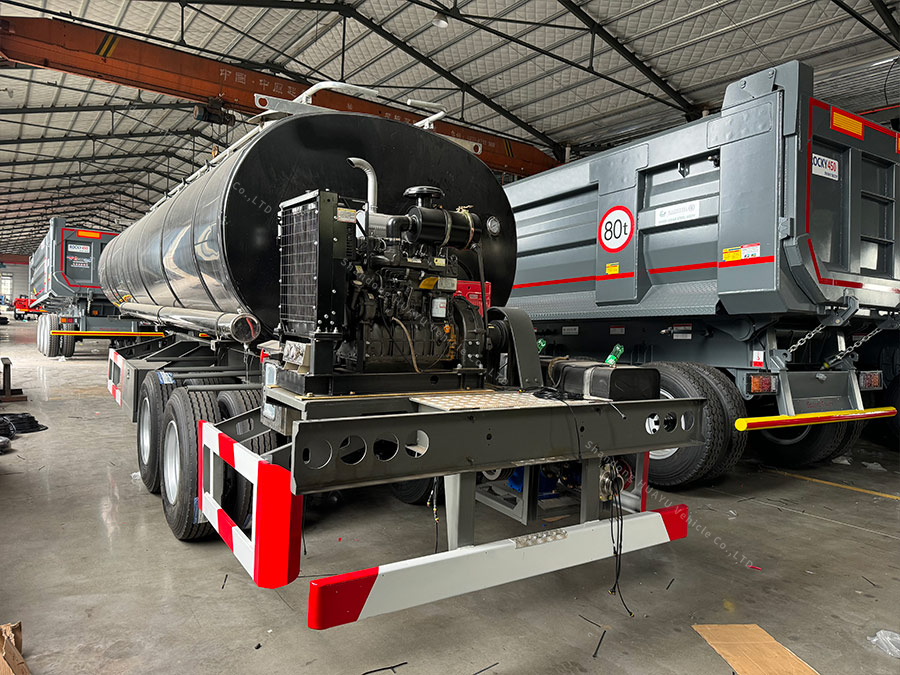
Matching tank capacity with fleet hauling limits is your first step. Capacities typically range from 4,000 to 14,000 gallons (15,000L to 50,000L). You must align this volume with paving machine consumption rates. Bridge law weight restrictions also dictate your maximum allowable capacity. High-capacity tanks impact maneuverability. A 50,000L configuration can be difficult to navigate in tight road construction zones or steep job sites.
Selecting the right material impacts payload and durability. Each material presents specific advantages and operational limitations in the field.
| Material | Durability on Rough Terrain | Payload Efficiency (Tare Weight) | Corrosion Resistance | Thermal Fatigue Resistance |
|---|---|---|---|---|
| Carbon Steel | High | Low (Heavier) | Low | Excellent |
| Aluminum | Medium | High (Lighter) | High | Moderate |
| Stainless Steel | High | Medium | Very High | High |
Custom plumbing layouts depend on your specific workflow. You must choose between rear-discharge and mid-discharge setups. Rear-discharge is standard for feeding stationary storage tanks or large transfer vehicles. Mid-discharge setups offer better visibility and control when feeding road construction paving machinery directly on the move. The choice depends entirely on your operational layout.
Suspension customization is equally important. Heavy-duty mechanical leaf springs suit rugged construction sites where articulation and durability are paramount. Air-ride suspensions are better for highway-heavy transport, providing a smoother ride that protects the tank shell and internal baffles from high-frequency road vibrations. Selecting the wrong suspension leads to premature structural fatigue.
A full thermal insulation layer is absolutely necessary. Manufacturers typically use rock wool, glass fiber, or high-density polyurethane. Insulation thickness usually ranges from 50mm to 150mm. This thickness directly correlates to the rate of temperature loss per hour. A high-quality asphalt tanker semi trailer targets less than 2°C (4°F) of heat loss per hour during transit. An outer cladding protective jacket, usually aluminum or stainless steel, prevents moisture ingress. Moisture degrades the internal insulation layer rapidly, destroying its thermal resistance.
Active heating systems keep the cargo at optimal temperatures during long hauls or unexpected delays. Single and dual diesel burner configurations allow for rapid reheating of bitumen at the job site. Dual burners offer faster recovery times, which is critical when ambient temperatures drop unexpectedly. U-shaped thermal fluid heating systems distribute heat evenly throughout the tank. This prevents localized burning or degradation of the bitumen.
Direct fire tubes place the flame directly against the flue tube in contact with asphalt. This carries higher operational risks, including coking and localized overheating. Indirect thermal oil heating systems offer better safety and consistency for heated asphalt transport. They use a heat transfer fluid to warm the cargo gently. The thermal oil circulates through a closed-loop system, transferring heat to the asphalt without exposing it to direct flame temperatures.
Maintaining the heating system requires strict protocols. Burner nozzles must be cleaned regularly to ensure efficient combustion. Thermal oil levels and quality must be checked to prevent system degradation. A failure in the heating system during a long transit can result in a total loss of the cargo and severe damage to the trailer.
High-temperature, heat-traced discharge valves are mandatory. They prevent blockages during the unloading process. Standard valves will freeze shut as the asphalt cools upon contact with the ambient air. Heat-traced valves use either electrical elements or thermal oil circulation to keep the valve body hot. Specialized asphalt gear pumps are integrated into the system. These pumps are powered by a PTO (Power Take-Off) or an independent diesel engine. They ensure smooth, consistent discharge of the viscous liquid.
Liquid surge in high-density loads creates immense kinetic energy. Engineered internal baffles, or surge plates, are strictly required. They ensure braking stability. They prevent rollovers on uneven construction roads. Baffles control the front-to-back movement of the liquid asphalt during transit. Without baffles, a sudden stop would cause the heavy liquid to slam against the front bulkhead, potentially pushing the truck through an intersection or causing a jackknife.
The design of these baffles must account for thermal expansion and the high viscosity of the cargo. They must have adequate flow-through holes to allow the asphalt to level out during loading and unloading, but enough surface area to disrupt the surge wave during transit. Inspecting these baffles for stress fractures is a critical part of annual maintenance.
High-temperature pressure relief valves protect the tank structure from over-pressurization during heating. Vacuum relief valves prevent tank implosion during rapid pump-out. If the pump removes liquid faster than air can enter the tank, the resulting vacuum can collapse the steel shell. Specialized anti-spill manhole covers feature emergency release latches. These components work together to contain the hazardous cargo safely in the event of a rollover.
Meeting regulatory standards is a strict requirement. You must comply with DOT, ADR, or local equivalent standards for hazardous material transport. These regulations govern the safe movement of high-temperature liquids on public roads. Compliance involves regular inspections of the tank shell thickness, valve integrity, and braking systems.
Common failure points include burner ignition failures and thermal oil leaks. Valve seizing and insulation degradation also cause downtime. You must establish standard operating procedures (SOPs). Daily valve clearing, burner testing, and insulation jacket inspections mitigate these risks. Catching a small thermal oil leak early prevents a major system failure on the road.
Operators require specialized training. They handle pressurized, 400°F liquids. They must manage thermal expansion headspace accurately. Overfilling a tank leaves no room for the asphalt to expand as it heats, leading to dangerous spills through the pressure relief valves. Operating complex integrated heating panels safely demands rigorous, ongoing education. Drivers must know how to troubleshoot burner faults and manually override valves if necessary.
Evaluating the lifecycle efficiency requires looking beyond the initial acquisition. You must factor in fuel consumption for heating. Calculate the payload efficiency gained via a lighter trailer tare weight. Project the maintenance intervals for pumps, burners, and valves. A well-engineered bitumen tanker trailer reduces long-term operational friction. High-quality insulation reduces the amount of diesel burned to maintain cargo temperature, directly impacting your daily operating expenses.
Shortlisting vendors requires strict criteria. Demand verifiable testing of heating efficiency. Inspect the quality of welds, preferring automated submerged arc welding over manual welding for the main barrel seams. Ensure the rapid availability of replacement parts like burners and valves. A trailer sitting in the yard waiting for a proprietary valve is losing money. Comprehensive warranties covering the tank shell structure and the heating apparatus separately are essential indicators of vendor confidence.
Review the manufacturer's documentation regarding thermal retention. Ask for case studies or field data showing temperature drop rates in cold weather conditions. Evaluate their support network. If a burner fails in a remote construction zone, you need access to technical support and overnight parts delivery. The right vendor acts as an operational partner, not just a fabricator.
A: Asphalt trailers feature thick structural insulation and integrated active heating systems. They use high-temperature valve construction and specialized expansion joints to handle severe thermal expansion, unlike standard liquid trailers which lack these thermal management capabilities.
A: High-quality trailers lose less than 2°C (4°F) per hour. The exact duration depends on insulation thickness, ambient weather conditions, and wind-chill factors during transport. Proper insulation allows for several hours of transit without engaging the burners.
A: Capacities range from 4,000 to 14,000 gallons (15,000L to 50,000L). The ideal size depends strictly on local weight regulations, bridge laws, and paving machine consumption rates. Larger tanks maximize delivery but reduce maneuverability on tight sites.
A: A diesel burner combusts fuel to heat thermal oil. This hot oil circulates through internal U-tubes distributed within the tank, warming the asphalt evenly. Temperature sensors monitor the process to prevent localized overheating and coking.
A: Baffles control liquid surge dynamics. They prevent the heavy liquid from sloshing violently, ensuring braking safety and maintaining structural integrity during off-road construction site navigation. They stop the kinetic energy of the moving cargo.
A: Yes, aluminum maximizes payload due to its low tare weight. However, you must carefully manage temperature thresholds, as extreme heat and rough terrain can stress aluminum alloys more than steel, requiring specialized maintenance.


