
Views: 0 Author: Site Editor Publish Time: 2026-07-19 Origin: Site


For fleet managers and logistics directors, selecting the correct trailer configuration is a high-stakes decision that directly impacts payload efficiency, route flexibility, and operational overhead. Misaligning trailer types with cargo requirements or route topographies leads to suboptimal weight distribution, increased maintenance costs, and potential regulatory compliance failures. When you dispatch the wrong equipment for a specific route, you risk overloading axles, struggling with tight dock access, and burning through tires prematurely. This guide provides a technical breakdown of full trailer architecture, evaluates the operational trade-offs of full trailer transport, and offers a definitive framework for choosing between a full trailer and a semi-trailer for commercial fleets. We will examine the mechanical realities of axle placement, coupling stresses, and yard shunting dynamics to help you spec the exact equipment needed for your freight profile.
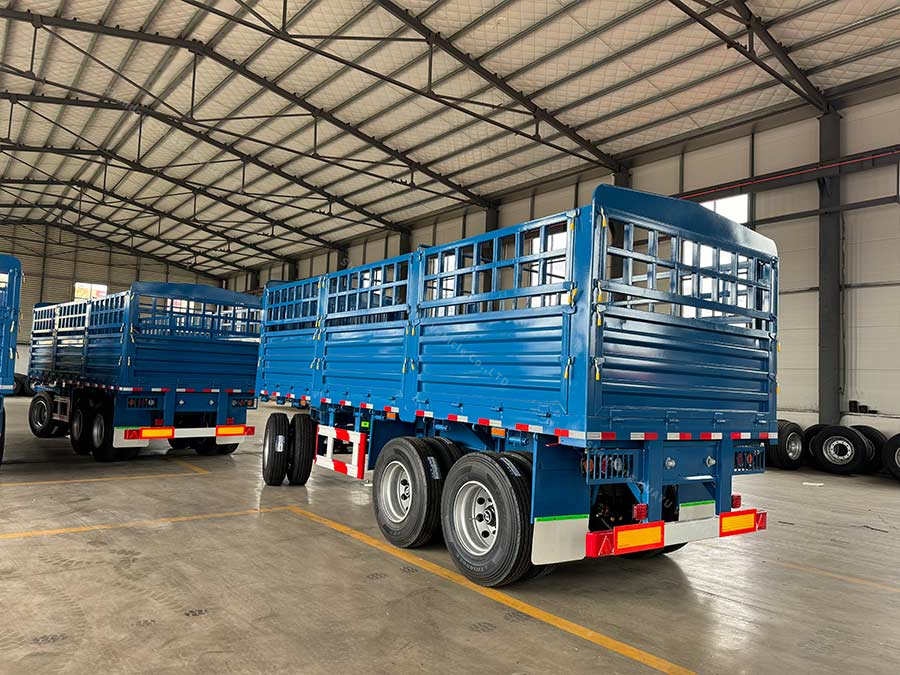
The engineering baseline of a Full Trailer relies on its front and rear axle placement. This specific layout allows the unit to support 100% of its gross weight. It does not transfer vertical load to the towing vehicle. The independent load-bearing design fundamentally changes how fleets handle staging. Operators can drop and stage loaded trailers without requiring landing gear. They also do not need a supporting prime mover to keep the trailer level. This mechanical independence means the trailer chassis absorbs all vertical cargo stress directly through its own suspension system.
Yard shunting dynamics change significantly with this configuration. Independent stability allows these trailers to be repositioned easily. Facilities can shunt them across yards using light utility vehicles. Specialized tugs can move them without needing a fifth-wheel-equipped terminal tractor. This flexibility speeds up dock operations and reduces equipment bottlenecks. Yard managers gain more options for organizing loaded and empty units. When a dock door opens, a simple yard tug can push the unit into place while the primary rigid truck is out on another delivery run.
Consider the structural frame requirements for this axle setup. The chassis must be rigid enough from front to rear to prevent sagging under heavy loads. Engineers use high-tensile steel main beams that run the entire length of the cargo bed. Crossmembers are spaced closely together to support the floor decking. The suspension systems on both the front and rear axles must be calibrated to handle the full gross vehicle weight rating independently. Air ride suspensions are common to protect fragile cargo and reduce road vibration.
A drawbar trailer coupling system typically features an A-frame or a straight drawbar design. The pivoting front axle uses a turntable steering mechanism or steering axle knuckles. This steering setup dictates the tracking behavior of the unit. The trailer remains completely unpowered on its own. Braking pressure travels through pneumatic lines and glad hands. Electrical power for ABS, signals, and lighting transmits from the primary rigid truck through heavy-duty umbilical cables.
The mechanical stress points differ from traditional setups. Maintenance teams must monitor drawbar eyes, coupling pins, and towing hitches. These components endure horizontal pulling forces rather than vertical weight loads. Traditional fifth-wheel kingpins handle entirely different stress profiles. Regular inspections of the drawbar mechanism prevent coupling failures. Proper lubrication of the turntable ensures smooth tracking during transit. If the turntable binds due to lack of grease, the trailer will resist turning, causing severe tire scrub and potential structural damage to the A-frame.
Connecting the power and air lines requires specific procedures. Drivers must ensure the glad hands are locked securely and the rubber seals are intact. Air leaks in the control line will delay brake application on the trailer. The electrical pigtail must be routed to prevent dragging on the ground or catching on the drawbar during tight turns. Modern units often include electronic braking systems (EBS) that require a dedicated data cable connection to synchronize braking effort perfectly with the towing truck.
Manufacturers build standard configurations to meet diverse industry needs. Common builds include flatbeds, enclosed dry vans, and specialized vocational trailers. Agricultural, heavy construction, and timber industries frequently utilize these specialized units. A cargo full trailer adapts well to high-volume, low-density freight. It also serves operations moving heavy, segmented aggregates where dropping a load quickly is necessary.
Mapping specific configurations to ideal use cases maximizes efficiency. Flatbed versions excel at transporting timber and construction materials. Enclosed dry vans protect sensitive cargo during multi-stop distribution routes. The modular nature allows operators to match the trailer body to the exact freight profile. This adaptability makes them highly valuable in specialized logistics sectors. For example, a beverage distributor might use a rigid truck for inner-city drops and leave the fully loaded trailer at a staging area just outside the city limits.
Vocational applications often require custom bodywork. Dump bodies mounted on these trailers allow for rapid unloading of gravel or sand. Tanker versions transport liquids like milk or fuel, utilizing internal baffles to control liquid surge. The versatility of the platform means you can spec the body to match your exact operational requirements. You are not limited to standard dry freight boxes when designing your fleet.
The physics of load transfer define the full trailer vs semi trailer debate. Semi-trailers transfer up to 50% of their forward weight to the tractor's drive axles. This transfer happens via the fifth wheel coupling. In contrast, full trailers transfer negligible vertical load to the towing vehicle. They rely entirely on the towing vehicle's tractive effort. The pulling power matters more than the load-bearing capacity of the hitch. This fundamental difference dictates how you load the vehicles and what type of truck you use to pull them.
Prime mover requirements vary drastically between the two designs. Semi-trailers mandate specialized tractor units built specifically for towing. A full trailer pairs typically with a standard cargo-carrying rigid truck. This pairing forms a high-capacity drawbar combination. The rigid truck carries its own payload while pulling the secondary unit. This setup maximizes the total cargo volume moved by a single driver. You get two separate cargo spaces powered by one engine.
Consider the axle weight limits in your operating region. Because a semi-trailer pushes weight down onto the tractor, you must carefully balance the load to avoid overloading the tractor's drive axles. With a drawbar combination, the weight of the trailer is contained entirely on its own axles. You only need to ensure the rigid truck has enough engine torque and braking capacity to handle the combined gross mass safely.
Volume constraints play a major role in equipment selection. Semi-trailers provide a longer, uninterrupted cargo deck. This continuous space is ideal for oversized, indivisible loads. Exceptionally long freight requires this unbroken floor space. Steel beams, large machinery, and long timber poles demand the continuous deck of a semi-trailer. You cannot split a 50-foot steel beam across two separate cargo boxes.
A rigid truck combined with a full trailer creates an articulated cargo area. This breaks the payload into two distinct, modular compartments. Segmented loads offer unique advantages for specific delivery routes. Operators can split payloads between the truck and the trailer. They can drop the trailer at one location and proceed with the truck. This modularity suits multi-stop distribution networks perfectly. You can load the truck for route A and the trailer for route B, dropping the trailer at a secure yard for another driver to pick up later.
Loading dock operations differ based on this continuity. A semi-trailer backs into a single dock door, and forklifts can access the entire load from one point. A drawbar combination requires either two dock doors or the driver must uncouple the units and back them in separately. This adds time to the loading and unloading process. You must weigh the benefits of modularity against the potential delays at the distribution center.
Forward tracking behavior differs significantly between configurations. The front steering axle of a full trailer follows the tractor's path closely. This results in less off-tracking during forward turns compared to a long semi-trailer. Drivers navigate tight corners more easily moving forward. The trailer wheels stay closer to the path of the towing vehicle. This makes them excellent for navigating narrow rural roads or tight industrial parks where a long semi-trailer would drag its rear axles over curbs.
Reversing complexity introduces a major operational challenge. The double pivot challenge involves the hitch pin and the front steering turntable. This makes reversing a full trailer combination exponentially more difficult. Backing up a single-pivot semi-trailer requires standard commercial driving skills. Reversing a double-articulated unit demands highly specialized techniques and extensive practice. The driver must steer the truck to push the drawbar, which then steers the front axle of the trailer, which then dictates the direction of the rear axles.
| Operational Feature | Full Trailer Configuration | Semi Trailer Configuration |
|---|---|---|
| Load Bearing Mechanics | 100% independent via front and rear axles | Shares forward weight with tractor unit |
| Coupling Hardware | Drawbar eye and pin hitch | Fifth-wheel plate and kingpin |
| Cargo Space Layout | Segmented (Rigid truck box + trailer box) | Continuous, uninterrupted deck length |
| Reversing Difficulty Level | High (Double articulation points require extreme skill) | Moderate (Single articulation point is standard) |
| Forward Cornering Tracking | Excellent (Minimal off-tracking on tight turns) | Moderate (Requires wider turns to avoid curbs) |
| Staging Requirements | Can be dropped anywhere, no landing gear needed | Requires solid ground for landing gear support |
Calculating maximum gross combination mass requires a structured framework. Operators must compare drawbar combinations against tractor-semi-trailers. Full trailer transport often maximizes overall volume for lighter freight. You must determine if your freight profile benefits from modularity. Multi-stop deliveries and split payloads favor the truck-and-trailer combo. A single high-capacity semi works better for dense, heavy, single-drop loads like steel coils or bulk liquids.
Volume optimization depends on the specific dimensions of your cargo. High-cube freight benefits from the combined floor space of a rigid truck and trailer. Operations moving palletized goods can load both units independently. This dual-loading capability speeds up terminal operations if you have the dock space. Evaluate your average shipment size to determine the best fit. Match the equipment to your most common payload scenarios to avoid hauling empty air.
Consider the tare weight of the equipment. A rigid truck and a drawbar trailer have two separate chassis, two sets of bodywork, and multiple axles. This often results in a higher combined empty weight than a standard tractor and semi-trailer. If your freight is extremely heavy, this higher tare weight might reduce your legal payload capacity. Run the numbers on your specific cargo density before making a purchasing decision.
Route constraints heavily influence equipment viability. Urban environments, tight loading docks, and narrow access roads pose challenges. Drawbar combinations navigate forward through tight city streets effectively. However, backing into standard loading bays is highly inefficient. Evaluate the necessity of drive-through loading bays at your facilities. Specialized yard hostlers may be required to manage trailer positioning if your drivers cannot back the units efficiently.
Facility access dictates the practical use of these combinations. Distribution centers must accommodate the unique turning radius and staging needs. If your delivery points require complex reversing maneuvers, consider the operational delays. Drive-through facilities eliminate the reversing penalty entirely. Audit your primary delivery locations before committing to a specific configuration. A truck that cannot reach the loading dock is useless.
Topography also plays a role in traction. Because a drawbar trailer does not transfer weight to the towing vehicle's drive axles, the rigid truck relies solely on its own weight for traction. In snowy or icy conditions, a lightly loaded rigid truck pulling a heavily loaded trailer may struggle for grip on steep inclines. A semi-trailer, by contrast, pushes weight down onto the drive tires, improving traction in poor weather.
Operating drawbar combinations requires a specialized skill set. Drivers must understand the physics of the double pivot system. Safely operating and backing up these units demands rigorous training. Outline the training investments required for your current workforce. Potential recruitment bottlenecks exist when requiring proficient drivers. The talent pool for operators skilled in multi-articulated vehicles is smaller than for standard semi-trailers.
Operational complexity increases with modular equipment. Dispatchers must plan routes that minimize reversing requirements. Maintenance teams must track two separate cargo bodies per combination. Address these complexities through standard operating procedures. Invest in driver retention programs to keep skilled operators. Proper training mitigates the risks associated with complex vehicle dynamics and reduces accident rates in the yard.
Implement a structured training program for new hires. Start with forward driving dynamics, emphasizing the tracking behavior of the trailer. Move to basic coupling and uncoupling procedures, ensuring they understand the pneumatic and electrical connections. Finally, tackle reversing in a wide-open, controlled environment before allowing them to attempt dock maneuvers. Document all training to maintain compliance and safety standards.
Bridge laws and regional transport regulations treat combinations differently. The US Federal Bridge Formula applies distinct rules to axle spacing. European Modular System rules also govern truck-and-full-trailer combinations specifically. These regulations often differ from standard tractor-semi-trailer setups. Verify local compliance regarding maximum overall combination lengths. Axle-spacing restrictions dictate how you can distribute weight across the units to remain legal on public roads.
Operating across different jurisdictions requires careful route planning. A compliant combination in one region may violate length limits in another. Fleet managers must stay updated on changing transport legislation. Consult local transport authorities when designing new routes. Compliance failures result in heavy fines and delayed shipments. Proper axle spacing ensures legal weight distribution across all regions you operate in.
Pay close attention to the specific regulations regarding drawbar length. Some jurisdictions measure the total length from the front bumper of the truck to the rear bumper of the trailer. Others have specific limits on the cargo-carrying length. Ensure your equipment specifications align perfectly with the legal definitions in your operating area to avoid costly citations at weigh stations.
Dynamic stability at highway speeds requires careful attention. Full trailers face specific risks like trailer sway and snaking. The whip-on-steer effect can occur during sudden lane changes. Proper weight distribution within the trailer prevents these stability issues. Heavy items must sit low and centered over the axles. Drivers must reduce speed during adverse weather conditions to maintain control and prevent the trailer from oscillating.
Braking dynamics differ significantly between the two trailer types. The risk of jackknifing exists during emergency stopping maneuvers. Brake synchronization between the towing vehicle and the unpowered trailer is critical. Uneven braking force causes the trailer to push the rigid truck, potentially causing a loss of steering control. Regular testing of the pneumatic brake lines prevents synchronization failures. Advanced ABS systems help mitigate these high-speed dynamic risks by pulsing the brakes independently.
To ensure optimal braking performance, follow these maintenance steps:
Lifecycle maintenance requirements diverge based on the coupling system. Semi-trailers require maintenance of the fifth wheel and landing gear. Full trailers demand upkeep of the drawbar, turntable, and drawbar bushings. Additional steering axle components also require regular inspection and lubrication. Maintenance teams must adapt their schedules to these specific components. Neglecting the turntable leads to poor tracking, increased tire wear, and potential structural failure of the A-frame.
Tire wear patterns vary across both configurations. The independent steering axle on a drawbar unit experiences unique lateral forces during tight turns. Brake system maintenance involves checking the glad hands and pneumatic relays frequently. Compare the maintenance hours required for each setup. Proper alignment of the steering axle extends tire life significantly. Consistent preventative maintenance reduces unexpected downtime for both configurations and keeps your fleet moving efficiently.
You must also account for the maintenance of the rigid truck's cargo box. Unlike a tractor unit, the rigid truck carries freight and requires body maintenance, floor repairs, and rear door adjustments. This adds another layer of maintenance complexity compared to a standard tractor-trailer setup where the power unit is separate from the cargo container.
Take the following actionable steps to optimize your fleet:
A: A drawbar trailer is a specific type of full trailer. It utilizes a rigid or hinged drawbar to connect to the towing vehicle. It steers via the front pivoting axle, allowing it to track behind the truck.
A: Yes. Because it has both front and rear axles, it can bear its own weight entirely. It does not require landing gear or a tractor unit to remain stable and level.
A: Yes. Its independent stability permits manual shunting for light applications. Facilities can use light utility vehicles and yard tugs to move it without needing a specialized fifth-wheel coupling.
A: A full trailer is significantly harder to reverse. It features a double-articulation point at the hitch pin and the front steering turntable. This makes reversing highly complex compared to the single pivot of a semi-trailer.
A: Fleets choose them for modularity and specific weight distribution benefits. Operators can use a rigid truck for smaller deliveries while leaving the trailer staged elsewhere, maximizing route efficiency.
A: Yes, in most cases. Depending on the jurisdiction, operating multi-articulated or heavy drawbar combinations often requires specific commercial driving endorsements and specialized training due to the complex vehicle dynamics.


