
Views: 0 Author: Site Editor Publish Time: 2026-07-17 Origin: Site


Transporting oversized, multi-component freight creates immediate logistical friction on the job site. Fleet managers constantly face the tension between needing extended deck length for structural materials and requiring lateral cargo containment for loose components. Standard flatbeds fail on length requirements for specialized freight, forcing operators into dangerous overhang situations. Traditional extendable flatbeds lack the sidewalls necessary to safely secure cylindrical, loose, or shifting cargo without excessive and inefficient strapping. You need a solution that bridges this gap without compromising payload capacity.
The extendable sidewall trailer serves as a hybrid asset designed to solve both dimensional and containment challenges. It combines a telescoping chassis with modular drop-sides. This configuration allows you to haul standard pallets one day and 80-foot steel beams the next. Fleet managers and owner-operators can evaluate its return on investment by looking at its versatility in specialized hauling. You will learn how these trailers operate, their primary applications, and what technical features matter most during procurement.
An extendable semi trailer relies on a telescoping central beam or dual-beam construction. This engineering allows the trailer to expand from standard lengths of 40 to 53 feet up to extended lengths exceeding 80 feet. The inner beam slides out from the outer frame to accommodate oversized freight. Operators secure the trailer at specific intervals using heavy-duty locking pin systems. These systems can be manual or pneumatic. Advanced systems are designed for rapid adjustment. You can often deploy or retract the chassis in under 15 minutes on-site. This minimizes downtime and keeps your drivers moving.
The extension process requires careful coordination. When the driver engages the pneumatic lock release, air pressure retracts the heavy steel pins holding the chassis together. The driver then locks the trailer brakes and slowly pulls the tractor forward. The internal sliding mechanism rolls on heavy-duty bearings or greased friction pads. Once the desired length is reached, the driver releases the air valve, and the spring-loaded pins snap back into the nearest locking holes. Visual inspection of these pins is mandatory before loading. If a pin fails to seat fully, the chassis can collapse under load during transit.
Air lines and electrical harnesses must also accommodate this massive change in length. Manufacturers route these critical lines through a flexible track system or a spring-tensioned recoil system inside the main beam. This prevents the lines from dragging on the ground or snapping when the trailer stretches. Regular inspection of these internal lines prevents unexpected brake failures or lighting issues on the road.
Sidewalls provide critical lateral containment. Manufacturers design these walls as modular, drop-down, or fully removable panels. Vertical wall extensions maximize cargo volume while maintaining load stability. Drop-down sidewalls significantly reduce load-securing time. They mitigate the risk of lateral cargo shifting during transit. Compared to standard open flatbed securement, sidewalls eliminate the need for dozens of complex strap configurations. You simply load the freight, secure the primary tie-downs, and lock the walls in place.
When hauling mixed loads, the sidewalls act as a physical barrier against shifting. If a load of steel pipes settles and attempts to roll outward, the rigid steel or aluminum walls absorb that lateral force. This reduces the strain on your primary securement straps and chains. For operators hauling loose materials, dunnage, or smaller construction components alongside large beams, the sidewalls prevent these smaller items from vibrating off the deck.
The modularity of these walls adds immense value. You can remove specific panels to accommodate a forklift loading heavy pallets from the side. You can drop the rear panels to allow an overhead crane to lower a massive generator onto the deck. When the job requires a completely flat surface for freight wider than the trailer, you can remove all the panels and store them in the belly box. This adaptability keeps the trailer working across different freight markets.
You must choose the right equipment for your specific freight. An extendable sidewall configuration differs greatly from an extendable double drop trailer. Double drop trailers are built for ultra-tall or heavy industrial machinery like excavators and crushing equipment. They offer extremely high clearance and a low center of gravity. Choose a sidewall configuration when you need high lateral containment for uniform long loads. Sidewalls work best for pipes, beams, and mixed cargo that requires physical barriers to prevent shifting.
Double drop trailers feature a "well" between the front and rear axles. This well drops close to the ground, allowing tall freight to clear highway overpasses. When an extendable double drop stretches, only the well area expands. This makes them highly specialized and generally unsuitable for hauling standard palletized freight or long, flexible materials that require continuous support along their entire length.
In contrast, the extendable sidewall trailer maintains a uniform deck height from front to back. When it stretches, it provides a continuous, flat surface. This continuous support is mandatory for materials like pre-cast concrete pillars or long steel trusses, which will crack or bend if suspended over a gap. The addition of sidewalls makes this trailer far superior for hauling multiple smaller items alongside the main oversized load.
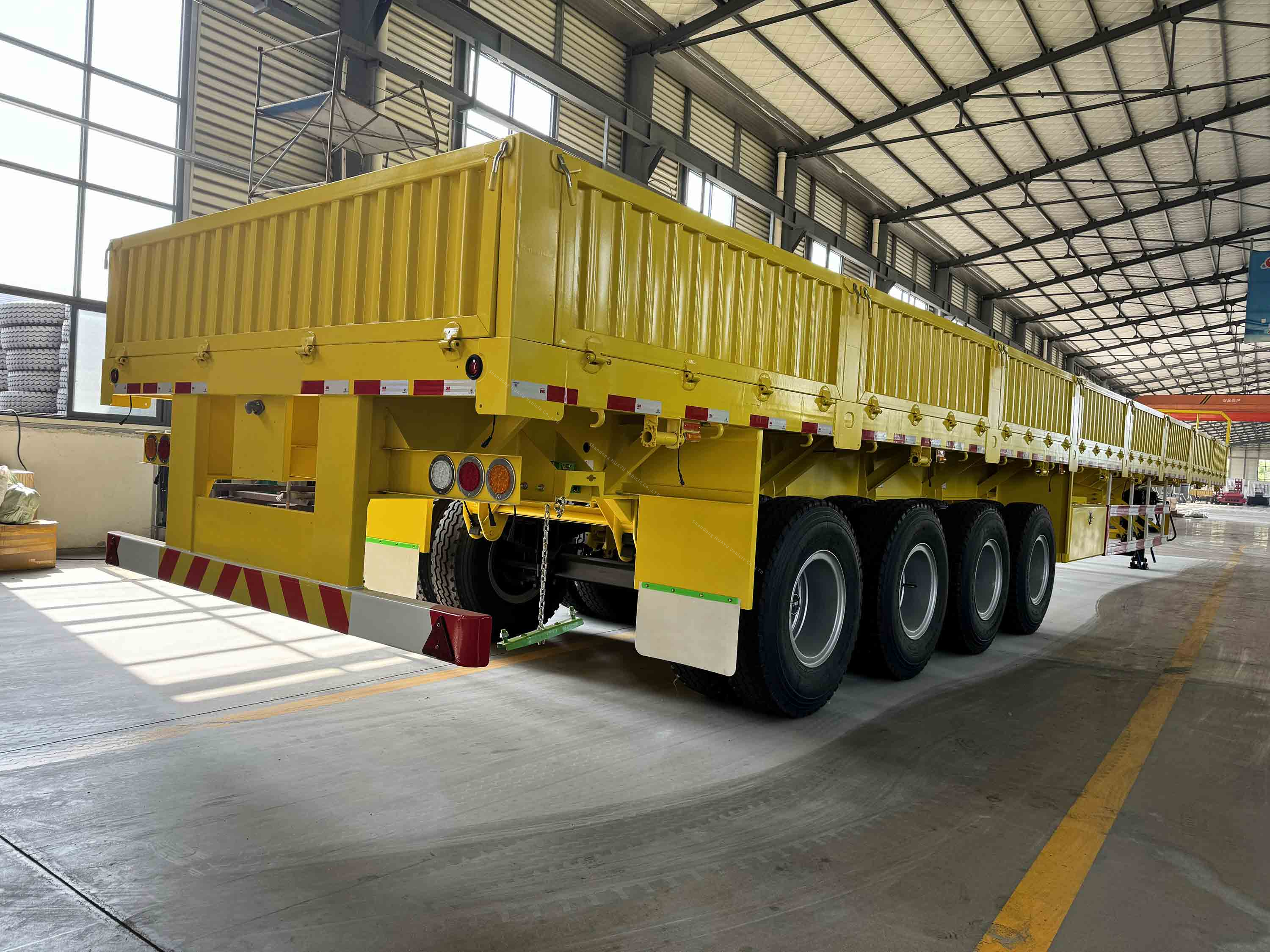
Hauling oil, gas, and municipal water pipes requires strict safety protocols. A dedicated pipe transport trailer must handle both length and rolling hazards. Sidewalls prevent the dangerous rolling of cylindrical freight. The extendable chassis easily accommodates 60-foot or larger pipe sections. This combination ensures pipes stay contained laterally while supported fully along their length. You avoid the risk of pipes breaking loose and causing catastrophic accidents on the highway.
Loading pipes onto a standard flatbed requires extensive use of pipe stakes, specialized chocks, and belly wraps. This process is time-consuming and leaves room for human error. With a sidewall trailer, the walls themselves act as the primary lateral restraint. Loaders can stack the pipes against the walls, significantly speeding up the loading process at the pipe yard. Drivers still use heavy-duty straps to secure the load vertically, but the fear of a lateral blowout is virtually eliminated.
Municipal water projects often require hauling pipes of varying diameters and lengths on the same load. The extendable sidewall trailer handles this easily. You can stretch the trailer to fit the longest pipe, while the sidewalls keep the shorter, smaller pipes securely contained. This eliminates the need to dispatch multiple trucks for a single mixed load, saving fuel and driver hours.
Construction logistics demand flexibility. A long load trailer excels at hauling structural steel beams, rebar bundles, and pre-cast concrete pillars. The extendable deck supports the primary oversized freight. Meanwhile, the sidewalls protect smaller accompanying components. You can load fittings, joints, and tools alongside the main cargo. This eliminates the need for a secondary support truck. Everything arrives at the job site together, safely contained.
Consider a bridge construction project. The contractor needs massive steel girders delivered, but they also need the heavy bolts, connection plates, and welding equipment. On a standard extendable flatbed, securing those smaller items alongside a 70-foot girder is a nightmare. They often require a separate hotshot truck. The sidewall trailer allows you to load the girder down the center, secure it, and then pack the smaller components along the sides. The walls keep everything on the deck.
Rebar bundles present another unique challenge. They are long, heavy, and incredibly flexible. When loaded on a standard flatbed, the ends of the rebar tend to bounce and shift outward during transit. The sidewalls physically block this outward shifting, keeping the rebar bundles tightly packed and aligned. This makes unloading at the job site much safer for the crane operators and rigging crews.
These trailers serve niche applications beyond traditional freight. The flat deck and modular walls allow the trailer to function as a customizable mobile workspace. You can use it as a display platform or an equipment staging area. Drop the sides to create an instant serving or demonstration area. The extended length provides ample square footage for temporary on-site infrastructure.
Disaster relief organizations frequently utilize these trailers. They can haul massive generators or water purification systems into a disaster zone. Once unloaded, the trailer stretches out, the sidewalls drop down, and it becomes a raised, stable platform for distributing supplies or setting up a temporary command center. The heavy-duty construction ensures it can handle the abuse of off-road environments.
In the oil and gas sector, these trailers often serve as mobile fabrication shops. Companies mount welding machines, toolboxes, and workbenches directly to the deck. The extendable feature allows them to transport long sections of pipe to the site, and then use the trailer itself as the platform for welding those sections together. The sidewalls provide a measure of protection from the wind and weather for the welders working on the deck.
Empty miles destroy profitability. The financial benefit of this trailer lies in its retracted state. When you finish an oversized delivery, you retract the chassis and raise the sidewalls. The trailer now functions as a standard drop-side unit. You can load standard palletized goods, bulk cargo, or agricultural products for the return trip. This backhaul efficiency maximizes revenue per mile.
Heavy haulers often struggle to find oversized loads for their return trips. A specialized double drop trailer might have to drive 500 miles empty to get back to base. The extendable sidewall trailer eliminates this problem. Once retracted to 40 or 48 feet, it can bump standard loading docks. You can pick up a load of lumber, bagged cement, or even crated machinery. The sidewalls make it easy to secure these standard loads quickly.
This versatility allows dispatchers to keep the truck moving and generating revenue constantly. You are not locked into the heavy-haul market. If construction slows down, you can put the trailer to work hauling agricultural supplies or general freight. This adaptability is a massive advantage in a fluctuating freight market.
Chassis strength dictates performance. You must specify high-yield strength steel, such as T700 or its equivalent. Inferior steel leads to chassis sagging when the trailer is fully extended. Sagging stresses the welds and compromises safety. You must also calculate payload capacity degradation. As you extend the wheelbase, the structural leverage changes. A trailer rated for 80,000 pounds retracted may only safely support 50,000 pounds when fully extended. Always consult the manufacturer's load charts.
The main beams are the backbone of the trailer. Look for continuous, submerged arc welding on the main beams. Avoid trailers with spliced or patched beams, as these are weak points that will fail under the stress of an extended load. The crossmembers must also be robust and spaced closely together to support heavy, concentrated loads like steel coils or machinery.
Understanding payload degradation is critical for safe operation. When the trailer is closed, the weight is supported directly by the tractor's fifth wheel and the trailer's rear axles. As you stretch the trailer, the distance between these support points increases. This creates a bridge effect. The longer the bridge, the less weight it can support in the center without bending. You must train your drivers and dispatchers to read and understand the load capacity charts for every extension interval.
The sliding mechanism requires careful evaluation. Roller-bearing extension systems offer smoother operation and resist binding better than basic friction-slide systems. Closely spaced locking intervals are necessary for precise weight distribution. If the locking pins are spaced too far apart, you cannot balance the axle loads accurately. Proper locking intervals ensure you comply with bridge laws and axle weight limits.
Friction-slide systems rely on greased steel pads sliding against each other. They are cheaper to manufacture but require constant maintenance. If dirt or grit gets into the grease, it acts like sandpaper, wearing down the steel and causing the mechanism to jam. Roller-bearing systems use heavy-duty steel rollers. They are more expensive but operate much smoother and are less susceptible to jamming from debris.
Locking intervals should ideally be spaced every 12 to 24 inches. This granular control allows you to stretch the trailer just enough to fit the load, minimizing the payload degradation. It also allows you to fine-tune the weight distribution between the drive axles and the trailer axles. If the intervals are spaced every 5 feet, you may be forced to extend the trailer further than necessary, compromising your weight capacity and maneuverability.
Evaluate your sidewall material trade-offs carefully. Aluminum offers weight savings and excellent corrosion resistance. Steel provides superior impact resistance for heavy-duty containment. Assess the integrity of the hinges, locking latches, and vertical wall extension systems. Verify the ease of operation for drop-down features. Rapid drop-down sides allow for efficient forklift side-loading and unloading at busy distribution centers.
Steel sidewalls are the standard for heavy construction and pipe hauling. They can take a beating from forklifts, swinging crane loads, and shifting steel pipes. However, they are heavy. Every pound of steel on the trailer reduces your legal payload capacity. They also require regular painting to prevent rust.
Aluminum sidewalls are much lighter, allowing you to haul more paying freight. They do not rust, making them ideal for hauling corrosive materials like fertilizer or road salt. However, they are more susceptible to denting and tearing if struck by a forklift. You must weigh the benefits of increased payload against the potential for higher repair costs.
| Feature | Standard Flatbed | Extendable Sidewall Trailer | Extendable Double Drop |
|---|---|---|---|
| Length Adjustability | Fixed (40-53 ft) | Telescoping (up to 80+ ft) | Telescoping (Well area) |
| Lateral Containment | None (Straps only) | Modular/Drop-down Sidewalls | None |
| Primary Cargo | Standard pallets, machinery | Pipes, steel beams, mixed cargo | Ultra-tall/heavy machinery |
| Deck Height | Standard (approx. 60 inches) | Standard (approx. 60 inches) | Low (approx. 18-24 inches) |
Longer trailers introduce severe maneuverability challenges. You face increased turning radii and significant off-tracking issues. The rear axles follow a much tighter path than the tractor. This requires specialized driver training. Route planning becomes critical. You must account for tight intersections, low bridges, and narrow rural roads. Depending on the extension length and cargo, you may require pilot cars or escorts to navigate safely.
Off-tracking is the biggest danger when pulling an extended trailer. When the tractor makes a right turn, the trailer axles drag across the inside of the corner. If the driver does not swing wide enough, the trailer will run over curbs, street signs, or even pedestrians. Drivers must be trained to monitor their mirrors constantly during turns and anticipate the path of the rear axles.
Route planning for an 80-foot trailer is entirely different from planning for a standard 53-foot van. You cannot rely on standard GPS units. You must use specialized commercial routing software that accounts for trailer length and turning radius restrictions. You must also physically verify the route, checking for construction zones, tight roundabouts, and narrow toll booths that could trap the extended trailer.
Telescoping trailers require rigorous maintenance. The sliding chamber attracts dirt, gravel, and road salt. You must clear debris regularly to prevent the beams from jamming. Proper lubrication of the extension mechanism is mandatory. You must actively prevent rust inside the sliding chamber. Additionally, you must address the wear-and-tear on sidewall hinges, latches, and drop-down mechanisms caused by heavy industrial use.
Ignoring this maintenance schedule will result in a jammed trailer. If the trailer gets stuck in the extended position, you cannot legally drive it empty on the highway. You will have to dispatch a mobile mechanic to dismantle and clean the mechanism on the side of the road, resulting in massive downtime and repair bills.
Operating an Extendable Trailer involves complex regulatory compliance. Axle weight limits change when the trailer is extended. The elongated wheelbase alters how weight transfers to the tractor and trailer axles. You must navigate regional variations in oversize load permitting. Trailer configuration directly impacts legal compliance. Ensure your dispatch team understands the specific bridge laws and permit requirements for every state or province on your route.
Bridge laws dictate how much weight you can carry based on the distance between your axles. When you extend the trailer, you increase the distance between the drive axles and the trailer axles. This often allows you to carry more total gross weight legally, but it also changes how that weight must be distributed. You must scale the truck carefully after loading to ensure neither axle group is overloaded.
Permitting is a constant challenge. A load that is legal in Texas might require an oversize permit in Oklahoma. Some states require flashing amber lights and oversize load banners as soon as the trailer exceeds 53 feet, even if it is empty. Other states only require permits if the cargo itself overhangs the trailer. Your compliance department must stay updated on these constantly changing regulations to avoid massive fines and out-of-service violations.
Safety must dictate your sourcing strategy. OEM-certified extendable sidewall trailers undergo rigorous structural testing. Engineers design the frame to handle the specific stress of both extension and lateral loads. Compare this to DIY or aftermarket utility trailer side modifications. Welding aftermarket sides onto a standard extendable flatbed introduces severe safety risks. Non-certified structural modifications compromise the trailer's integrity. Always rely on factory builds for commercial heavy hauling to ensure compliance and safety.
When an OEM designs a sidewall trailer, they reinforce the outer frame rails to handle the lateral stress of the walls and the cargo pushing against them. They integrate the stake pockets and hinges directly into the structural design. If you simply weld aftermarket pockets onto a standard flatbed, the frame rails will twist and crack under the lateral load. The walls will eventually fail, spilling your cargo onto the highway.
Furthermore, modifying a trailer's structure voids the manufacturer's warranty and alters the DOT certification. If you are involved in an accident with a modified trailer, the liability falls entirely on your company. Insurance companies will often deny claims if they discover non-certified structural modifications. The initial savings of a DIY modification are never worth the catastrophic legal and financial risks.
Identify critical supplier evaluation metrics before purchasing. Scrutinize the warranty terms specifically covering the extension mechanism. Ensure the manufacturer guarantees the availability of replacement sidewall panels. Request documented structural load testing data for the chassis at maximum extension. Discuss custom axle configurations with the supplier. Depending on your specific freight niches, you may need multi-axle setups or steerable axles to handle heavy, elongated loads safely.
The extension mechanism is the most vulnerable part of the trailer. Demand a comprehensive warranty that covers the locking pins, the sliding chamber, and the internal air/electrical lines. Ask the manufacturer about their parts availability. Sidewalls get damaged. You need to know that you can order a replacement panel and have it shipped overnight. If the manufacturer custom-builds every panel and takes six weeks to deliver a replacement, your trailer is out of service for a month and a half.
Axle configuration is another critical discussion. If you plan to haul extremely heavy steel beams, a standard tandem axle setup will not suffice. You may need a tri-axle or quad-axle configuration to distribute the weight legally. If you operate in tight urban environments, consider steerable rear axles. These axles pivot automatically when the truck turns, drastically reducing the turning radius and eliminating off-tracking issues.
A: Standard retracted lengths typically range from 40 to 53 feet. When fully deployed, maximum extended lengths can reach 80 to 90 feet, depending on the manufacturer. Operating at these lengths requires strict adherence to regional oversize regulations and often mandates special permits.
A: Yes. Most designs feature modular drop-down or fully removable panels. This allows you to convert the unit into a standard extendable flatbed when hauling cargo that exceeds the trailer's width or requires side-loading without obstructions.
A: Standard flatbeds are limited to 53 feet. An extendable trailer is necessary for hauling freight like wind turbine blades or long steel beams that exceed 53 feet. It prevents dangerous and illegal rear overhang violations while maintaining proper weight distribution.
A: It must combine length accommodation with strong lateral containment. The extendable chassis supports 60-foot pipe sections, while the rigid sidewalls prevent the cylindrical freight from rolling off the deck during transit or sudden maneuvers.
A: Extending the wheelbase changes the structural leverage and load distribution. The maximum concentrated weight capacity decreases as the trailer extends. A chassis that holds 80,000 pounds retracted may safely hold significantly less when fully extended to prevent frame sagging.
A: Yes. While the trailer itself is legal, extending it beyond standard legal lengths or hauling oversized freight requires state or federal oversize load permits. Requirements vary by jurisdiction and often dictate specific routing.
A: Modern systems are designed for efficiency. Using advanced pneumatic or hydraulic locking pins, a trained operator can typically deploy or retract the trailer chassis safely in under 15 minutes on a level surface.


